As day breaks and nights grow cold, young women search for growth in the Business Process Outsourcing (BPO) industry that extracts value from the dreams of working Filipinas.
Trigger Warning: This article contains mentions of sexual violence and self-harm.
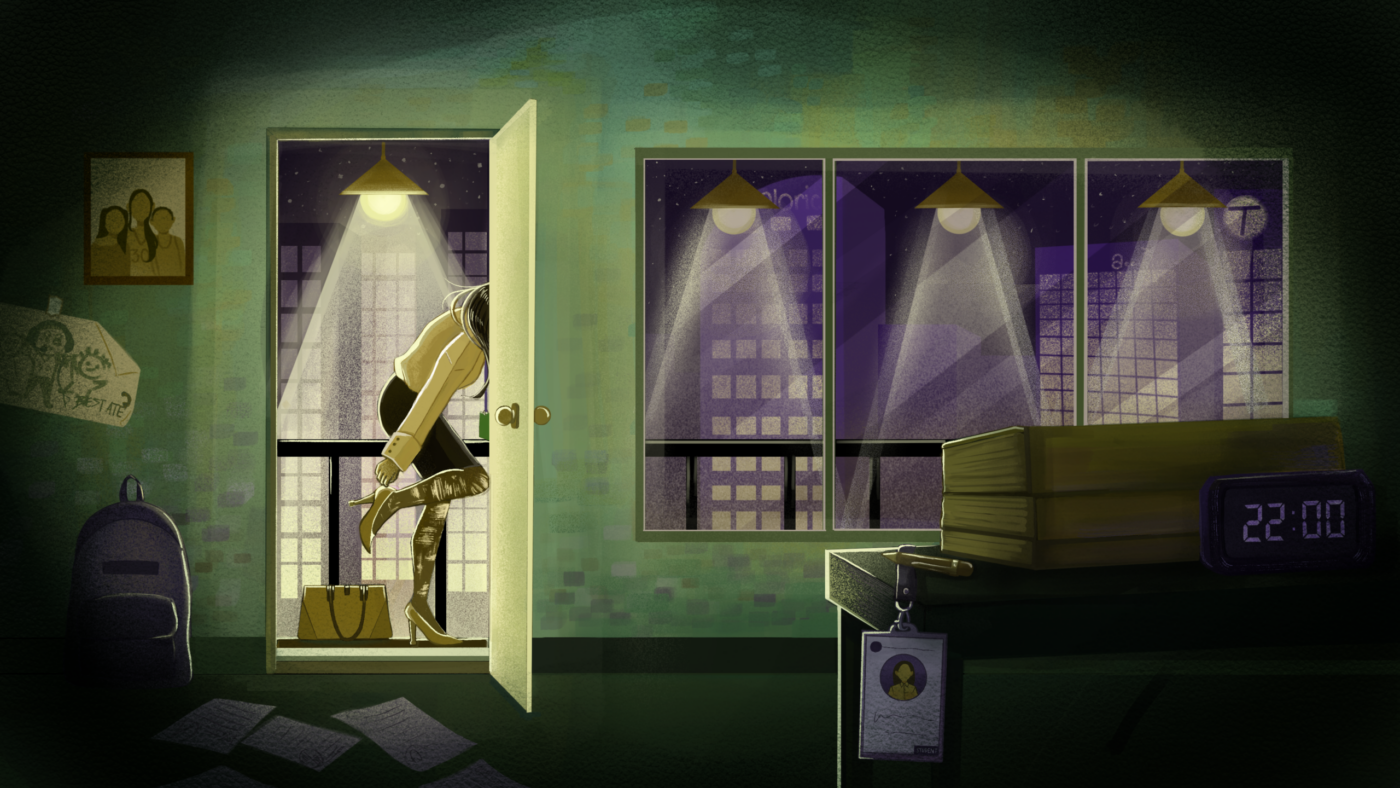
THE NIGHT is still young in Metro Manila’s most populated cities as the sidewalks gradually empty while Jia* and Kae* start their day. At 9:00 PM, their worries shift from coursework to clocking in as call center agents.
The BPO industry is known as a viable option for young job seekers like Jia and Kae, as it constantly offers low barriers to employment. In 2024, the industry contributed 8% to the Philippines gross domestic product, generating over USD 30 billion in annual revenue with over 1.7 million full-time employees.
However, behind the promise of national gains lies an ongoing history of exploitation that disproportionately puts women at risk of sexual violence and mental health pressures through a culture of normalization.
Holding half the sky
Living alone in her OFW parents’ home, Jia was pushed to give up her Accountancy degree under the promise of migration. With the relocation delayed and communication with her relatives reduced, she sought work in Quezon City, where BPO centers are concentrated.
At first, Jia had a negative impression of the BPO industry after hearing that employers from other companies see it as a sign of incompetence. Despite this, the desire for financial independence to resume her academics pushed her to this practical option.
While many young workers find jobs after leaving school, others continue their studies alongside it. For Kae, a Computer Science student at a state university in Manila, she was the only child of two elderly parents. “Wala kaming any income talaga outside of pension nila (We had no income outside their pension),” she says.
Surrounded by other working students, Kae was familiar with the impressions of the BPO industry as a toxic work environment, especially during night shifts. However, her concerns were outweighed by the need to make ends meet.
Both Jia and Kae were only 19 when they started working. Though they were barely of legal age, they already faced the realities of adulthood and were exposed to the mental health pressures women face in the workplace.
Breaking the script
As young queer women, Jia and Kae felt safe in their companies that had LGBTQIA+ friendly policies and women in managerial positions. Despite this, both expressed that inequalities and cases of sexual violence continue to persist due to a culture of normalization and tolerance.
Expounding on these issues, Kae recalled experiencing unwelcome physical advances from her fellow 28-year-old trainee during their company’s new-hire training period. “Pasmado kasi ako [tapos bigla niya kinuha kamay ko, tapos sabi niya, ‘Ah, basa. hindi mo na kailangan mag-ano [mabasa] (I have sweaty hands, and then they took my hand and said, ‘oh, it’s wet. You don’t need to lubricate anymore.)” she recalls.
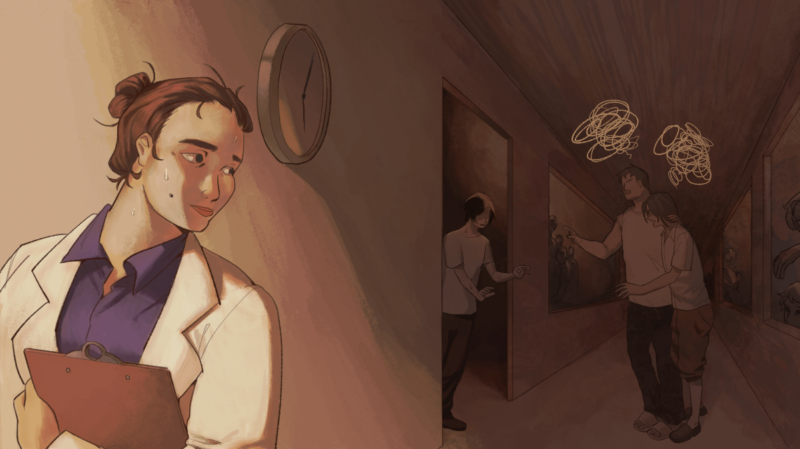
The incident escalated further when the perpetrator followed Kae into the restroom, a moment she decided not to further discuss during the interview. While she found comfort in sharing the incident with her colleagues, she also felt dismissed as they argued that such experiences were normal in the BPO industry.
Reporting the perpetrator to the Human Resources Department was also difficult for Kae, as he was considered ‘likable’ by their co-trainees and was not hired after the training period.
Beyond her experience, she shared that some perpetrators in their workplace were in positions of authority. “[Co-workers] have experiences sa mismong team leader nila kunyari, nagme-mentor [pero hinihipuan] sila [co-workers] [ng] own team leaders who pretend they’re mentoring, but touch them inappropriately,” Kae specifies.
For instance, she once witnessed the advances of a team manager to a colleague during their nesting period. Instead of reporting the incident, the survivor resigned quietly, as reporting sexual violence is complicated by the pressure to report perpetrators in positions of authority.
Meanwhile, Jia shared how she observed patterns of power imbalance as infidelity runs rampant in the BPO industry. She shared feeling uncomfortable with an affair between her two colleagues, an 18-year-old woman and a 27-year-old man.
Adding to this challenge, psychological services for seasonal employees are often inaccessible, even when Jia had an incident with a distressed client that made her consider self-harm.
“Sobrang frustrated [ng client]. Sabi [ng client], ‘I’m gonna jump off of this building’(The [client] was so frustrated. They said they would jump off this building),” Jia recalls. After the client dropped the call, she continued to worry, feeling that every call afterwards would be the same—or worse.
In the national context, Senate Bill No. 1476 and House Bill No. 4607 have been proposed to ensure humane working conditions for BPO employees. Despite this, it remains an urgent but inaccessible need to support young and seasonal workers.
Called to dream
In hopes of providing for her parents, Kae was unable to balance work with her academic commitments, as it came at a personal cost. With a 9:00 PM to 6:00 AM shift, she would have classes at 7:00 AM, and professors were not always understanding.
As overlapping responsibilities became difficult to manage, her mother and supervisor later on encouraged her to resign. At present, Kae works as a freelance AI trainer, which offers more flexibility and aligns better with her degree program.
On the other hand, Jia continues to search for employment in the BPO industry. Though offers do not fully match her experience, it is still higher than those in other industries.
However, it still does little to offset the issues that undercompensate their labor. For Kae, this means that in a revolving door of an industry, it is up to employees to decide whether to tolerate the normalized, unfair conditions or step away.
“At the end of the day, pinaprotektahan lang nila ang image nila, hindi ang employee nila. [Wala ka] rin talagang magagawa. They don’t really care kung anong mangyari sayo (They’re just protecting their image, not their employees. You can’t do anything. They don’t care what happens to you),” she elucidates.
Looking towards their future, Kae wishes to pursue jobs that bring her closer to becoming a data scientist. In hindsight, she acknowledges that working gave her a reality check and a great community.
Similarly, Jia values the community she has built and looks outward for opportunities towards her actual dreams. She plans to prioritize finishing her degree in Accountancy and eventually pursue a second degree in Theater Arts.
Although Jia and Kae have left their jobs, the BPO industry continues to grow. Nevertheless, it must ground itself as a site for Filipinos—young and old, experienced or inexperienced—to make a living.
Companies have the responsibility to push for improvements in the BPO industry. For Jia and Kae, those responsibilities include access to menstrual leave and creating safer, more supportive environments for survivors of sexual violence, especially for women.
Should they be made possible, these changes would provide a brighter tomorrow for women like Jia and Kae, who have carried the weight of working through the night, allowing them to dream soundly.
*Editor’s Note: The interviewees’ name has been withheld upon their request to protect their identity and privacy.
ERRATUM: A previous version of the article mentioned Kae hoping to become a beta scientist instead of a data scientist. The article has already been edited to correct this information. We apologize for the oversight.