The Occupy Wall Street movement in New York has sparked similar movements in several countries in support of the cause against economic inequality, arguably brought about by dominant financial institutions working under the guise of empowering people’s welfare. The Occupy Movement’s Philippine counterpart, however, seems to be a lackluster one, characterized by a lack of general public interest and solidarity among the various sectors of society. People are therefore left questioning the legitimacy of the effort as well as the sustainability of the purpose of this particular brand of protesting. Nevertheless, different sectors have since been spearheading more successful, though more focused, Occupy efforts.
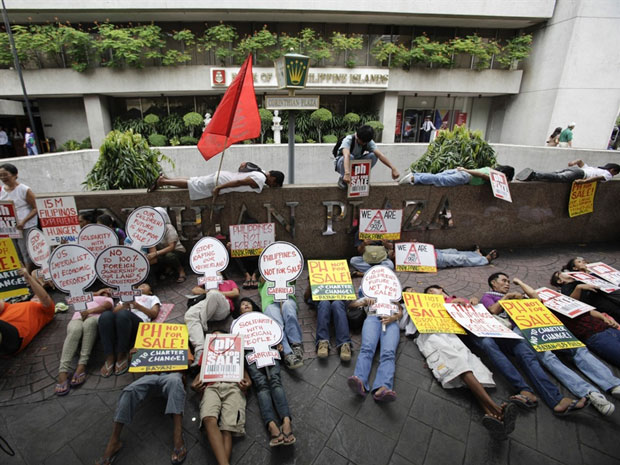
Photo from the Internet
Occupy Philippines
This event was the country’s first stint at creating our very own local version of the “Occupy Wall Street” Movement. Its first public action took place on October 14, 2011, meant to be a solidarity march from Ayala Avenue to the American Chamber of Commerce. Despite its strong handle on promotions in popular social networking sites such as Facebook and Twitter, the event ended earlier than expected because of the insufficient number of participants who attended the march. A sub-movement called Occupy Rizal Park held the next day failed to gain mass support as well.
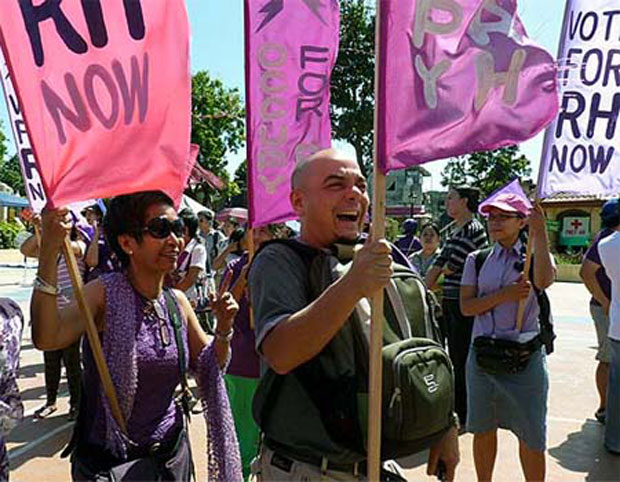
Occupy RH
Various sectors in the Philippines have chosen to utilize the surge in popularity of the “Occupy” brand of protesting and come together for the “Occupy for RH” Movement. Having officially started mobilizations last November 21, 2011, organizations supporting the cause have been staying outside the South Wing Gate of Congress in order to symbolize the urgency required to pass the bill before Congress adjourns for the New Year. So far the movement seems to be gaining a mass following, as people from different facets and economic tiers of society show their support and participate in the movement.
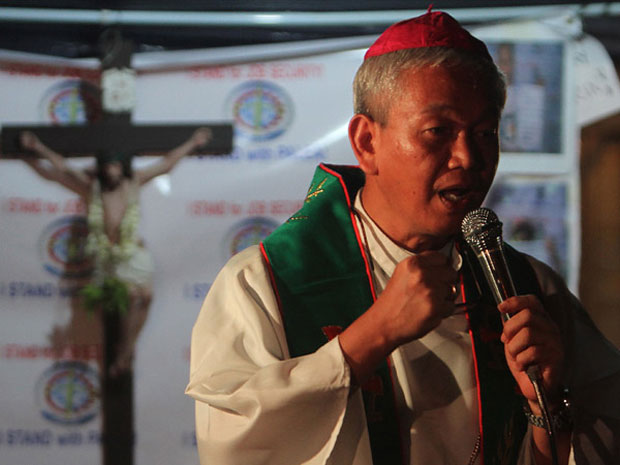
Kilusang 99%
The Catholic Church has created the “Kilusang 99%,” to urge the government to re-prioritize public welfare alongside the latter’s efforts in combating internal bureaucratic corruption. It currently criticizes the Aquino administration for concentrating too heavily on anti-corruption campaigns without recognizing the need to transform power structures in status quo that continue to proliferate injustices against the marginalized. While still at its early stages, this movement has already incorporated different marginalized sectors under its fold, such as fisherfolk and labor organizations.
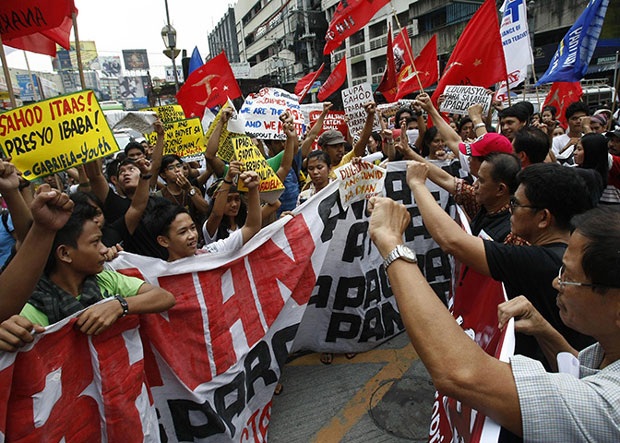
Occupy Mendiola
Hundreds have been trying to stage a camp-out at Mendiola Bridge for a 5-day mass action starting the 6th of December, pushing the administration to address human rights violations and state university tuition increases committed since Pres. Aquino came into power. The police met the demonstrators with violent dispersal efforts, with several students arrested due to the group’s lack of garnering rally permits. Due to the unconstitutional method through which the movement was made, the administration assumed justification to use water cannons and truncheons against the demonstrators.