University President Fr. Ben Nebres, SJ, said that as a whole, the university focused more on being men-for-others for its 150th anniversary, especially since the celebrations coincided with natural disasters.
The plans for the sesquicentennial began five years prior but the event only started two years ago. “The focus is the intensive three years of sesqui with themes for each year,” Nebres said.
1st year: celebrating excellence
Sesqui Head Sonia Araneta of the Office of University Development and Alumni Relations (OUDAR) said that the first year, themed “Celebrating Excellence,” was spent more on campaigning for the event.
According to Nebres, the Ateneo focused on engaging the community. “We [met] alumni to tell them about the celebration and invite them for the events.”
“We made sure that everybody’s on-board, that they knew what the celebration is going to be about,” Araneta said, adding that the sesqui team presented ideas to different stakeholders.
However, for OUDAR, it was not enough that people were aware of the events. The office encouraged Ateneans to actually participate and get involved.
“We wanted not just a very shallow way of awareness. We wanted it to be deep,” said Araneta. “We wanted to go as far down as we could to touch as many students as we could to involve them.”
2nd year: deepening spirituality
To prepare for the second year’s theme of “Deepening Spirituality,” monthly talks and Jesuit education formations were held. “We had [monthly] retreats and recollections during the second year,” said Araneta.
“That was also the year when we elected a new Superior General [for the Jesuits],” she added.
3rd year: building the nation
For the final and actual 150th year, several events were prepared by different sectors of the Ateneo community, such as creating a heritage room of Ateneo memorabilia and constructing new buildings.
However, the main goal was the 500@150 scholarship program to increase the number scholars to 500.
Nebres also added that the sesqui aimed to raise not only scholarship funds but money for the victims of calamities.
 Loyola Schools Vice President Assunta Cuyegkeng said country’s present plight makes the themes of the sesqui apt and needed.
“What we are called to do is to continue that, especially now that we are going through a difficult time because of political problems and a need to change culture. And what we need to do is to have the vision that we should help in building the nation,” Cuyegkeng said.
“A lot of events happened like the bleak possibility of elections, Maguindanao, typhoon. But this is when building the nation means making real choices for the country,” Ateneo High School Principal Fr. Raymund Hizon, SJ, said.
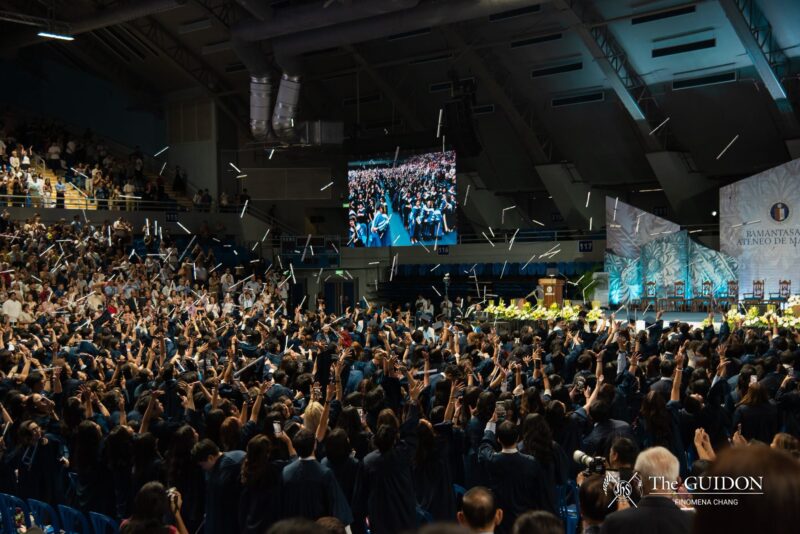
This year’s celebration began with the kick-off on June 14 and led to the One Big Night and Grand Alumni Homecoming on December 12.
After the 150th
Araneta clarified that since the celebration began late, it will extend until March 2010. Several new buildings with 21st century state-of the-art-designs for next year will allow Ateneo to cater to more “student-leaders” in the future, she said.
“Next year, we will be holding the gala sesqui performance of Walang Sugat. This is part of helping out in the scholarship programs for the students,” Grade School Headmaster Fr. Kit Bautista, SJ, said. “We will also show Batang Rizal either last week of January or first week of February.”
Araneta said the Ateneo has made its mark after a century and a half, but it will definitely not stop there. “And I hope at the end of the day, at the end of the year, we could say that we did the best that we could and I hope we can say that with certainty.”
“One hundred fifty years is not too long, and that gives me hope. I think it’s a call to do even more especially to the poor, and I think we’re starting now,” Hizon said. “We don’t need another 150 years to do that.”
Hizon added that by 2010 the Ateneo High School will also celebrate its sesquicentennial.