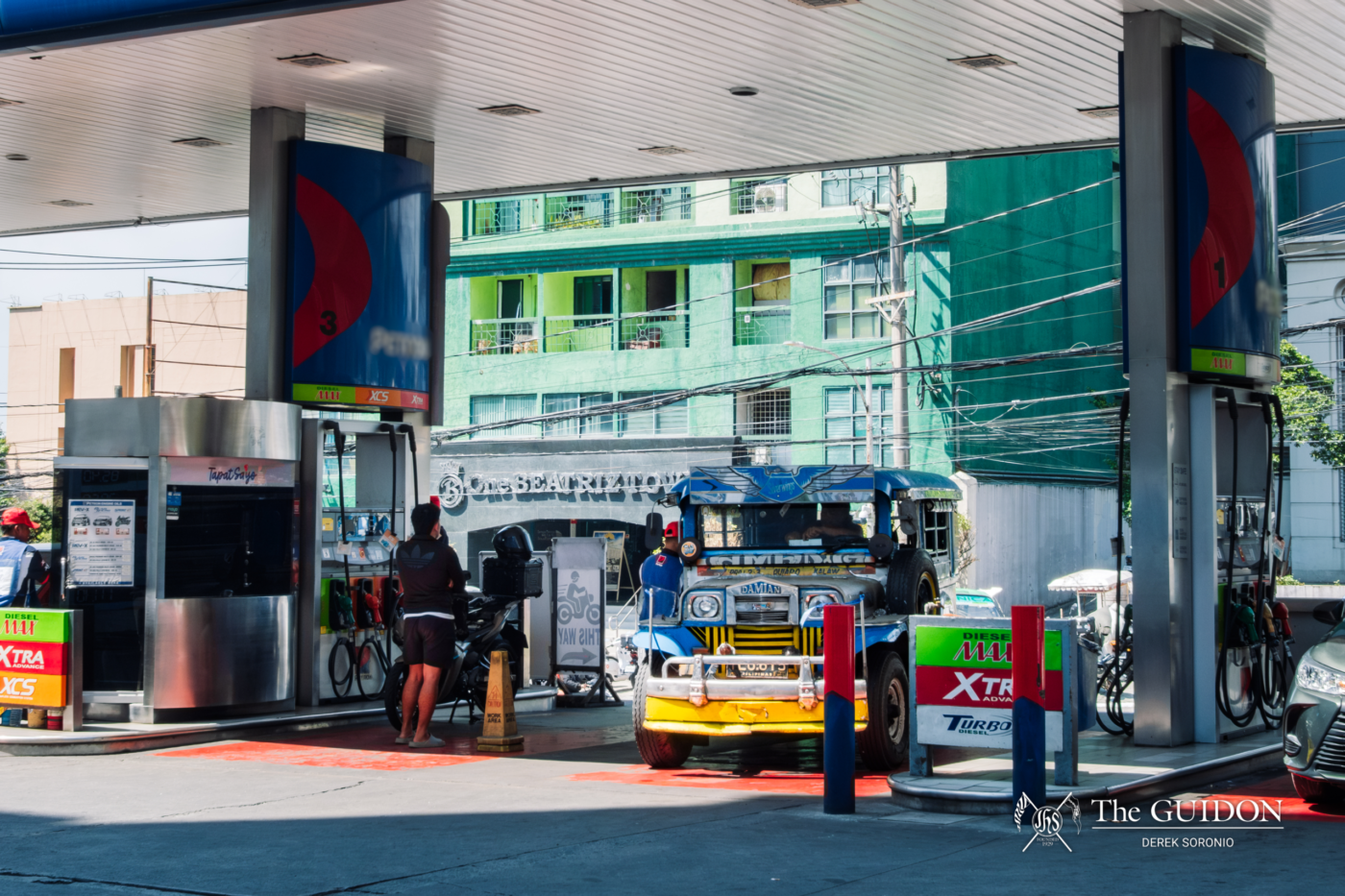
AS THE turbulent US-Iran war continues to drive fuel prices and inflation in the Philippines, questions remain on how University policies can support students most affected in times of crisis.
In light of these growing concerns, the Sanggunian conducted a constituency check, where they discovered that most respondents experience tangible impacts from the oil price hike. Specifically, most respondents noted that a significant portion of their allowance now goes to transportation costs, making the daily commute a bigger challenge for Atenean commuters who use public transport.
A national crisis
On March 6, the Malacañang released Memorandum Circular No. 114, s. 2026, directing government agencies and institutions to adopt energy-saving procedures.
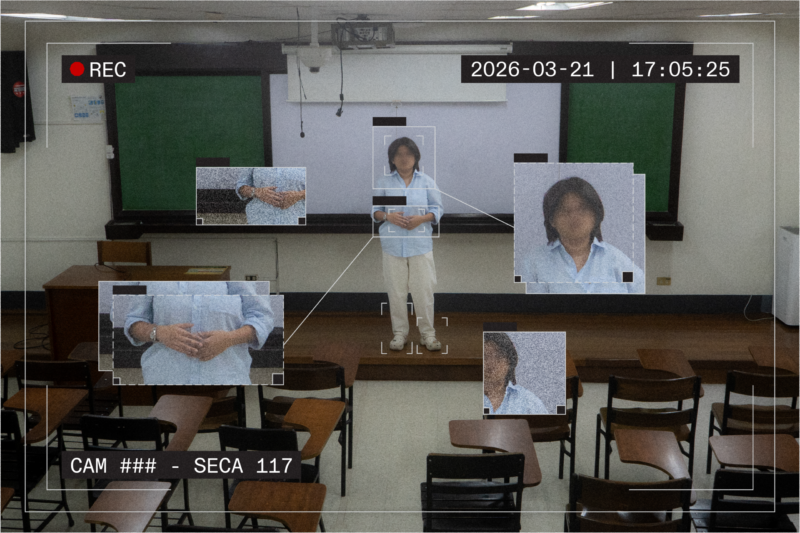
This prompted the University to roll out measures aimed at limiting energy use, including “synchronized digital days,” which shift classes online on selected Mondays and Fridays. During these periods, select offices like the Office of Student Activities are also closed, while the Rizal Library operates at limited capacity.
Additionally, the University implemented flexible work arrangements and financial assistance to employees, who can now loan up to Php 15,000 and receive a one-time aid of up to Php 4,000.
Now three months into the oil crisis, the majority of classes still remain onsite. Despite the implementation of digital days, Sanggunian Vice President Jedryc Romero highlights the “vagueness” of these contingency measures, pointing out that the responsibility of interpreting guidelines is often left to students and faculty.
Notably, Carmen Duran (2 BS MIS), a student commuter, stresses that though digital days may reduce commuting costs, the measure does not eliminate the need to go to campus for exams or organizational commitments.
The problem is further aggravated when public transport becomes less accessible. In these cases, Romero notes that students may turn to ride-hailing services, which are generally more expensive. Such adjustments influence students’ academic lives, particularly in terms of attendance and punctuality.
“Most likely, there [have] been students that have been late [to class] because they couldn’t commute [in] their usual way,” Romero explains.
Similarly, Shadrach Manlapaz (2 BS MGT) shares that he once missed a quiz after failing to secure a ride to campus. Long booking times during rush hour, exacerbated by fewer drivers on the road, illustrate how the unpredictability of his transportation is affecting his attendance and academic performance.
These experiences highlight how a precarious commute, made even harder by the oil crisis, can extend past mobility. As gaps in these contingency plans’ clarity remain unresolved, the weight of commuting amid crisis remains a burden students must navigate on their own.
Beyond transportation
For student commuters Duran and Manlapaz, the oil price hike shapes both how they travel and how they function within their daily routines.
Before the price hike, Duran primarily commuted through public transportation via the Light Rail Transit (LRT) and private car with her parents. However, due to recent increases in transport fares, Duran had to adjust to longer travel times, with her daily commute now including additional jeepney transfers and walking.
Conversely, Manlapaz alternates between driving his car and using ride-hailing services, depending on urgency and ease of booking. Yet, similar to Duran, rising gas prices have made his daily commute to campus costly and uncertain.
These changes have particularly caused students to become fatigued. “[H]aving to commute every single day, [with] the fact that [I] live far away […] and I’m also org active—It’s getting really tiring, honestly,” Duran admits. Manlapaz also believes that his travel routine shifts have reduced his time for rest and recreational activities such as “going to the gym or hanging out with friends.”
He also notes that by the time he gets home, the exhaustion from commuting sometimes causes him to fall asleep immediately, thereby cutting into both his study and personal time.
Moreover, safety concerns further shape students’ commuting decisions. Duran recalled that when an LRT disruption left her stranded, her mom insisted she book a Grab instead of taking the jeepney because it was “not safe,” despite the higher cost. In contrast, ongoing fare hikes push Manlapaz to rely on more affordable options like Angkas—an option he chooses even when he believes “it would be a lot safer” to take Grab or a private car.
Beyond questions of safety, increasing transportation costs have forced many students to rethink how they allocate their daily expenses.
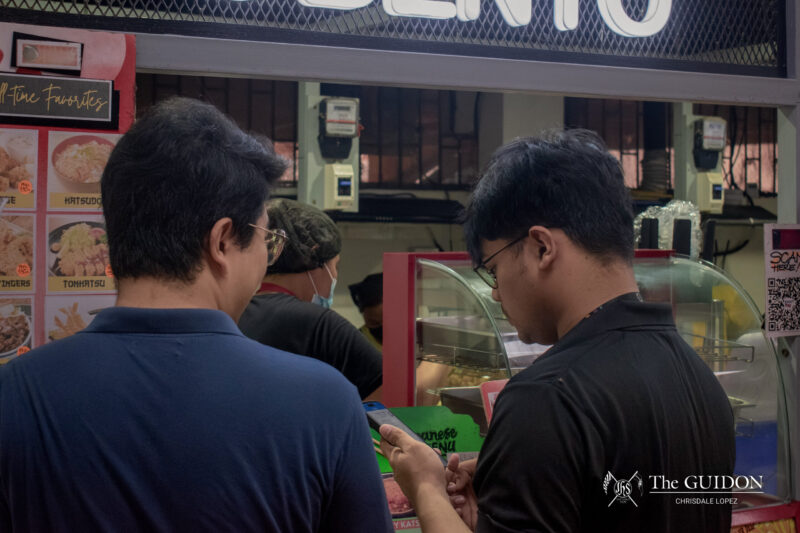
For instance, Duran discloses that her weekly allowance has been reduced, as her family adjusts to financial strains brought about by the oil price hike. As a result, she has even cut back on food expenses, buying only the cheapest meal she can find in the University cafeterias.
These trade-offs in their daily routines reshape not only students’ daily commutes, but also their finances, well-being, and academic life. With students themselves bearing the brunt of the price hikes, questions about University support are brought to light.
Toward long-term support
Apart from constituency checks, the Sanggunian, along with University offices, has conducted direct student reports and case-to-case coordination to surface commuter concerns amid the oil crisis and clarify issues surrounding the contingency measures.
However, Romero says that while the student government has explored measures such as a possible free transport initiative, these efforts are often slowed by the Sanggunian’s limited decision-making power in addressing an issue of this scale, leaving student concerns heard but not always translated into concrete support.
From the students’ perspective, Duran calls for greater consideration for commuters during transport disruptions, including more flexible attendance arrangements and class modality shifts to online when needed.
Manlapaz, meanwhile, suggests making the campus more accessible to ride-hailing drivers, noting that entry procedures can discourage them from accepting bookings from inside the Ateneo.
Still, Romero insists that the burden of rising fares is not limited to public transportation commuters alone, as even students who rely on private vehicles now have to cut deeper into their allowances or savings just to keep up with onsite participation. He asserts that current contingencies are “not enough,” calling on the University to “make sure that [students] are afforded as much support as they can [get].”
Romero situates the issue not only in transportation difficulties, but also in the more extensive welfare implications these costs have on students’ daily lives.
He thus points to a broader purpose for the University that goes outside current contingency measures. For him, the University should practice its role in pushing for accountability even beyond campus, while clearly locating student concerns within the larger political and economic conditions shaping their daily lives.
“I feel like Ateneo could be more explicit on how it stands. In terms of the transport strikes, in terms of the oil price hike, and the implications of our current situation. Rather than just doing these contingency measures, I think there’s also a need for Ateneo to speak up as their students have been doing,” Romero emphasizes.
This widens the crisis beyond the individual commuter, revealing gaps in how support is extended to those most affected. As such, the issue lies not only in mobility or cost, but in whether institutions like Ateneo are willing to move from temporary adjustments to more concrete forms of support for its community amid global tensions.