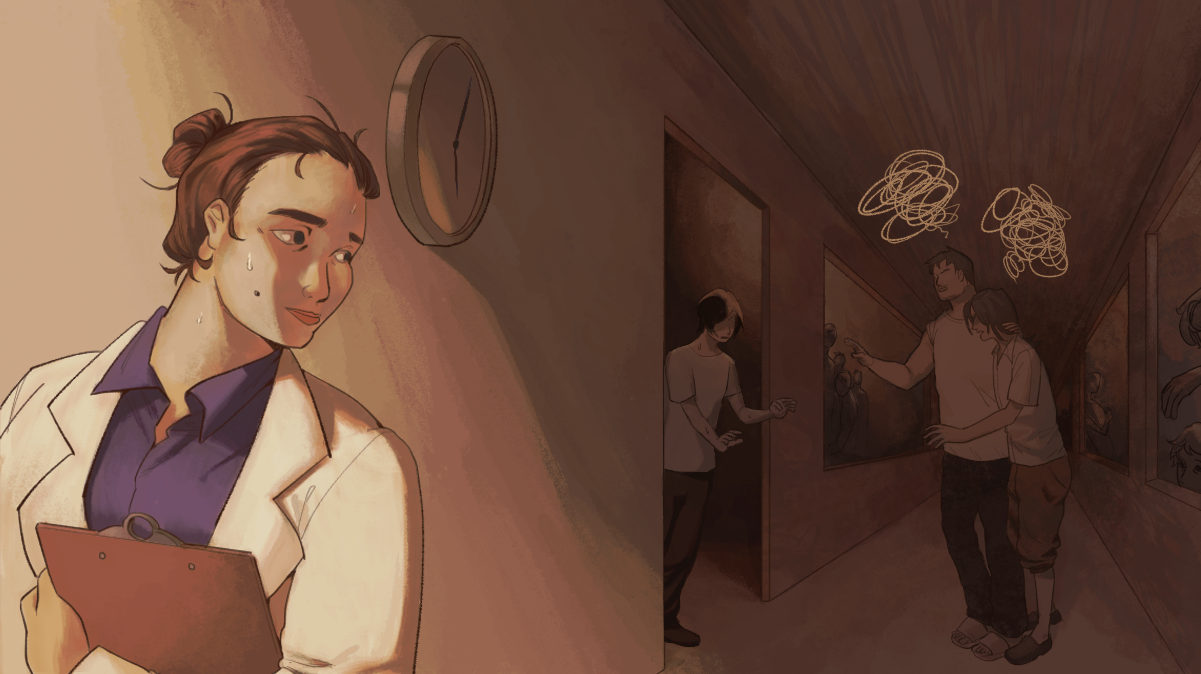
Behind the locked doors of the Philippines’ mental health facilities, Sir Guts and Mr. Rufo work through overstretched institutions as patients grapple with the stigma surrounding psychiatric care.
INSIDE PSYCHIATRIC institutions in the Philippines, mental health practitioners work through overcrowded wards, limited resources, and emotionally demanding conditions that transcend beyond ordinary healthcare.
While conversations on mental health have become more visible in recent years, psychiatric facilities continue to carry stigmas deeply ingrained in Philippine society, where seeking treatment is often met with discrimination and social exclusion.
The pulse of the wards
Among those who have worked inside the National Center for Mental Health (NCMH) is Gutsdozer “Sir Guts” Tancio, PhD, a licensed psychologist and PAP-certified clinical psychologist, who spent seven years witnessing firsthand the realities of the Philippines’ psychiatric facilities. During his time in NCMH, he moved across different units from occupational therapy to psychosocial rehabilitation.
Looking back on his experiences, he argues that mental healthcare remains a low priority of the government, contributing to persistent gaps in the country’s mental healthcare system.
“Kulang tayo ng professionals, facilities, training, budget, programs, [at] implementation, […] hindi siya priority [ng government] (We lack professionals, facilities, training, budget, programs, and implementation, […] mental health is not a priority of the government),” he asserts.
These limitations often force mental health workers to make difficult compromises in patient care. Faced with overwhelming numbers of patients, Sir Guts says he would rather let some patients experience delays but ensure quality care—rather than attend to everyone immediately but with compromised treatment.
The situation is no easier in the City of Dagupan, where Karl Rufo, RPsy, 36, works as a chief counselor and psychologist at the city’s Department of Health Drug Abuse Treatment and Rehabilitation Center (DTRC).
Inside the government-run facility, he facilitates therapy sessions for patients undergoing rehabilitation for substance abuse, develops treatment plans, and helps individuals recover. Outside DTRC, he also balances part-time clinical work for clients with mental health concerns.
Moving between rehabilitation work and clinical practice, Mr. Rufo’s experience reveals how mental health workers often feel the need to fill gaps across an already strained system.
Amid this lack of mental health practitioners in the Philippines, professionals like Sir Guts and Mr. Rufo also face physical fatigue and empathy burnout while working in psychiatric and rehabilitation facilities.
“In DTRC, there are 245 patients in the inpatient facility, but only eight psychometricians, five psychologists, three social workers, and one psychiatrist to care for them all,” Mr. Rufo shares.
Such shortages place additional burdens on practitioners. Mr. Rufo notes that many mental health workers experience compassion fatigue as they endure growing patient needs with limited manpower.
Ironically, despite being one of the biggest end-referral institutions in the Philippines, NCMH remains understaffed, lacking enough personnel across its psychiatric wards to adequately care for patients. This was also noted by Sir Guts, who used to work at the institution from 2015 to 2022.
Beyond the fatigue and burnout, Sir Guts and Mr. Rufo point to another challenge confronting psychiatric care—recovery does not necessarily end when a patient leaves a facility. Drawing from years of working with patients, both practitioners note that discharge does not always guarantee reintegration into society, as some of the heaviest burdens carried by patients remain waiting outside the wards.
The stigmas behind the doors
Sir Guts stresses that just like psychotherapy and medication, psychiatric wards and rehabilitation facilities exist to improve the mental health of Filipinos. However, it is a common view in Philippine society that those who get admitted to these facilities are hopeless, instead of needing medical intervention.
For years, Mr. Rufo and Sir Guts have witnessed how patients behind the walls have faced such stigma from their neighbors, their own families, and even their own doctors.
In his early years at DTRC, Mr. Rufo admits that he also believed the idea that “once an addict, always an addict.” However, this thinking slowly changed as he interacted with more patients.
He recalls a conversation with one of his patients who was nervous about leaving the rehabilitation center, who said: “‘Kapag lumabas ako kuya, isa sa mga kinakatakutan ko ay makita pa rin ako bilang isang adik [… ] Tina-try ko naman po ‘yung best ko […] napapaisip ako na gawin ko na lang [kaya ulit] kasi yun naman yung tingin ng tao sa akin.”
(When I get discharged from the facility, one of my fears is that they’ll still see me as an addict. I’m trying my best. At some point, I think that I’ll just do it again because that’s how people see me anyway.)
Sir Guts shares another layer of this stigma, this time coming from the patients’ families. In his experience, patients’ families would sometimes lock their doors and pretend they were not in the house, causing the patient to question why their own family would not accept them.
Since the protocol for both wards does not allow them to be discharged without a family outside the facility to support them, these patients are forcibly re-admitted, where they often end up staying until they pass away.
Sir Guts stresses that these facilities must not be branded as places where individuals end up when they are “past the point of no return.” Instead, he encourages them to be viewed as what mental health practitioners have seen it as for years: a place of hope.
Beyond their healing hands
In aiding patients’ recovery, Mr. Rufo emphasizes the importance of the family’s support. The goal of every mental health facility, as Sir Guts shares, is for the patient to be discharged to their family right away, but the warm acceptance of a patient’s family is something they can only hope for.
Apart from this, whether or not the societal conditions are conducive to mental health plays a vital role in the patients’ healing. Sir Guts emphasizes that although the facilities give the patients the tools to cope, they cannot change the stressors of the world outside. He adds that the everyday struggles that Filipinos face, like traffic, low wages, and lack of jobs, are critical causes of poor mental health.
“Karamihan naman ng mga mental health issues ay dahil sa personal struggles na nadulot ng economic crisis. Hindi sufficient ‘yung system sa pagtulong sa mga may mental challenge, tapos ito pa, yung daily living conditions,” Sir Guts states.
(Many mental health issues are because of personal struggles rooted in economic crisis. The system is not sufficient in helping those with mental challenges, and then daily living conditions [make it more difficult]).
Safeguarding the Filipino’s mental health, then, becomes a collective effort from different public and private sectors. Philippine society is also imperative in this advocacy, as patients’ realities are likewise shaped by neighborhood conversations and social media sentiments.
As Sir Guts and Mr. Rufo assess another patient’s chart, craft policies for the ward, and discharge another patient, they cling to the hope that their patients will someday fully reintegrate into society. For now, they continue bearing the conditions demanded by their line of work without complaint, collecting more stories of progress from their patients. Just as every year did, these stories remind them that mental health is an advocacy that changes lives and is always worth striving for.
*Editor’s Note: Upon clarification from Sir Guts, the article was edited to reflect that his comments regarding the conditions at NCMH pertained to his time working at the institution.