While global political tensions and fuel prices rise, gas station employees remain fueled up to face customers who have no choice but to deal with the changes.
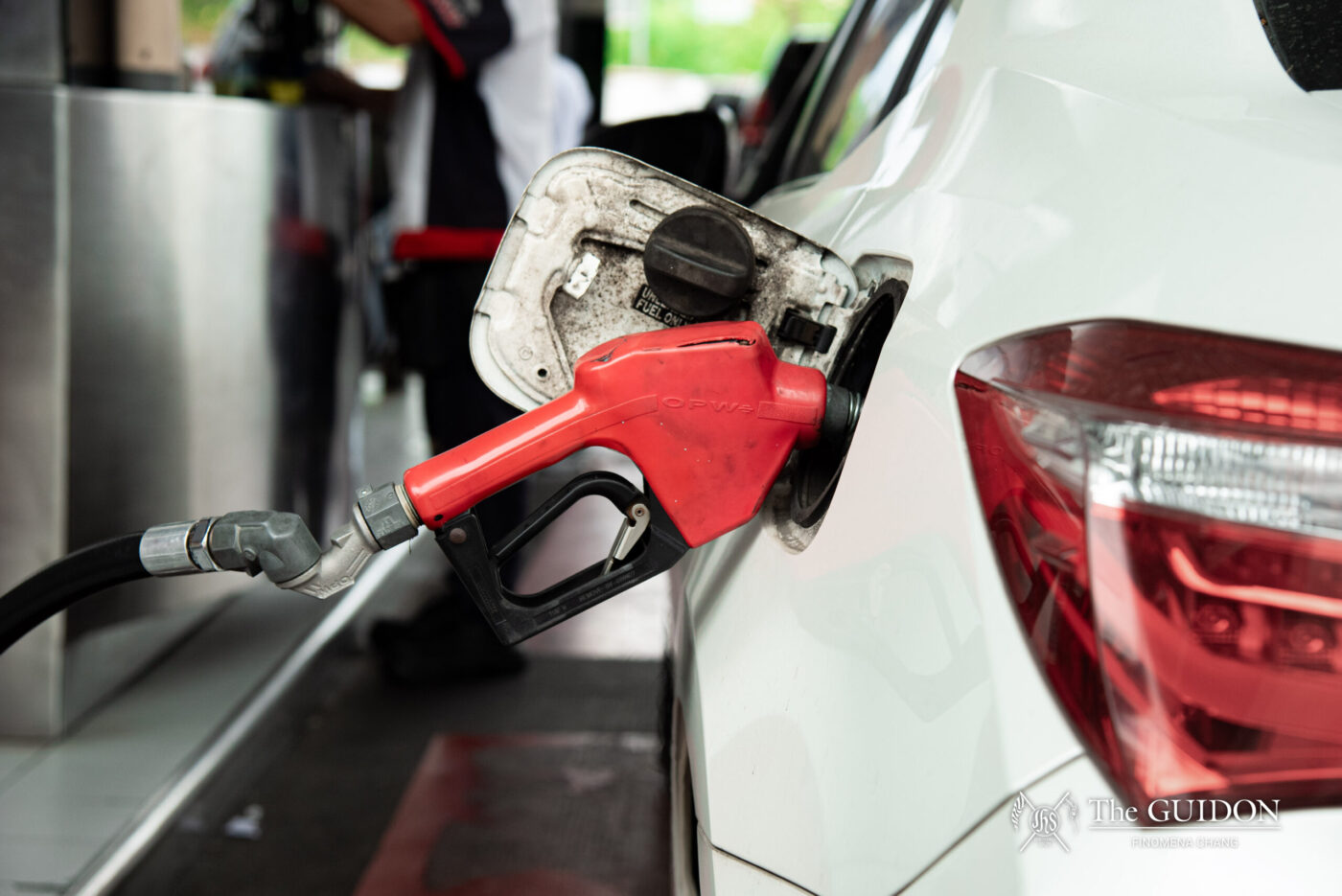
GAS STATIONS line Katipunan’s humid, busy road. Cars come and go, while employees attend to customers waiting to have their cars refilled with gas. When temperatures rise and gas prices increase, these employees are among the first to witness the effects through the people they meet and serve.
Nevertheless, they remain standing in their stations, bearing witness to the lingering domino effect caused by the ongoing geopolitical conflict. After all, in the Philippine fuel industry, gas attendants are the first to interact with riders who struggle to make ends meet and customers who regularly rely on vehicles.
Taking the shift
Sir Jo* knows this fast-paced routine of going to the gas station all too well. Now 53 years old, he has worked in the energy and fuel industry since he was 21.
Every day, Sir Jo wakes up and commutes at 4:30 AM to avoid traffic. Then, by 5:30 AM, he starts his day as a gas station service manager.
His years of experience are seen in the confidence he carries as he walks—greeting, teasing, and instructing his fellow employees. Alongside this demeanor is the discipline in his leadership. As a station manager, Sir Jo has become the all-rounder—supervising, cashiering, and assisting in pumping the gas.
With this, he emphasizes that there must be a balance between work and friendship between him and his employees. They can have fun with each other, but there must always be a level of professionalism when it is time for their shift.
Under the guidance of Sir Jo is a 33-year-old gas attendant, Kuya Pao.* Known as a “service master” at their company, he is one of the employees responsible for attending to customers, pumping gas, and processing payments. This job that was initially offered to him by a neighbor has become a steady source of income, which he has grown familiar with since 2013.
“[Kapag] karaniwang araw, okay naman. Kahit sabihin natin nakakapagod, kaya naman. [Pero] nakakapagod din kasi maraming customer, lalo na mainit. (A normal day is okay. Even if it can be tiring, it is doable. Although it can still be tiring when there are many customers, especially if the weather is hot.),” he expresses.
Over the years, the two have become familiar with some regular customers—most of them residents in the neighborhood, students, and high-ranking officials.
Soft-spoken and gentle, Kuya Pao emphasizes that all they do is help customers with every drive on the road. Similarly, Sir Jo believes that all customers must be approached with care and hospitality, regardless of whether they are familiar friends or just passing through.
When prices pump up
Despite their efforts to approach customers with kindness, not everyone is friendly in return. In Kuya Pao’s experience, there are still customers who treat gas attendants poorly.
“Porket naka-sasakyan sila, [ang] tingin nila sa mga taong kagaya namin, [ay] parang utusan (Just because they have cars, they think of people like us as servants),” he vents. He adds that when a customer demands assistance with an issue beyond the attendants’ control, they turn to Sir Jo, who finds excitement in dealing with customer issues.
Recently, a common issue customers face is the increase in gas prices. Hence, motorists look for gas stations with relatively lower costs, like those where Sir Jo and Kuya Pao work.
Sir Jo takes it upon himself to be updated on news of rollbacks and increases, ensuring he can properly orient his workers. At the station, Kuya Pao observed that when gas prices increase, customers would swarm the area, with lines reaching the main road.
However, while these price hikes account for rising operational costs for gas companies, Sir Jo notes that it overlooks the workload placed on the attendants who have to service twice as many customers.
“Nag-increase ang price ng fuel pero hindi nag-increase ang sahod (The price of fuel increased, but not the pay),” Sir Jo says.
Ultimately, he believes that preparing and orienting the gas attendants is the best he can do for them, who have to endure eight-hour shifts that become extra busy when rush hour hits.
The stopover turned home
In times when fuel prices and their work as gasoline boys remain uncertain, Sir Jo and Kuya Pao continue with their jobs.
During these unpredictable periods, Sir Jo remains motivated as the breadwinner of his family of six. However, as he nears 60 years old, he has decided to settle down before reaching retirement age. As he awaits this time, he works hard and tries to make as much financial preparation.
Though he has remained loyal to his first job, Sir Jo tells his co-workers to stay open to better opportunities outside the gas station.
Kuya Pao takes this advice to heart. Although the job provides for his family in Iloilo, he remains open to other work. “[Kung] may dumating na magandang opportunity, bakit hindi natin subukan? (If a good opportunity comes around, why should we not try?),” he shares.
The gas station is a hectic place, both for patrons worried about rising prices and for workers enduring long, tiring shifts. As customers come and go, gasoline attendants keep journeys moving while building lives around the station itself—holding on to hopes of finding their own path, outside the station.
*Editor’s note: The name of the interviewee has been changed to protect their identity and privacy.