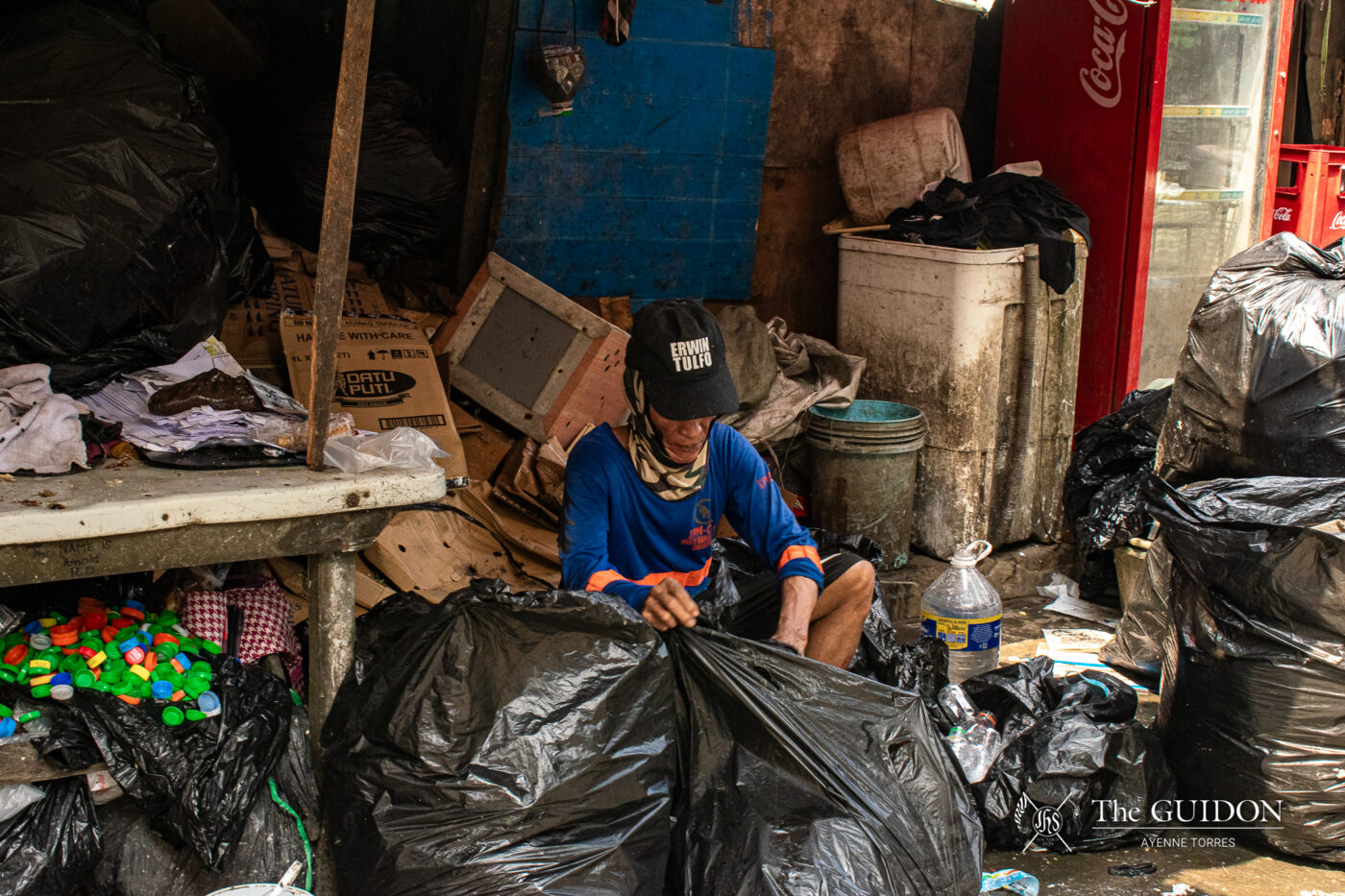
In the lands of Smokey Mountain, families scavenge the wastes surrounding them to make a living, while resisting health hazards and the government’s systemic neglect.
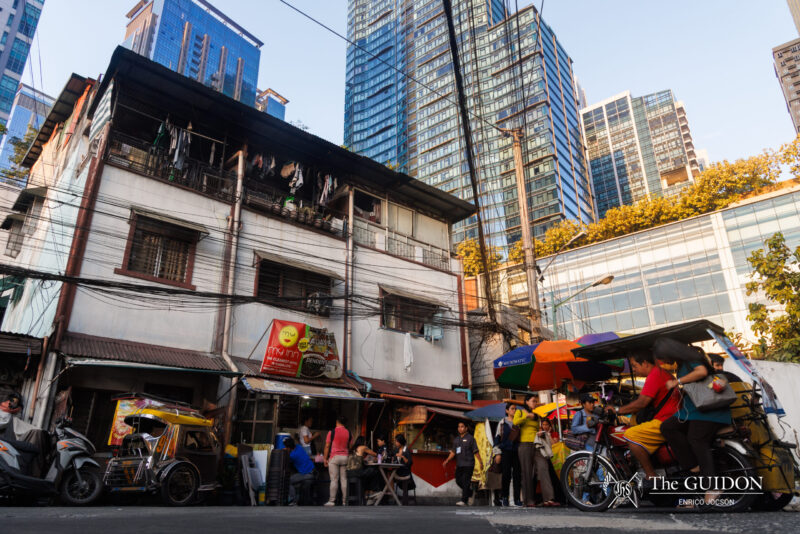
A MOUNTAIN of once-towering trash has long been transformed into a community by the residents of Smokey Mountain in Tondo, Manila, where families spent decades building homes from scratch and scraps, turning a dumpsite into a neighborhood.
Today, the community that rebuilt Smokey Mountain faces displacement as the government moves forward with its waste-to-energy facility project, which is framed as a solution to the city’s mounting garbage crisis. Yet, behind the promise of progress lies a harsher truth: the families who cultivated homes from trash are now being driven out the moment their land becomes valuable to those in power.
Demolitions tied to the project have already pushed out most residents. Based on community accounts, the population of Upper East Smokey Mountain has dropped from around six hundred families to roughly a hundred. The remaining households continue to live under the constant threat of eviction.
Reducing the country’s weight
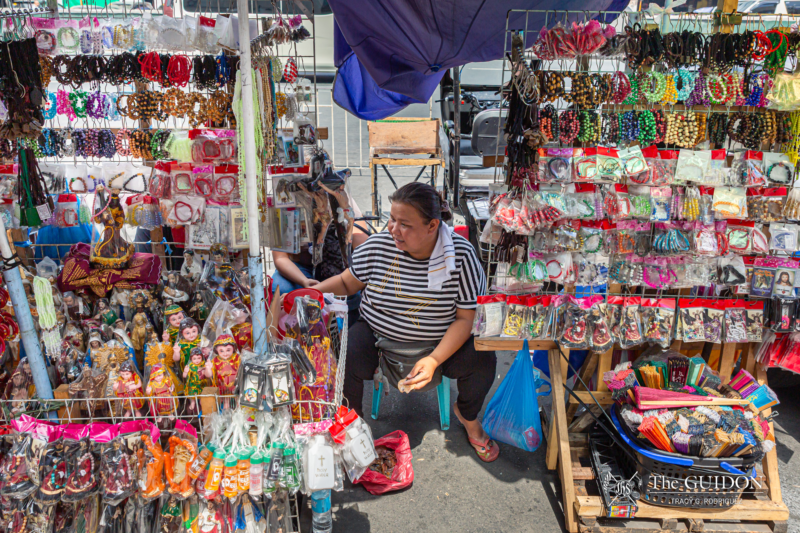
In Smokey Mountain, survival begins when the country’s waste piles up. Every day, scavengers brave the heaps of trash in hopes of finding metal, plastic bottles, or anything that could be worth a few pesos from nearby junk shops.
As such, their labor exists at the fault line of a broken system. The Philippines’ long-standing struggle with inadequate waste management has triggered a cascade of health, environmental, and social crises. Flooding from clogged waterways, contaminated soil, and polluted air disproportionately affect vulnerable communities like Smokey Mountain’s residents.
For families who built homes amid these dumps, daily life means breathing smoke that clings to their lungs and navigating scattered scraps, which both wear their health down long before anyone notices. Their problems extend beyond this, as they continue to survive in the margins of a broken system that fails to protect them.
Among those who call Smokey Mountain home is Mang*, a 51-year-old scavenger who has spent most of his life combing through the city’s landfills and working for recycling agencies.
Ironically, the same work that sustains his family is what strips him of his health, as long hours in toxic fumes and polluted air have taken a toll on his lungs and stamina. Yet despite this slow erosion of his body, he resists government bribes in the form of cash, determined to stay in Smokey Mountain.
Mang’s refusal, however, is not his alone. For the long-time residents of Upper East Smokey Mountain, their feet remain planted in the soil they have tended for years—turning down financial offers of Php 15,000 to 30,000, unwilling to trade their home for uncertain relocation.
One of whom is 21-year-old Anora Madrid, whose experience reflects the broader struggle of families caught between survival, displacement, and the fight to hold on to the homes they built. As the youngest in her family, she joined her siblings scavenging for scraps to sell in junkshops—an experience she recalls from her high school years.
Her father’s words, “Pag wala kang diskarte, alam mo naman na ang bansa natin is mapili…kahit anong sipag mo, walang asenso.” (If you don’t have a strategy… you know how our country is selective, that despite all diligence, success is not guaranteed), resonated with her as she grew up. This pushed her to stop scavenging and pursue education; however, financial difficulties later forced her to leave college before finishing.
Having grown up in Smokey Mountain, she has seen how society reduces their home to “just a landfill,” erasing the community that has taken root over generations.
“‘A mountain of garbage,’ why did no one pay attention then? Now that residents have developed the area, [the government] is demanding to reclaim it,” Madrid asserts in a mix of Filipino and English
Reusing life from waste
Even as authorities stake their claim, the people who call Smokey Mountain home continue to make a living from what others have discarded.
Despite being aware of the inherent risks, scavengers persist through the air reeking of foul odor, toxic pollutants, and the aftermath of typhoons. Desperate to survive, Mang recalls taking medication for six months just to keep working, as his company enforces a strict “No work, no pay” policy.
For him, scavenging is not a choice—it is a necessity.
“Pamamasura lang ang hanapbuhay namin—minsan meron, minsan wala.” (Scavenging is our sole source of livelihood, sometimes we find scrap, sometimes we don’t,)” he says. On better days, his earnings reach Php 400, while on his worst ones, he returns home with barely anything.
Like Mang, Madrid grew up in the same cycle of uncertainty. Her father first came to Smokey Mountain after hearing the news about former president Gloria Macapagal Arroyo’s call to plant crops on vacant lands. What began as planting seeds, she says, eventually became planting homes.
Mang and Madrid’s story exposes a broader tension in urban policy. Despite laws like the Republic Act 9003 or the “Ecological Solid Waste Management Act of 2000,” which are meant to improve waste management, some families have spent generations fending for themselves at the city’s margins.
Macoy Cabangon, a 23-year-old activist and community organizer of Anakbayan Manila, says that the key issue lies in the conflicts of land settlements, rooted in government corruption.
As the pointperson for Smokey Mountain, he mentions that it is evident how the government often aligns with the interests of the elite—granting space to corporations and foreign investors, while displacing the very community that built their lives there.
This misalignment of priorities not only displaces families but also exposes a deeper flaw in governance—the very people who sustain the city’s economy remain neglected by the system meant to protect them.
Recycling buried dignity
Amid the looming threat of eviction, Smokey Mountain still pulses with life for families who live and work there. Although their houses are built from scraps, it is solidarity that helps them stand tall.
There, home is not measured by fancy walls or high ceilings, but by the people’s sense of bayanihan (community solidarity) that turns an unlivable place into a land worth fighting for.
Scavengers and garbage collectors remain excluded from basic services, stable income, and protection, despite being the frontliners of the city’s recycling system. Their lives shed light on the unseen disparity of urban progress, where the city’s development rests on the backs of the people it has long overlooked.
Madrid explains that demolitions have stripped countless families of their homes without clear relocation. “Ang bahay ay buhay, […] kapag sinira mo ‘yan, sira na ‘yung buhay mo eh.” (A house is one’s life, […] if demolished, your life’s ruined.) Through this, she advocates policy reforms that allocate proper housing for Smokey Mountain residents to help the homeless.
In the end, Smokey Mountain stands as both a reminder and a mirror. It reminds the public that survival alone should not be mistaken for resilience, and that the failures of the nation’s system must be recognized and denounced.
Beneath the heaps of trash rest the quiet suffering of people conditioned to endure survival as a habit, their hope for relocation buried under the same soil that sustains the metropolis. Until their cries are heard, the trash will continue to reek, and the mountains will burn—a reminder that no progress built on neglect is ever clean.
*Editor’s Note: The name of the interviewee has been withheld to protect their identity and privacy.