The overwhelming amount of campaign materials reflects stories of strategy, but deflects the environmental impact it leaves behind.
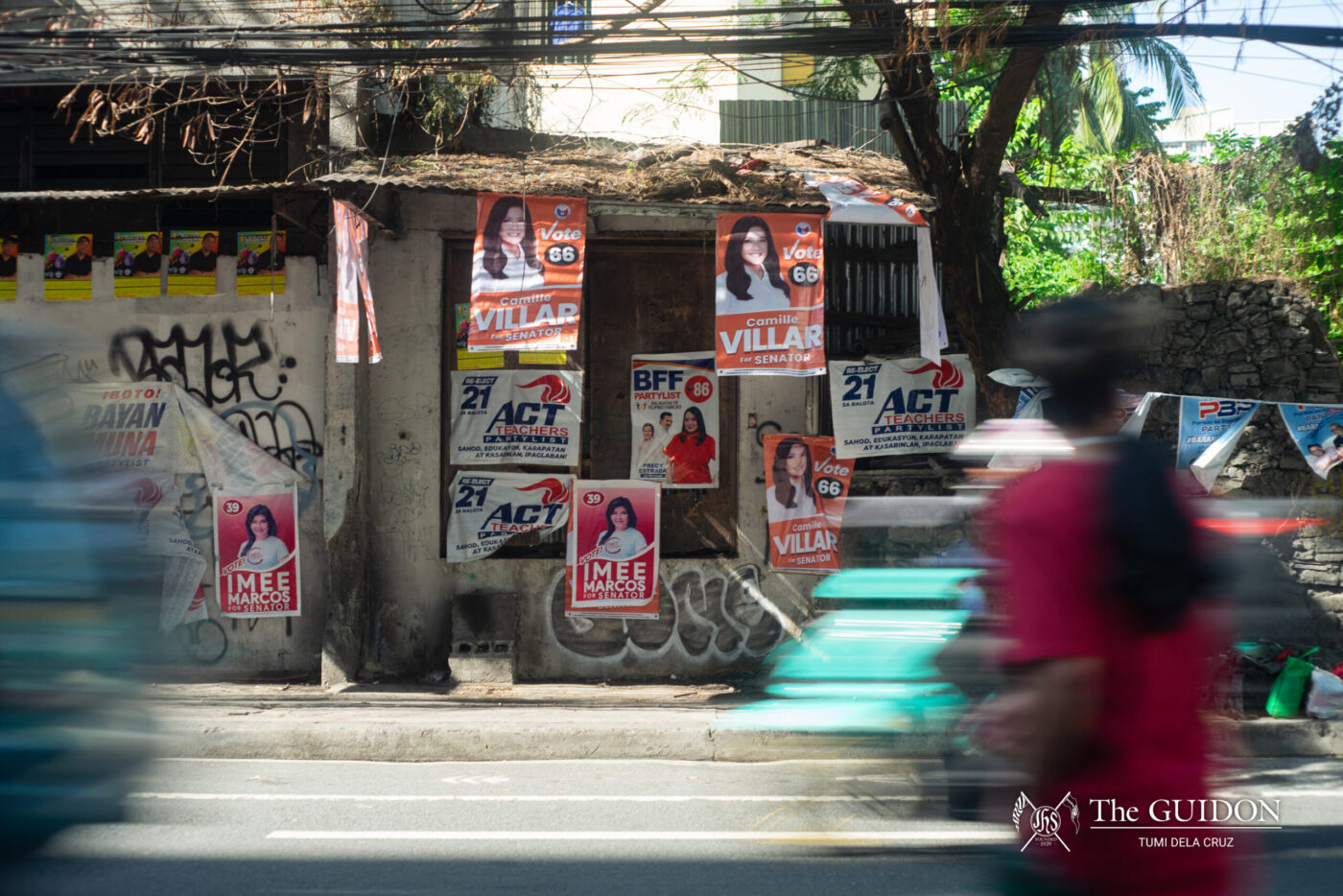
FLYERS, TARPAULINS, and billboards bearing candidates’ faces line highways and narrow streets, making them difficult to ignore. This visual flood has prompted conversations about how political marketing shapes voter perception—and what it leaves behind.
As candidates aim to make their names known, their campaign materials become fleeting symbols of the season—visible today, forgotten tomorrow. Yet, with each election cycle, these remnants accumulate, raising concerns about their long-term environmental impact.
Setting up the strategy
According to University of the Philippines Los Baños political science professor Miguel Enrico Ayson, this kind of political campaigning goes beyond the election season. Politicians’ names and faces are plastered on government projects, congratulatory banners, and even fiesta celebrations.
This constant visibility reflects how deeply embedded visual campaigning is in Philippine campaign culture. With materials saturating public spaces all year round, many politicians aim to build familiarity early on—ensuring that by the time the official campaign period begins, their names are already at the top of voters’ minds.
“We have weak political parties, which is why these candidates prioritize campaigning for themselves, using everything at their disposal,” Ayson states.
This system that prioritizes candidate-centric campaigns reflects a broader reliance on recognition over policy, raising questions about how deeply political engagement runs and what it takes to earn genuine public trust. However, Ayson adds that resolving this issue is still a challenge, as those who benefit from the current system are the ones in positions of power.
“Kung personality lang ‘yung pinapag-usapan, disadvantaged talaga ‘yung mga taong competent naman maglingkod pero walang resources para makipagsabayan sa mga ganitong klaseng propaganda materials,” he expresses.
(If we’re only talking about personality, those who are competent but do not have the resources to compete with those who produce large amounts of propaganda materials are at a disadvantage.)
Having observed many election cycles, Ayson shares his dismay at the contrast between a government official’s modest salary and the massive budgets poured into campaigns. Inflated campaign funds have now become the source of overproduction, leaving behind a trail of pollution.
Ballots to bins
This overproduction, driven by a personality-based electoral culture, begs the question: Where do they go once the season is over? Environmental organizations, like Kids Who Farm (KWF) in Zamboanga City, recognize this problem and are attempting to solve it.
KWF Founder Muneer Arquion Hinay explains that tarpaulins—the most commonly produced print campaign material—are unsustainable single-use plastics. For him, the use of tarpaulins reflects how environmental issues are often sidelined in the country, thus becoming a cyclical problem.
“Whenever I see big posters, I think of how to dispose of them; do [campaigning candidates] account for the volume of waste they generate?” Hinay asks.
In the face of this recurring problem, KWF advocates for the conscious use of materials and calls for donations of used tarpaulins. The collected tarpaulins are then recycled into “tarpots,” which are upcycled pots for home gardening.
Beyond recycling, these “tarpots” become resources for communities to practice home-based farming. These efforts reflect a belief that sustainable change begins at the grassroots, empowering people to take collective, long-term action against systemic issues like electoral overproduction.
The cycle of the seasons
Though community empowerment is possible, organizations like KWF worry if their initiatives make a dent in reducing the pollution caused by these materials. Hinay expresses disappointment that candidates who advocate for environmental issues rarely get elected. For him, this systemic problem can only be solved with change that begins on the ground—through accessible voters’ education.
Ayson, on the other hand, believes that change at the government level is more likely to break the cycle. He emphasizes the importance of continuity from one leader to the next, hoping that those without large campaign funds can still make their advocacies known.
Though they propose different solutions, both agree that the flood of campaign materials is a symptom of a problematic personality-based electoral culture. This premium on personality often sidelines promising candidates who can better address key issues like the environment.
Still, both Hinay and Ayson remain hopeful. Hinay advocates for grassroots-level initiatives that help people make informed decisions. Meanwhile, Ayson puts his faith in the youth, urging them to stay engaged and hold politicians accountable. Together, they believe meaningful change must begin with empowered communities—where advocacy and genuine public trust become the true tipping point of elections.