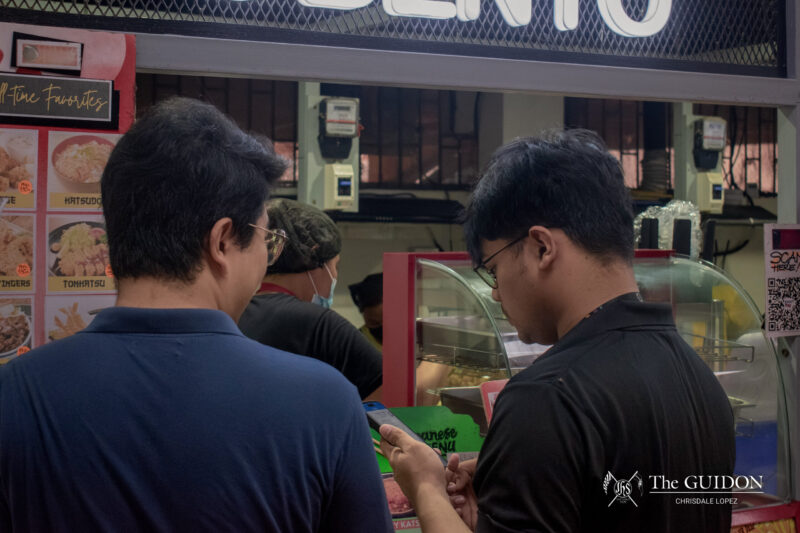
One of the offshoots of the new deposit system for utensils is evident in JSEC: fewer people are frequenting the place to eat. “I feel that some customers are too lazy to return their plates,” says Kalbi Korean Food part-owner Clarke Ng.
All this, for the environment.
In place since last year, the Bring Your Own Baunan (BYOB) system is one of the many initiatives Ateneo formulated to bring environmental awareness directly to its students.
Ng explains that last year was a costly one for JSEC stall owners. Stalls were required to pay for the plates, utensils and cups themselves in compliance with the BYOB scheme. Students, however, had no incentive to take better care of the dining materials used; hence large quantities of dining materials were lost, resulting in greater expenses for stall owners.
Ng says he also noticed a decrease in customers when it was announced that Matteo Ricci’s steps would be a no eating area.
Since the JSEC administration wanted to compensate for the perceived failure of the BYOB system last year, the deposit system was put in place. All the plates, utensils and cups bought by store owners before were bought by the JSEC administration and are now used today in the deposit system. The scheme—adding P15 to the base cost of meals, with a refund upon returning dining materials—envisions making students more attentive and careful with their rented plates and utensils.
Burdensome to the students, the improved BYOB scheme ensured that expenses for stall owners would be reduced to a minimum. Besides discouraging students from being careless with their rented plates, savings were also earned through the use of the administration-provided dishwashers.
Ng’s problem—that is, of students not returning used plates and utensils—is also seen in the Gonzaga Cafeteria, as students who are still unfamiliar with the deposit system just leave their plates on the tables.
Ng’s reaction represents how the other owners feel about the deposit system. He says by forcing students to follow BYOB when they eat in school, this there is a decrease in garbage which they would have had if there was no waste reduction set-up in the first place. The augmented BYOB system, for him, is a step in the right direction, amidst the hassles it causes for diners.
“The BYOB program is a good way to get students [to] be aware of environmental issues that [they] should be doing something about,” Ng says. “Even if it doesn’t change old habits, at least even here in school, it is a good start.”