TODAY, PSYCHOLOGY exists in a limbo where buzzwords like “gaslighting” and “hyperfixation” are integrated into everyday language, while political figures continue to preach that acknowledging mental health is indicative of weakness.
In my four years as a Psychology major, a question has always lingered in my head: Whose mind are we studying?
My friends and I often joke that our field is only for old white men. Well, Freud was most likely not thinking about the desires of enslaved Filipinos when he came up with the id. While the discipline has greatly evolved from its contentious origins, classroom lessons still typically default back to concepts and research rooted in Western, industrialized societies.
For developing countries like the Philippines, the way psychology is discussed—both in the academe and the public sphere—often seems disconnected from the nation’s sociopolitical realities. This may be one of the factors why Gen Zs are more enamored with foreign slang than our own unique cultural sensibilities. Worse, the field’s detachment from the Filipino masses hinders mental health destigmatization.
Bringing psychological education and services closer to the common Filipino remains a challenge without proper institutional support. If mental health remains a mere concept, it is hard to blame less privileged people when they echo harmful notions about it. After all, how can struggles with depression and anxiety resonate when the growls of their families’ stomachs have always been louder than the whispers of their minds?
The issue, then, goes beyond personal ignorance; it is entrenched in systemic gaps both in governance and education.
Across universities, the psychology curriculum follows provisions laid out by the Commission on Higher Education. Despite including “building knowledge on local culture and context” as one of the program outcomes, the memorandum only prescribes one subject focused on Sikolohiyang Pilipino (Filipino Psychology), with most required units allotted for licensure examination courses.
In the Ateneo, Culture and Psychology (PSYC 28) is offered only during senior year, while the first three years of learning psychology are dependent on foreign materials. To the best of their abilities, our professors compensate with localized examples and their own nuanced critiques. However, exploring the indigenous psyche amid a Western-centric approach to human behavior can be quite disorienting.
I am not saying that understanding foundational, well-established concepts is harmful. In fact, much of the progress on therapeutic interventions and psychological research can be credited to studies abroad. I simply hope that this is not where we stop—that we aim to bridge unfamiliar ideas to our own contexts.
Filipinos have minds, struggles, and strengths of our own that are equally valid and deserving of attention. If we truly want a country that recognizes mental health, we must work towards a Psychology that is grounded in our people’s realities and critical of our institutions’ failures.
We deserve a study of the mind and behavior that emanates from and responds to our experiences—more so of the marginalized. We deserve schools, leaders, and systems that are globally attuned but ultimately care for the Filipino body, mind, and life.
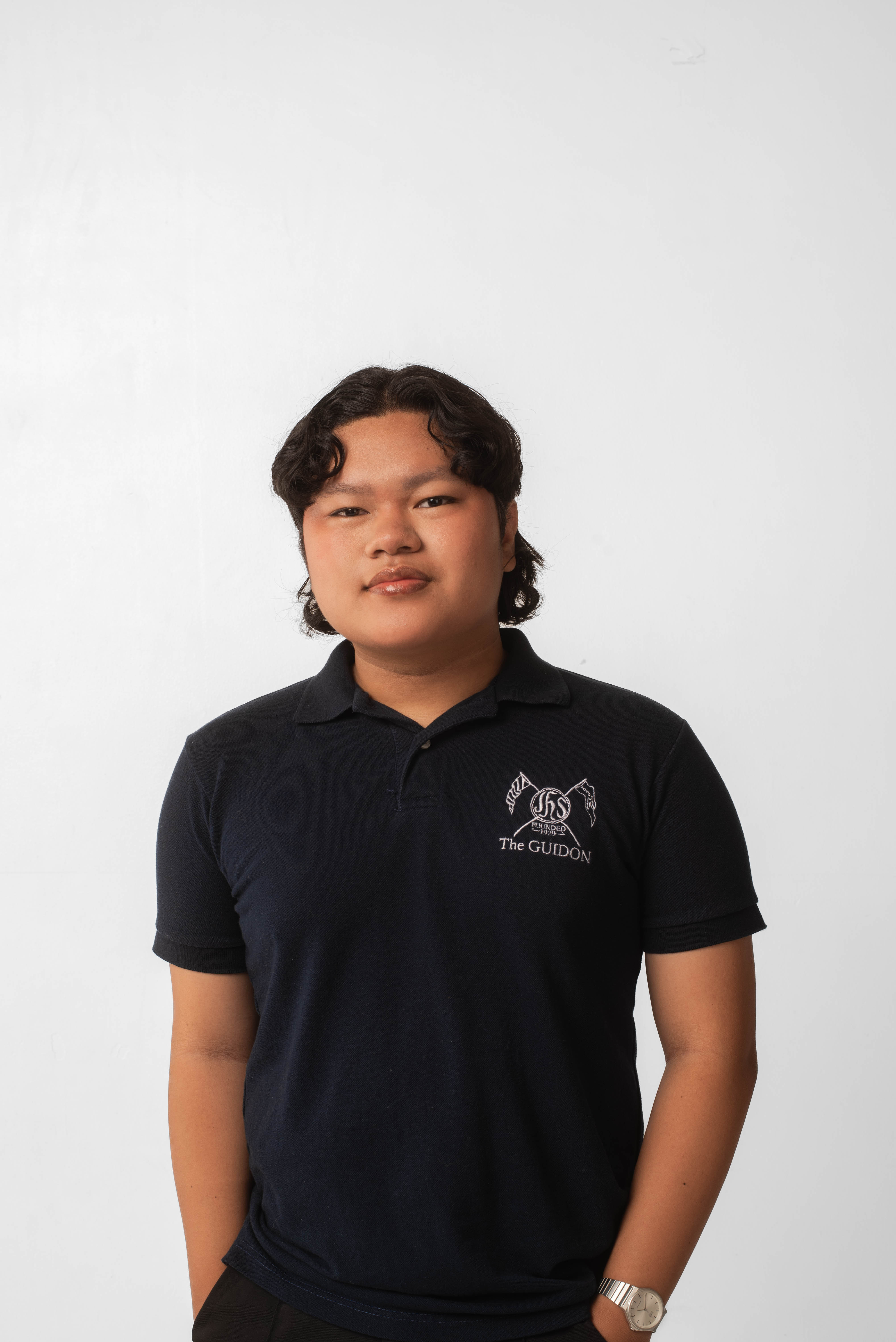
Rozz is an AB Psychology student minoring in English Literature, set to graduate in 2026. With his love for culture and stories, he hopes to craft narratives about forces that shape the lives of people—governance, education, and media.
Editor’s Note: The views and opinions expressed by the opinion writer do not necessarily state or reflect those of the publication.