
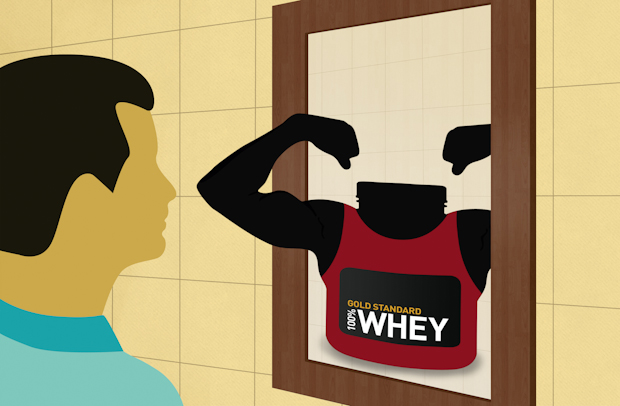
One’s college years are usually a time of exploration and autonomy: a journey of identity, both of the self and the world at large. It is also the time that a great number of individuals put much emphasis on their appearance.
Apart from keeping up with the latest fashion trends, they begin to invest considerable sums of time into looking good without their clothes. Such is done through an active effort to sculpt their bodies. It is an activity encouraged by the growing number of gyms and fitness centers in Manila.
Under pressure
The youth today are under immense pressure to look a certain way: everywhere they turn, they find themselves inundated with images of barely clothed models flaunting the “ideal” body. Sex indeed sells— and the media has taken advantage of this to no end.
Take recent superhero movies, for instance. They all feature stripping leading men, with broad shoulders and chiseled torsos. The sight of these larger than life actors showing off their perfectly sculpted muscles on screen, not to mention hearing their girlfriends swoon, has likely inspired more than a few men to hit the gym. This ideal image, however, is quite often beyond the reach of an average person.
Cultural standards to what an ideal body looks like have grown increasingly pervasive and, to a large extent, become ingrained in the public consciousness.
In a study done by Dr. Harrison Pope, a professor of psychiatry at Harvard who studies the media’s effects on body image, it was shown that over the past decades, the portrayal of the male body has shown it to become increasingly large, lean and muscular. The study also notes a drastic increase in the proportion of undressed men beginning in the 1980s.
Though body issues for men have only recently come to light, the kind of image-based pressure that women face has evolved as well. Criticism of the fashion industry’s emphasis on unnatural thinness that was seen as promoting eating disorders such as anorexia and bulimia seems to have borne fruit. Current trends among women point to an increased priority on muscle tone and firmness that was not present in past generations—and so the quest for muscle has become a gender equal pursuit.
One of the most concrete examples of the pressure exerted on young boys and girls to look the part comes from their action figures and dolls. The changes that these toys, such as G.I. Joe and Barbie, have undergone over time only help in perpetuating notions of the “ideal” body type. These images are meant to depict what ideal bodies should look like, and for easily impressionable children these standards are unquestioningly accepted. The problem is that these depictions have wandered into the realm of the unattainable.
For example, another study by Pope in 1999 found that a G.I. Joe in the ‘60s had an extrapolated arm size of 12.5 inches. In 1994, it was up to 16.4 inches, and then in 1998, G.I. Joe Extreme was introduced—it had an incredible 26.8 inch extrapolated bicep size.
This action figure had reached an arm size that surpassed even that of the world’s largest bodybuilders, such as those who compete in the Mr. Olympia Competition, which was made famous by Arnold Schwarzenegger.
The story is the same with Barbie dolls. Although estimated measurements vary, somewhere around a 39-inch bust, 18-inch waist, and 33-inch hips is what is generally accepted to be close to the proportions of a real-life Barbie doll, and those numbers speak for themselves.
In light of all that, what business do these unrealistic models have in homes and in children’s hands?
Back in the day
The root of why the desire to possess a muscular body is such a powerful impulse can be traced back to our primitive selves. In the days before the rise of civilization, especially in the hunter-gatherer culture, physical prowess was held in the highest esteem. One’s ability to hunt and kill for their next meal was the key to continued survival. In such a Darwinian landscape, and before our enlarged craniums stole the scene, it was truly a game of the survival of the fittest bodies.
Millions of years have hard-wired into our brains a number of visual clues to help identify who would make a good mate and would provide offspring with favorable genetics. This resulted in our unconscious attraction to certain bodily proportions that spoke of strength and virility for men and fertility for women.
For men, a V-shaped physique is the embodiment of physical dominance and is a look that bodybuilders have long recognized as the key indicator of supreme fitness—something they strive to emulate. The image of broad shoulders coupled with a wide chest and a flared back that tapers down to a narrow waist is what characterizes this body shape, made possible by the presence of testosterone.
The contrast between the width of the shoulders and the narrowness of the waist and hips serves to highlight the upper body bulk that denotes brute, physical power and, thus, an ability to provide food and shelter in a harsh and unforgiving environment.
This “Superman” look requires considerable upper body muscular development along with minimal body fat, both of which require hard work and dedication to achieve, not to mention exceptional genetics.
For women, the waist to hip ratio has long been the golden indicator of fertility. A narrow waist accentuates the width of the hips, and this is one sign of the abundance of estrogen, the hormone mainly responsible for feminine characteristics and which directs the body to store fat in the buttocks, hips and thighs. This is also the source of the term “birthing hips,” as wide hips have long been thought to aid in giving birth.
Despite having come a long way from reliance on primarily physical abilities to put food on the table, modern society still carries the hardwiring to seek out these bodily proportions, which continue to greatly influence what we find attractive.
Looking good
The popularity of a vast variety of workout regimens and diets is a clear indicator of how the goal of a perfect body has become a major endeavor for a lot of people. The way in which exercise programs such as P90X and diets such as South Beach have become household names is a testament to society’s preoccupation with getting in shape.
A recent study by Marla E. Eisenberg that was published in the official journal of the American Academy of Pediatrics in November 2012 garnered much attention for its findings, which stated that “the use of muscle-enhancing behaviors [among the youth] is substantially higher than has been previously reported and is cause for concern.”
Eisenberg’s study followed five behaviors: changing eating habits, exercise, using protein powders, steroids and other muscle-enhancing substances. It was found that nearly all the students engaged in at least one of the behaviors in an attempt to increase muscle tone or size, and up to a third reported taking steroids or other muscle-enhancing substances, such as creatine.
These behaviors were more prevalent among those of Asian race, those who were overweight or obese according to their Body Mass Index (BMI), and those who were on a sports team.
With a little help
Diet and exercise have long been regarded as the best ways to get into shape. Recently, however, supplements have come to be widely employed in order to hasten the attainment of a certain bodily goal.
In hindsight, though, do the means really justify the ends? This is one of the major questions plaguing the sports world and one that concerns recreational athletes as well. Steroid use among athletes in many different sports over the years has been well-documented and highly publicized, the most recent being the controversial stripping of Lance Armstrong of his seven Tour de France gold medals.
Though steroid use may be perceived to be the biggest issue among the muscle-enhancing behaviors cited in Eisenberg’s study in pediatrics, what should be problematized more are the readily available and legal supplements. It is easy to think that supplements purchased over the counter are always safe and free from side effects.
However, the problem with many supplements, as stated by many medical authorities, is a lack of regulation. Majority of supplements are not screened or tested by the various food and drug administration bodies. This is because the manufacturer is tasked to prove the safety, purity and testing of the product. Many of the common herbal supplements also have no substantiated health benefits, and the same goes for bodybuilding and athletic performance supplements.
The difference though lies in the much greater health risk that these muscle-related supplements present as opposed to the more innocuous daily vitamins. Dietary supplements do not undergo the same scrutiny that a drug does, which is why a case against dietary supplements must first be made before a product is junked.
Some supplements are routinely pulled from the market due to suspected damage to normal bodily functions, and sometimes even death. Many supplements contain chemical substances that are potentially hazardous to health. Even one of the more commonly accepted supplements, creatine, poses the threat of impaired kidney function with sustained long-term use.
Another added problem is the manner in which many people who work out “stack” a set of supplements, which means that they take different supplements at one time, with different purported benefits and often with a lack of credible testing.
One of the most dangerous misconceptions perpetuated in some bodybuilding forums is that some banned substances can and should still be taken. A number of misguided individuals consider a supplement being banned a mark of its efficacy; they attribute its shelving to misuse by a handful of careless people, which they believe is indicative of its potency.
Thus, there is still a market for these banned products, and they can still be purchased from many retailers. The danger here stems from ignorance or abuse, which can be on the part of the seller or the buyer: retailers are either ignorant about the legal and medical status of a supplement, or continue to sell these supplements despite their knowledge. The buyers, in turn, either don’t value the fact that these substances are banned, or simply don’t know that it has been recognized by the medical community as potentially harmful.
However, this does not mean that supplements should be shunned offhand, as some have been shown to be quite safe. Whey protein, for example, is a natural by-product in making cheese. It is said that whey is the most easily absorbable form of protein, and has no documented adverse effects aside from it being unsuitable for consumption by those who are lactose-intolerant.
Eisenberg’s study asserts that protein powders should be considered apart from the more extreme type of supplements. Regardless, what is called for is greater awareness regarding the possible detrimental effects of supplements, as this will allow for informed choices regarding one’s health.
Showing cracks
The mounting pressure to meet the often impossible bodily standards has begun to take its toll on many of the youth. Excessive and obsessive physique-related behavior among the youth has begun to be a major cause of concern for the medical community. Body dysmorphic disorders are among the more serious problems that may result from the stress of keeping up with society’s standards.
The study in pediatrics found that “boys’ body dissatisfaction has simultaneously increased, and research has demonstrated that exposure to images of extremely muscular models contributes to body dissatisfaction and muscle dysmorphia in young men.” The phenomenon of muscle dysmorphia, known as the Adonis Complex, is a disorder wherein the person is obsessed with the idea that he is not muscular enough. It is also known as reverse anorexia, or colloquially as “bigorexia.”
Junior management engineering major Robert Abaño has experienced a few of the symptoms. “I went through a meathead phase where I just wanted to get bigger and bigger, like the professional bodybuilders.”
Luckily for him, he didn’t end up trapped in that hopeless venture. “Afterwards, I noticed that my genetics were not up for that, so right now I’m content with just being lean and having basic muscle tone.”
On the plus side
“Although it is appropriate to promote physical activity in youth, which may have desirable benefits in terms of health and body composition, care should be taken to emphasize moderation in behaviors and to focus on skill development, fitness, and general health rather than development of a muscular appearance,” stresses Eisenberg.
RJ Adalem, another management engineering junior, says, “Lifting weights gives me a certain high that I can’t get from any other activity. Of course, the aesthetic appeal is a plus. I think it’s normal for many people our age to put a premium on looking good, regardless of their gender. However, that shouldn’t be your only reason if you want to seriously lift weights.”
Abaño agrees. “Functionality is important for me as well.” The two espouse the benefits of lifting weights and working out as beneficial apart from the aesthetic element.
“I believe that the more valuable benefits are the intangibles. I lift weights to release endorphins, which cause me to feel good afterwards. Aside from this, it serves as an emotional outlet and stress release, two much-needed factors for teenagers like myself,” shares Abaño.
“It’s a great way to bring up your confidence and to develop invaluable traits such as hard work and commitment,” Adalem adds.
Abaño sums it up when he says, “Personally, I believe that as long as you feel good about yourself, then there is no need to obsess over the six-pack-with-sex-cuts-and-bulging-biceps image that society imposes on men.”
Body language
Individuals who consume bodybuilding supplements on a regular basis are more or less familiar with these substances that they constantly put in their bodies.
Research by the Inquiry Staff
Illustration by Shanice A. Garcia
Source: www.muscleandstrength.com
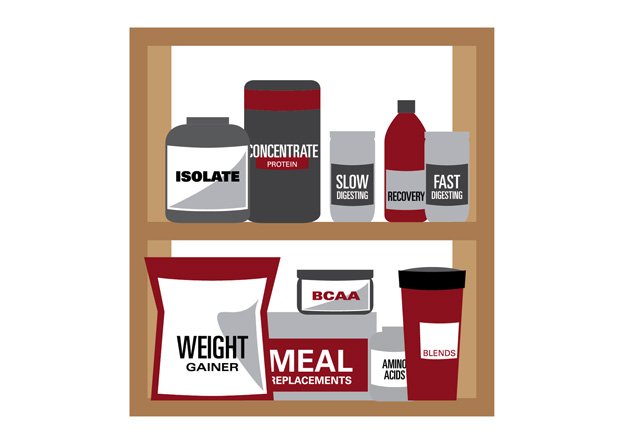
Isolate. An isolated protein source is one that has been chemically purified to remove most everything other than the actual protein source. Generally, isolates are 90%+ pure protein.
Concentrate. A concentrated protein source is not as pure as an isolate, and generally contains 70 to 85% of the protein source. Concentrates contain more fats, carbohydrates and, in the case of whey protein, more lactose.
Blends. A protein blend is a combination of various protein sources and purity levels. A blend can be more cost effective then a pure isolate, and can also offer the benefit of having both fast digesting and slow digesting protein sources.
Amino acids. Amino acids are the building blocks of protein. While there are over 100 total amino acids, only 20 amino acids are considered standard. These standard amino acids are separated into two categories: essential and non-essential amino acids. Essential amino acids cannot be created in the human body, and must be obtained from food. Non-essential amino acids can be synthesized, or created, in the human body.
BCAA. Branched chain amino acids, also called BCAA, is a term that refers to a chain of the three essential amino acids leucine, isoleucine and valine. The combination of these three essential amino acids make up over one-third of the skeletal muscle in the body, and play a vital role in protein synthesis.
Weight gainer. Weight gainers are high calorie protein powders meant to assist bodybuilders and athletes who are in need of rapid weight gain. They can be used as meals on the go, or in between meals as a means of adding extra daily calories.
Meal replacements. Meal replacement protein products are considered to be entire meals in and of themselves. They contain a formulated nutritional and macronutrient blend that provides not only enough protein, but also an appropriate amount of carbohydrates, healthy fats and vitamins and minerals.
Recovery. A recovery blend is a protein supplement that contains any number of additional, non-protein supplement products meant to aid in post-workout recovery. These supplements range from creatine to multivitamin and minerals, and larger doses of glutamine and taurine.
Slow digesting. A slow digesting protein source provides a long term stream of protein and amino acids, meant to assist in keeping a positive nitrogen balance for longer periods of times. A slow digesting protein is a great choice for in between meals.
Fast digesting. A fast digesting protein source, such as whey protein, acts quickly to help regulate bodily nitrogen levels, especially after periods of fasting. A fast digesting protein is also beneficial as a post-workout protein source.