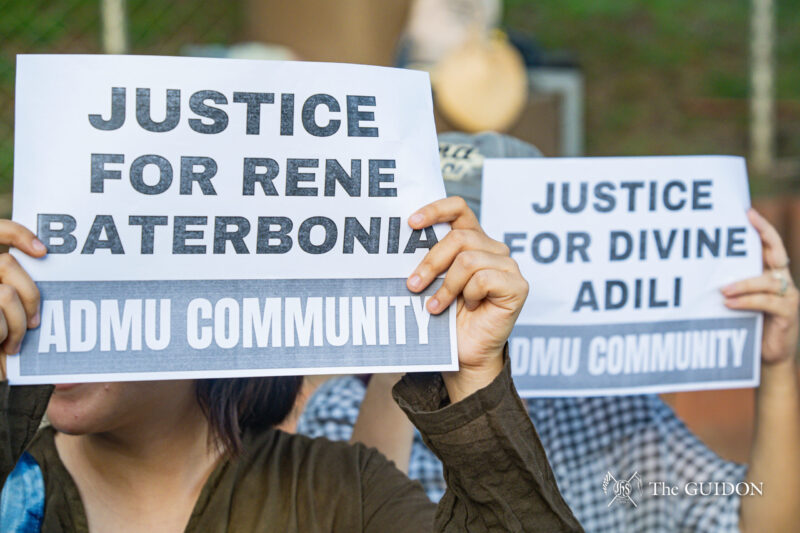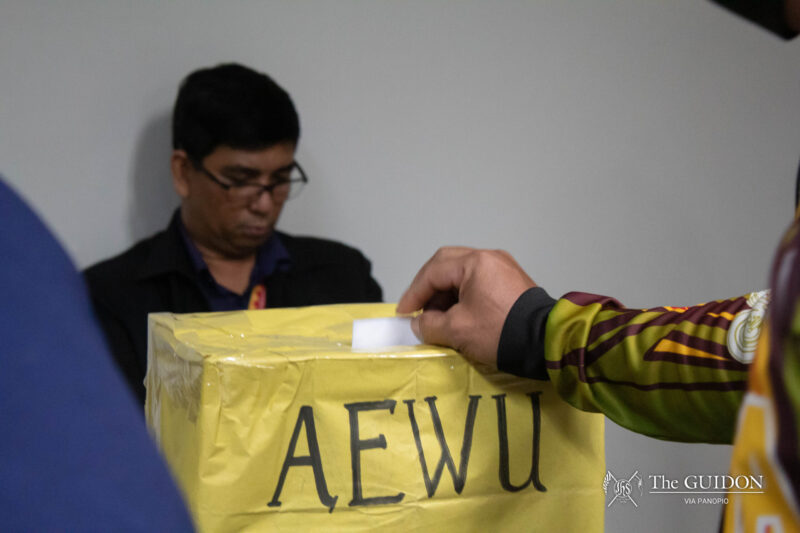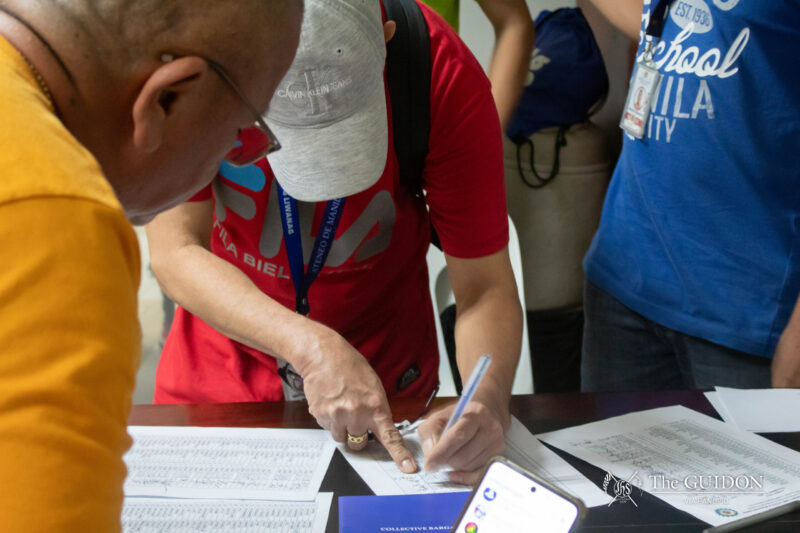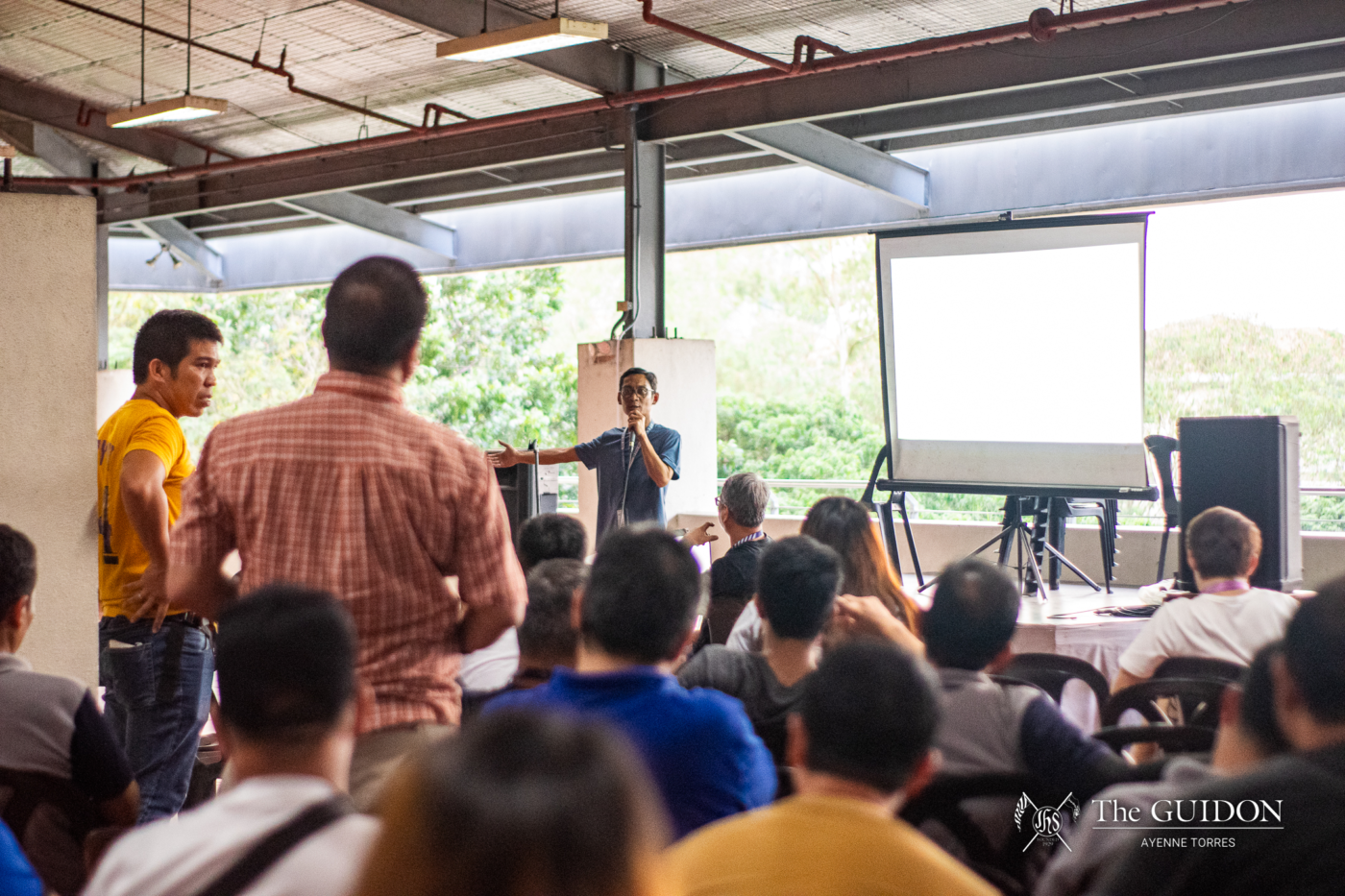
IN A 52-page decision dated March 25, the National Labor Relations Commission (NLRC) ordered the University to compensate 65 illegally suspended Ateneo Employees and Workers Union (AEWU) officers and members. In the same decision, the NLRC concurrently dismissed the Union’s unfair labor practices (ULP) complaint against the Ateneo and upheld the work rotation program (WRP) of the University as valid.
These decisions came after the Department of Labor and Employment assumed jurisdiction over the dispute, stopping AEWU’s impending strike last December 2025 and referring the case to the NLRC for mandatory arbitration.
As of writing, both AEWU and the administration filed separate motions for partial reconsideration, with the University stating that it “respectfully disagrees” with the ruling on illegal suspensions. Likewise, AEWU President Raymond Tano said that while the Union respects the NLRC’s decision, it is not yet final and executory.
Even with both parties filing these motions, the NLRC maintained their positions to dismiss the Union’s ULP allegations against the University and validate Ateneo’s WRP through an April 30 resolution. Similarly, they denied the University’s motion for reconsideration “for lack of merit.”
“The Court reiterates that while jurisprudence recognizes management’s prerogative to discipline its employees, the exercise of this prerogative should at all times be reasonable and […] tempered with compassion and understanding,” NLRC expounded in the resolution.
This labor dispute developed after AEWU filed a notice of strike on October 23, 2025 over alleged ULP by the University administration. These alleged practices included mass suspensions, violation of the 2024–2029 Collective Bargaining Agreement (CBA), and lack of consultation on the WRP.
On unfair labor practices
Explaining the dismissal of ULP allegations, the NLRC stated that the Union failed to present substantial evidence proving that the University interfered with employees’ rights to self-organization or violated the CBA—the main grounds of AEWU’s claims.
The commission emphasized that the WRP remains valid since it was not “unreasonable or oppressive” and it falls under the University’s management prerogatives in the CBA, particularly regarding employee reassignment and policy implementation.
Meanwhile, the rollout of the WRP in 2024—which the University claimed to improve workforce flexibility—was criticized by the Union for lacking meaningful consultation. The AEWU added that it violates the CBA’s provision on the Union’s rights to “participate in decision-making and policymaking processes.”
However, the NLRC maintained that while the CBA recognizes the Union’s right to take part in these processes, such participation is limited to matters that directly affect employees’ rights, benefits, health, and welfare.
With this clarification, the commission ruled that the implementation of area rotation does not fall within these categories, and instead relates to the University’s authority to implement area rotation as recognized under the CBA.
The commission further specified that while employees have security of tenure, this does not grant them a vested right to a specific position, and that University management may regulate work assignments within lawful bounds.
Further explaining the validity of WRP, the NLRC found that the program complied with established “jurisprudential guidelines” on the transfer of employees, as it “merely involved a transfer from one area within the University to another area without change in rank, level, and salary or a break in service.”
The NLRC also noted that the Ateneo conducted consultations and dialogues months before the WRP’s implementation. As per the commission, this counters AEWU’s claims of malice or arbitrariness in the University’s exercise of management prerogative.
Despite these rulings, Tano maintained that the Union remains firm in their stance regarding the ULP allegations and the WRP.
Suspensions in review
From previous developments of this dispute, 30 Ateneo employees were given warnings or penalized with one-day suspensions for alleged acts of loitering, holding unauthorized meetings, and attending to personal matters during work hours on September 5, 2025–days before the WRP implementation.
In the same incident, the NLRC further noted that seven union officers received varying suspension periods, depending on the gravity of the charges against them.
However, the NLRC pointed out that the University relied heavily on CCTV footage without other supporting evidence to fully establish the charges. Moreover, they highlighted that under the Employee Code of Discipline, the committed infractions are not punishable by suspension, but only by a written reprimand.
In line with this, the NLRC ruled that penalized employees must be compensated for a day’s worth of their salary due to having served an unjustified suspension.
Meanwhile, on the September 9, 2025 incident, the NLRC’s decision explained that 49 union members and officers were suspended for six days over alleged failure to comply with transfer orders related to the WRP, with AEWU President Tano in particular receiving a 16-day suspension. The University imposed these penalties for alleged infractions of sabotage, insubordination, and willful disobedience by the charged employees.
However, upon reviewing these charges, the NLRC held that the suspensions on union officers and members for alleged violations of the WRP were “not commensurate” with the offenses committed.
While the commission recognized that the employees’ intentionally reported to their original work assignments on September 9, 2025 despite having received transfer orders beforehand, NLRC held that the acts are far from being “wrongful and perverse,” a requisite under Supreme Court ruling on what constitutes insubordination and willful disobedience.
As a result, while the commission denied the Union’s claims for moral and exemplary damages due to lack of bad faith or oppressive conduct by the University, they ordered the University to pay the affected employees’ wages for the period of their suspension, as well as cover their attorney’s fees, recognizing that the employees had to take legal action to protect their rights.
After the ruling
Following the decision of the NLRC, both AEWU and the administration acknowledged the ruling while maintaining their respective positions.
On the side of AEWU, Tano explained that while they respect the ruling, the Union sees the need for further review on certain issues, especially on the implementation of the WRP.
Similarly, the University’s statement maintains that the disciplinary measures were appropriate and consistent with its management prerogative under the CBA. Hence, they plan to also pursue legal remedies to seek reconsideration on this matter.
Despite this dispute, Tano emphasized that AEWU remains civil in its relationship with the University, stressing that legal action was pursued after both sides were unable to reconcile their respective positions. He added that the Union remains open to dialogue until appropriate remedies have been exhausted.
The GUIDON also reached out to University Marketing and Communications Office Director Maria Teresa Villanueva and University Human Resource Vice President Maria Victoria Cortez, PhD via email to ask for further context of the University’s position.
Both referred The GUIDON to the University’s official statement and opted not to provide further comments as they wait for the resolution of the University’s motion for reconsideration. Villanueva also said that the University will issue an official statement once the resolution has been released. As of writing, no statement has been released yet.
Editor’s Note: This is a developing story.