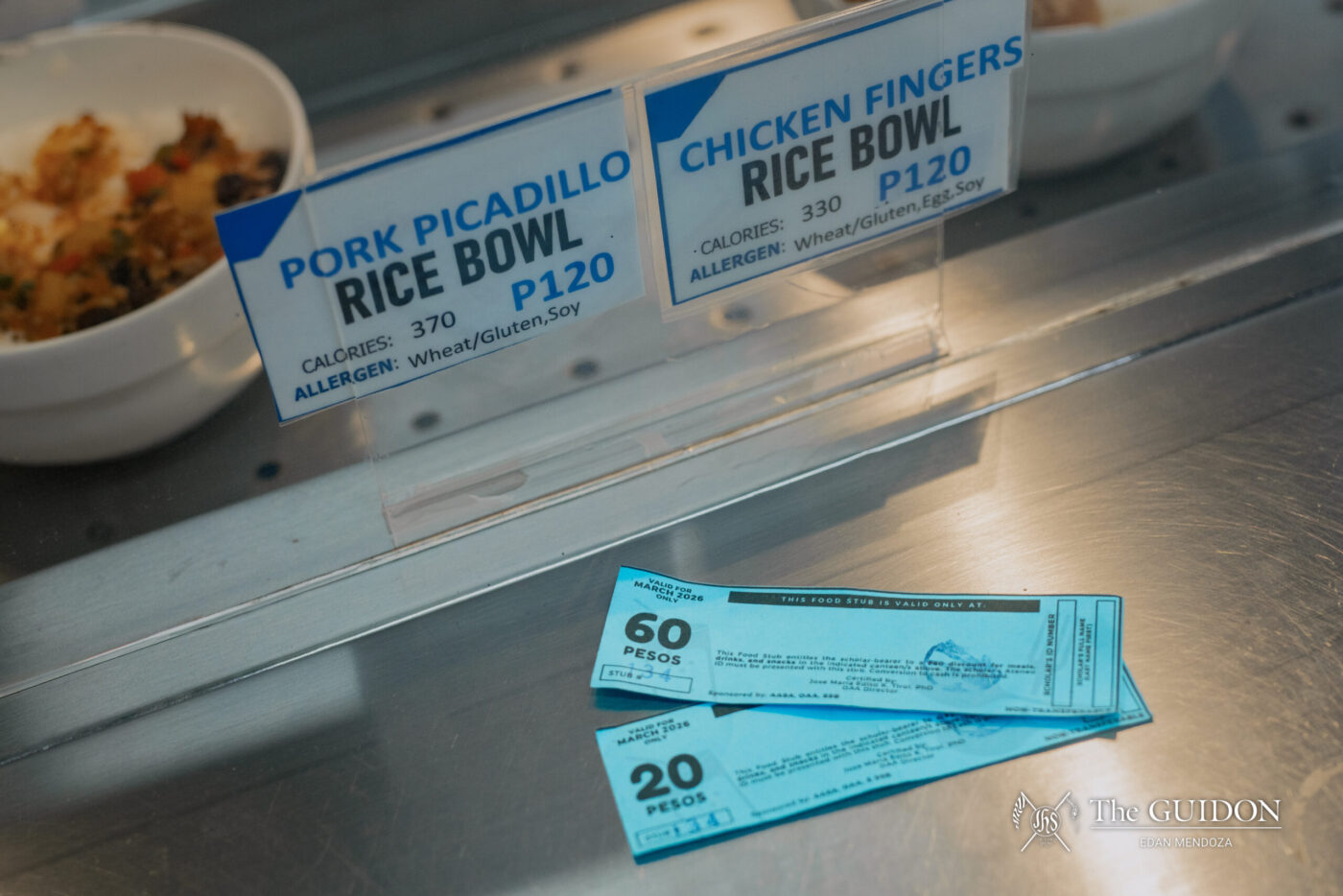
AS FOOD insecurity persists among scholars, the Scholars’ Sectoral Board (SSB) passed an act that mandates semestral funding for food stubs in the Central Assembly.
This measure followed an SSB study held in October 2025, which revealed that 70.3% of surveyed scholars “worry” about having money for food, and that financial-aid scholars, freshmen, and on-campus dormers are “most affected” by food insecurity.
With this act, the Sanggunian must approve at least 8% of its Student Activities Fund to ensure consistent food stub distribution during the first and second semesters.
‘A silent reality’
Beyond financial struggles, SSB Legislative Affairs Officer Aly Arididon shared that food insecurity has been “a silent reality” scholars are “expected” to cope with.
This reality is reflected in the SSB’s report, which found that scholars manage hunger through strategies such as eating once a day, sleeping through hunger, and attending student organizations’ events for free food.
The study also revealed that 51.6% of scholars trade off necessities, like transportation, for food several times a month.
Scholars’ Sector Representative Hxyll Almonguera explained that scholars’ struggles “deeply manifest” in their academic performance.
As such, SSB Legislative Affairs Officer Vam Vivar noted that the bill seeks to expand access to the SSB’s food stubs, which provide food support regardless of scholarship type.
Meanwhile, the Office of Admission and Aid’s (OAA) food stubs prioritize 100% financial-aid scholars without food allowances, while any remaining stubs are made available for other scholars during a free-for-all period.
Once the act takes effect, Arididon said that the OAA will initially shoulder the SSB’s share of monthly food stubs, but the Sanggunian Department of Budget and Management must reimburse the OAA within the semester.
This arrangement aims to address “slow” disbursements that result in fewer scholars receiving food support throughout the semester.
Institutional support
Apart from providing food stubs, the OAA launched the SCHOmmunity Pantry, which provides snacks to at least 70 scholars daily since March through donations from the Ateneo community.
Additionally, the OAA grants food allowances based on the income of the scholar’s family. Arididon, however, noted that the allowance has other “stringent criteria” due to the office’s limited budget.
“[The institutional support is] present and there are a lot of platforms that scholars could tap into. However, the limitation really lies on these institutional supports not being able to suffice for all of the scholars […] in Ateneo,” she remarked.
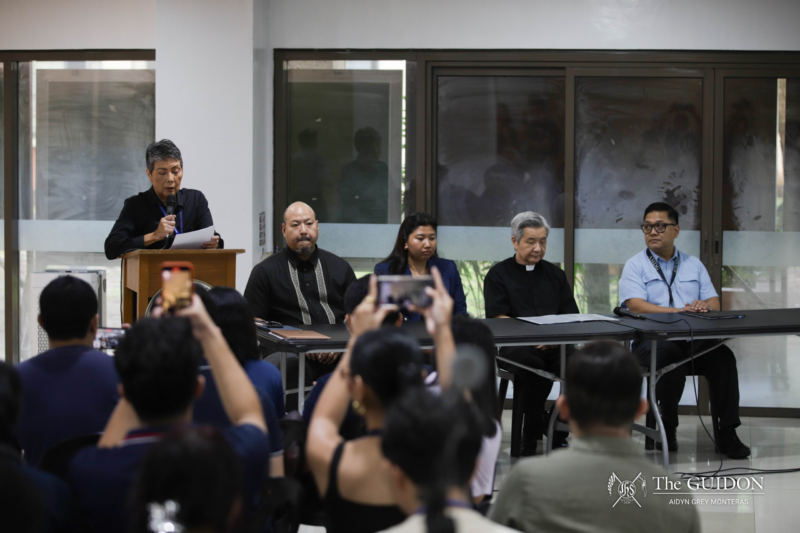
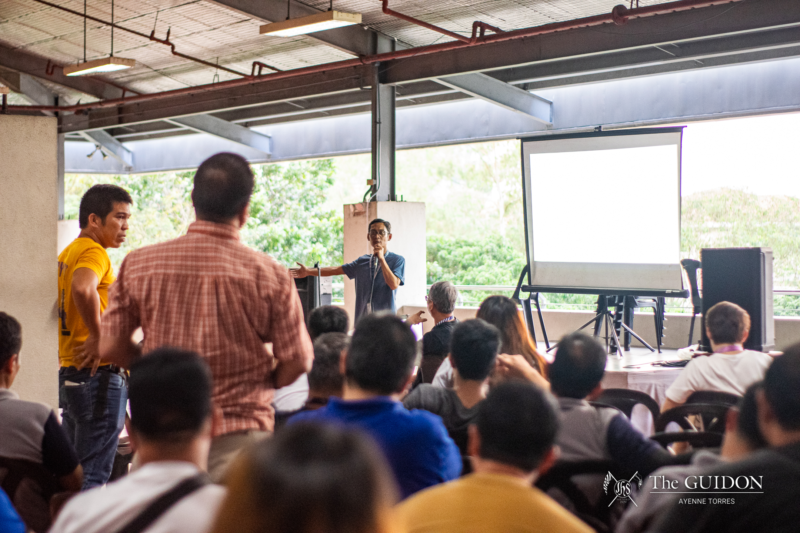
In an April 14 town hall, OAA Scholarship and Financial Aid Head Christine Magboo shared that the office currently cannot increase the value of food stubs or help ease the cost of meals on campus due to budget constraints.
To address these constraints, she added that the OAA will hold another ukay-ukay fundraiser for food allowances in January 2027. Notably, the 2025 iteration of the fundraiser secured around Php 700,000 for food subsidies and tuition scholarships.
Regarding the bill, Almonguera said that the SSB consulted the OAA on the provisions of the act in a courtesy call, adding that they were “on the same page […] regarding the direction of the bill.”
Towards food security
Among scholars, Vivar shared that the bill has received a “generally positive response,” noting that the SSB anchored the bill on surveys and focus group discussions held for their study.
She also expressed hope that the bill continues to support scholars, because 7% of scholars reported that food stubs fully cover their monthly food needs, drawing from the SSB survey.
However, Adrian Sean Caminong (3 BS CH-MSE), a Magis Scholar, pointed out that food support systems are a “temporary solution” for food insecurity in the Ateneo, mentioning that these initiatives fail to address a “systemic gap” due to inconsistent availability and varying eligibility.
Caminong added that scholars still struggle to balance their academic responsibilities and daily needs, stressing that food insecurity must be understood as a structural issue rather than an individual failing.
In response, Almonguera said the bill aims to create a more efficient and accountable system for food stub disbursement in the Sanggunian. Vivar further noted that this bill is currently the “most direct way” the SSB can ensure the food stubs budget does not fluctuate every semester.
Beyond accessibility, Arididon hopes the bill will reduce the “judgment” scholars feel when availing food assistance, helping lessen the shame of being treated differently.
Additionally, Caminong urges the Ateneo administration to implement broader structural reforms beyond food stubs by establishing stronger support systems, such as institutionalized food assistance for scholars.
Ultimately, the SSB aims to target future legislative agendas towards root causes of food insecurity among scholars, including rising food prices on campus, to ensure the sustainability of their efforts for affordability.