

Cross-clarity
Language makes the world go round, as it is the very essence of different perceptions and the norms of interaction.
In the local level, whether you look at language as a fundamental tool of communication or as a component of national identity, the intersecting functions of English and Filipino remain to be a highly debatable topic.
Look at the amount of controversy spurred by James Soriano’s column on the matter. Much to the dismay of a lot of people, he acknowledges that there is a distinct divide of identity between the two languages. It may be a harsh assertion, but it does mirror a cause-and-effect reality in the Philippines’ current situation.
Cause: the Philippines has one of, if not the, highest rates of English-speaking citizens in Asia.
Effect: This sole skill is the gateway of many Filipinos to securing jobs abroad, where a significant portion of our country’s economic remittances lies.
My thesis partner and I both come from expatriate families, and we’ve spent majority of our lives abroad. So when we had to go up to random strangers in different barangays to ask them to answer the surveys we made for our thesis data-gathering, it was an opportunity for us to exercise our limited Tagalog skills beyond our comfort zones.
It became routine to approach them with a hopeful smile and a heavily accented greeting: “Hi kuya/ate! Pwede po mag-fill-up survey to? Para sa thesis namin po.’’
I would wait in silence as they answered our surveys. As much as I wanted to initiate small talk or to respond to their comments on our thesis topic, my mind could not formulate simple Tagalog sentences in time, so I just nodded back in agreement or replied in a very brief manner.
After the whole experience, I can honestly say that my inability to coherently speak the language spoken by a majority of the nation’s population is disheartening.
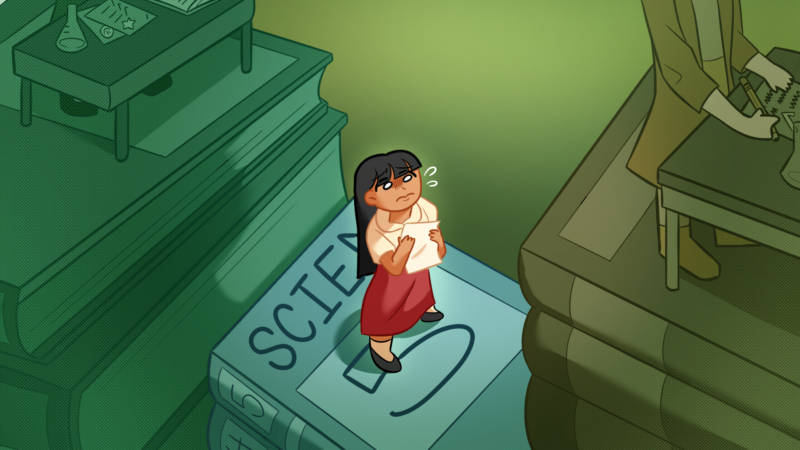
This sense of disconnectedness and inexplicable divide is an ongoing social phenomenon that many third culture kids undergo when they go back to their own countries after being exposed to a different environment. In my case, you can blame either my being too self-conscious, or my tendency to resort to English because there’s a genuine sense of ease that accompanies it, for the lack of a better term.
As a communication senior graduating this year, I don’t regard this as an advantage whatsoever, especially in my chosen career path. This divide, which hinders me from communicating more effectively in Filipino, is something that I continue to struggle with. I do believe English and Filipino should coexist, and that learning Filipino is just as important as learning English. More than that, however, this goes beyond practical matters, since Filipino is a fundamental aspect of our nation’s identity that should bind us as a nation, regardless of the status quo.
It’s inevitable that a strong background in English is the passport to more job opportunities, but it’s another thing to say that you’re a Filipino but you can’t speak the national language.
Now this whole piece doesn’t have the same ring to it compared to how this would have sounded in Filipino, does it?






[…] an original title of a Led Zeppelin song, but it was also the title of my second column. I wrote about my personal experience that opened my eyes on the whole third-culture concept, which […]