GRASSROOTS PROGRAMS are the pipeline to the sporting world, providing opportunities for many promising athletes to showcase their talents at the highest levels.
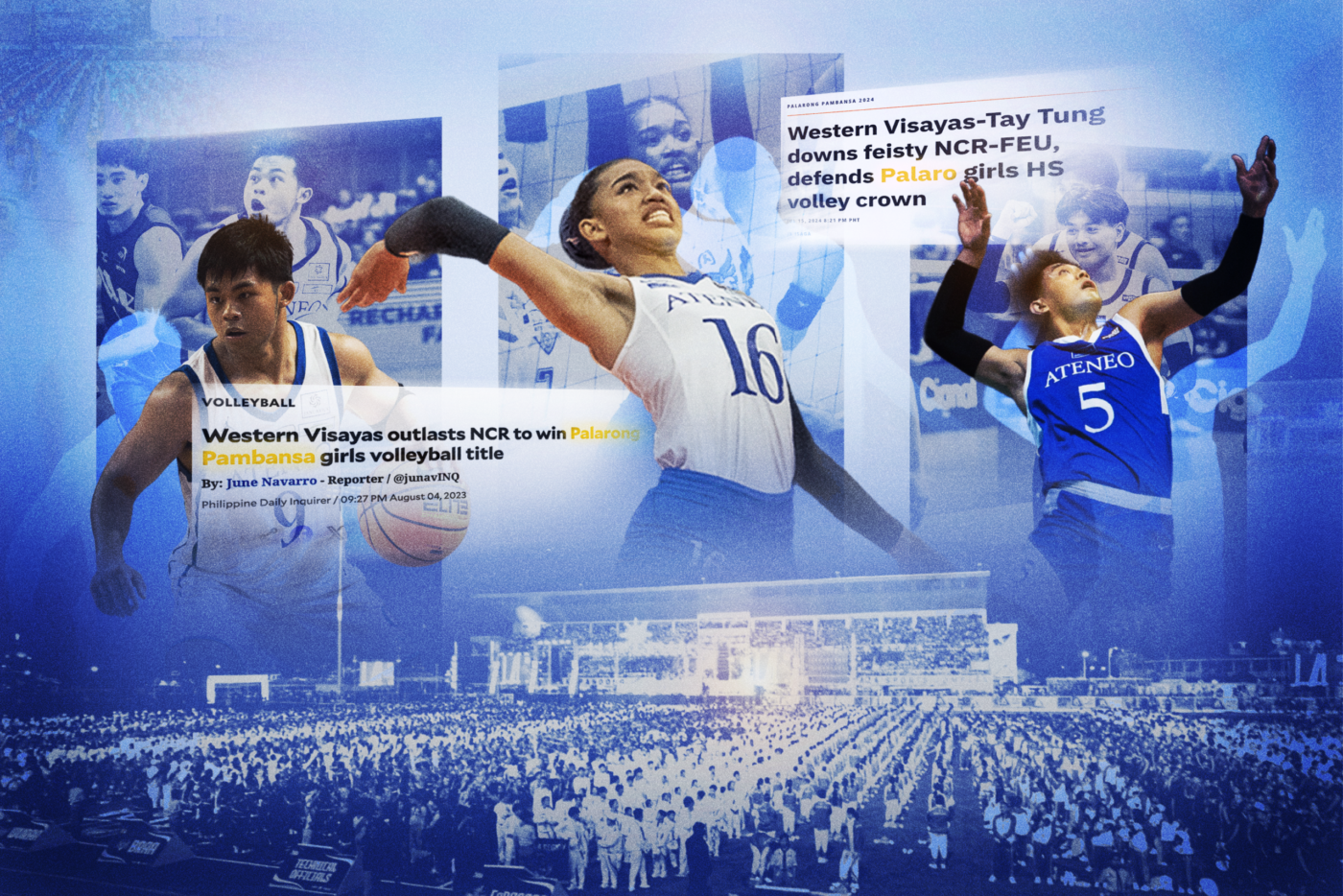
In the Philippines, one of the biggest stages for these young athletes is the Palarong Pambansa, an event that brings together the best from the country’s 17 regions in the spirit of competition and camaraderie.
Over the years, coverage of the Palaro has been steadily evolving, especially in an increasingly digital world, highlighting athletes outside Luzon after breakthrough performances. With added coverage of grassroots sports in the Philippines, the country’s youth sporting scene is poised for a long-overdue moment in the spotlight, showing that sporting excellence can come from anywhere.
Insular domains
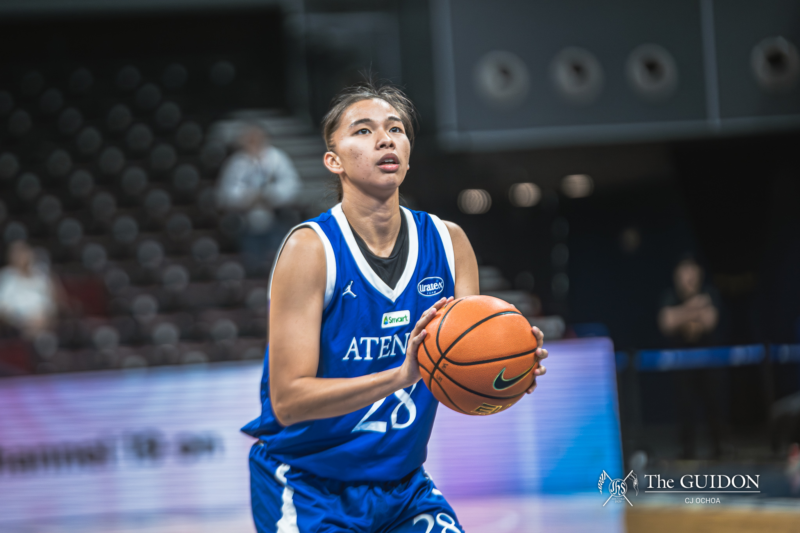
Ateneo has become a second home for athletes coming from all corners of the Philippines. From Cebu native Jared Bahay leading the Ateneo Men’s Basketball Team, to Bacolod’s Dona De Leon and Isabela’s Kennedy Batas making their mark for their respective Volleyball Teams, the Blue Eagles hail from all over the country.
Yet, for many of these athletes, being discovered was never a guarantee. For some, the journey to Ateneo first passed through the Palarong Pambansa—one of the country’s oldest tournaments.
Throughout the 2000s and early 2010s, coverage of the Palaro was often limited to local outlets, such as SunStar Publishing, and a small number of national media organizations. Coupled with unclear restrictions that have stood in the way of journalists and media alike, the event stayed largely absent from the broader Philippine sports conversation.
This landscape, however, gradually began to shift. As the Palaro entered the sphere of social media and the digital world, so did its reality slowly begin to change.
With livestreams, highlight reels, and wider online coverage growing increasingly common in recent years, the event has become much more than just another competition. Rather, it has turned into a stepping stone for athletes to achieve their goal of showcasing their skills in the best collegiate league in the nation—the University Athletic Association of the Philippines.
Such was the case for Ateneo Women’s Volleyball prized rookie De Leon, whose journey through the Palarong Pambansa prepared her for the collegiate level.
Hailing from a Visayas region that had rarely found success in the Palarong Pambansa, De Leon became a pillar in the region’s first-ever championship. “The comments of other people were that the Visayas region wasn’t strong enough, and [winning the championship] was a great experience for me because we built history in Visayas,” she shared.
Stories like De Leon’s have become a defining feature of the Palaro as the tournament steadily finds its place in the digital landscape. Success in an athlete’s career often depends on both talent and exposure, and with the increased media attention surrounding the Palaro, athletes are now able to showcase themselves beyond their regions.
Casting a wide net
With the dawn of social media, the Palaro’s coverage has further solidified, following the integration of live streaming and digital game statistics starting in the 2024 edition in Cebu. Furthermore, the proliferation of highlight reels on platforms like TikTok has also benefited these athletes.
“The way [different individuals and outlets covered] the games last year, [since they covered] all the teams, [it] boost[ed] the confidence of other players,” De Leon said in Filipino.
She opined that the increased coverage is also beneficial in growing their respective sports, noting from her experience that the Palaro’s regional coverage brought more fans to the future of Philippine volleyball, thereby increasing fan support.
Additionally, Rappler writer Delfin Dioquino stated that they have always taken the Palaro seriously and that the coverage has served as a platform to highlight the stars of tomorrow, citing Olympic gold medalist Carlos Yulo’s journey.
The greater spotlight on the Palaro has proven beneficial in a practical sense, providing opportunities not only for their athletic careers but also for their academic endeavors through scholarships.
“Yung mga young athletes sa iba’t-ibang province, they also want to get scholarships para makapag-aral, para magkaroon ng mas malaking exposure when it comes to their athletic careers,” Dioquino explained.
(The athletes from different provinces, they also want to get scholarships to study, to have bigger exposure when it comes to their athletic careers).
As the Palaro continues to gain more traction in the national consciousness, more is to come as it becomes the land of opportunity for young Filipino athletes.
Bright future
Despite its initial struggle to gain any sense of spotlight, the Palaro’s growing online presence spells not only a bright future for Filipino sports and athletes, but also for the families and communities that these athletes represent.
With their performances now being viewed across multiple platforms, athletes are now being seen by coaches, scouts, and institutions across the country. By providing increased coverage to the grassroots level of Philippine sports, athletes are no longer just playing for the love of the game, but instead, to change their lives.
As emphasized by Dioquino, the stories that surround these athletes reflect the larger realities of Philippine sports. Athletes are no longer fighting for themselves and their careers; instead, they look at these opportunities as a means for their families and for the country.
With this renewed attention to the Palarong Pambansa, it opens the door not only for the continued rise of the Palaro, but also for the continued development of young athletes for their future careers. Should this surge in coverage be sustained, talent from all parts of the country will soon find themselves with opportunities they may have never thought possible.
“It’s the role of the media to give [the athletes] exposure, tell their stories truthfully and honestly, so that they can be known, and lead them to opportunities that would help them better their lives and better themselves,” Dioquino expressed.With the Palarong Pambansa slated to begin in the last week of May, all eyes look to the next pool of talent that will banner their individual regions. Guided by the motto of “Discipline, Teamwork, and Excellence” that has been the battle cry throughout the tournament’s existence, the Palaro is once again ready to make some noise—one that is sure to catch the attention of every Filipino sports fan.