WEAK INTELLECTUAL Property (IP) systems risk the Philippines’ biodiversity and traditional resources to foreign exploitation, often at the expense of indigenous and local communities that preserved them for generations.
Despite the adoption of the Nagoya Protocol and the World Intellectual Property Organization (WIPO) Treaty on Intellectual Property, Genetic Resources and Associated Traditional Knowledge (GRATK), the country’s ineffective regulatory enforcement leaves the nation’s environmental, economic, and cultural interests vulnerable to biopiracy and exploitation.
Loopholes in nature
Biopiracy refers to the extraction and commercialization of biological and indigenous knowledge without equitable benefit-sharing, highlighting the role of intellectual property (IP) systems in protecting ecological resources. These IP systems, commonly defined as “creations of the mind,” grant holders exclusive rights and control over inventions and creative work while requiring disclosure in exchange for protection.
According to former director general of the Intellectual Property Office of the Philippines (IPOPHL) Josephine Santiago, LL.M., disclosure is a vital instrument in managing intellectual property. She further explains that disclosure allows individuals to build on the world’s existing body of knowledge.
Traditional mechanisms such as patents, trademarks, and copyrights grant IP holders exclusive rights to an invention or idea, creating a legal monopoly. However, Santiago highlighted that IP governance extends beyond protection, as it should also ensure such creations are used for the common good.
Despite these protections, gaps in implementation enable biopiracy, appropriating culturally significant resources and leaving behind indigenous and local communities in the larger scheme of globalization.
In the Philippines, Indigenous communities have utilized local plants as part of their health care practices, with more than 1,600 plant species documented to be used in traditional medicine. For instance, Banaba has long been used as a treatment for fever and diabetes in the Cordilleras, but its anti-diabetic properties were patented by Japanese company Itoen KK.
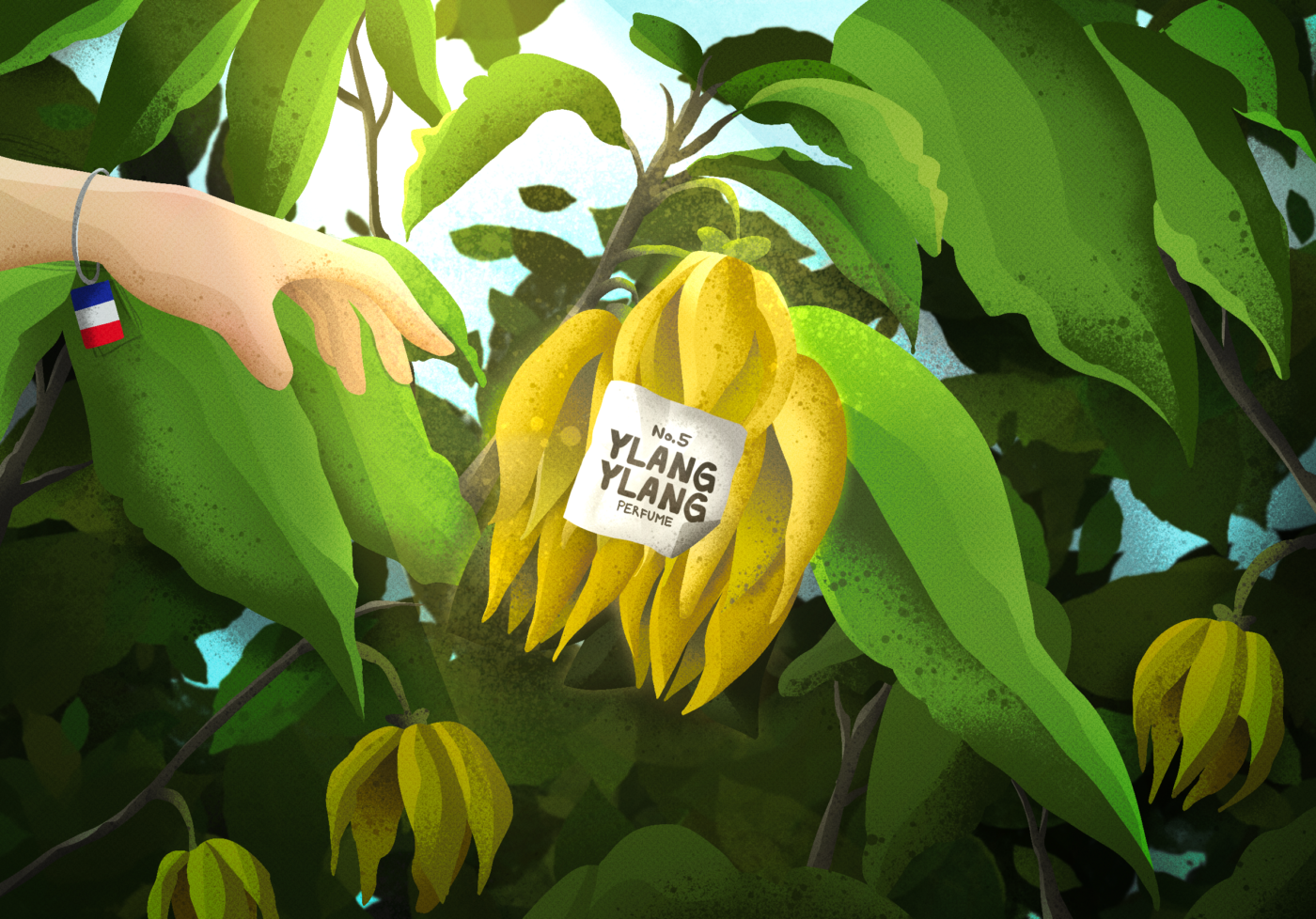
In the 1990s, the United States drug maker Neurex Inc. patented a painkiller called Ziconotide (SNX 111), developed from the native Conus magus in Palawan. Meanwhile, Yves Saint Laurent is popularly said to have secured a patent for a perfume formula based on the ylang-ylang flower (Cananga odorata), after years of using flowers imported from the Philippines for perfume manufacturing.
These cases point to the Philippines as a prime target for commercial exploitation and biopiracy, leaving indigenous communities unrecognized as the rightful owners and stewards of heritage.
IP for IP
As a signatory of the Nagoya Protocol since 2015, the Philippines has developed a number of laws and regulations designed to enforce the treaty’s goals of fair and equitable access to genetic resources.
In 2016, IPOPHL and the National Commission on Indigenous Peoples (NCIP) issued a joint order, requiring the disclosure of Indigenous Knowledge, Systems, and Practices (IKSP) in patent filings.
With the slogan “IP for IP (Intellectual Property for Indigenous People),” the new set of procedures has given traditional knowledge legal weight in the evaluation process of patents.
“IPOPHL will have to alert NCIP to check whether there have been agreements, consent, [and] benefit-sharing arrangements [with indigenous communities]. If the invention is granted, [and] commercialized, royalties would have to be flowed back to the community,” Santiago explained.
In line with the joint order, the NCIP established a registry of IKSP to cross-check patent applications and block the ones that contributed similar ideas.
To further build on these efforts, the WIPO Treaty on GRATK became effective in 2024, requiring all patent holders to disclose their innovation’s country of origin, as well as the Indigenous Peoples or local communities providing the traditional knowledge.
Yet, protection remains insufficient despite such regulations and treaties, leaving local and indigenous communities vulnerable to resource appropriation.
All rights reserved
Disclosure is only the beginning of IP protection in a globalized and industrialized world, calling for more robust international policies.
Amid other interventions, such as expanding the existing IP system and adding provisions on local and indigenous communities, Santiago highlights the potential of developing a whole new system for preventing biopiracy.
Sui generis (“of its own kind”) protection aims to protect IP that does not fall under existing and traditional laws. According to Santiago, this approach may be relevant for traditional knowledge that lies in unique folklore and cultural expressions.
However, as sui generis protection has yet to be integrated with international law, IP frameworks have a long way to go not only in understanding the unique ecologies across the globe, but also in remembering the traditions that first catalyzed innovation.
In light of emerging technologies and rapid innovation, indigenous and local cultures risk being forgotten, calling for policies that are contextualized within ecologies and the communities that foster them.