IN CELEBRATION of Women’s Month, The GUIDON highlights women leaders from the School of Science and Engineering (SOSE) who are shaping the future of Science, Technology, Engineering, and Mathematics through their research, mentorship, and leadership. As department chairs, they stand at the intersection of scientific discovery and education, guiding both their disciplines and the students who will carry these fields forward.
By sharing their experiences and insights, these women leaders offer a glimpse into the challenges and aspirations that define their journeys in the academe. Their stories underscore the importance of women representation in science and in expanding the possibilities of research, innovation, and learning in Ateneo and beyond.
Q: What is your name and field of scientific study?
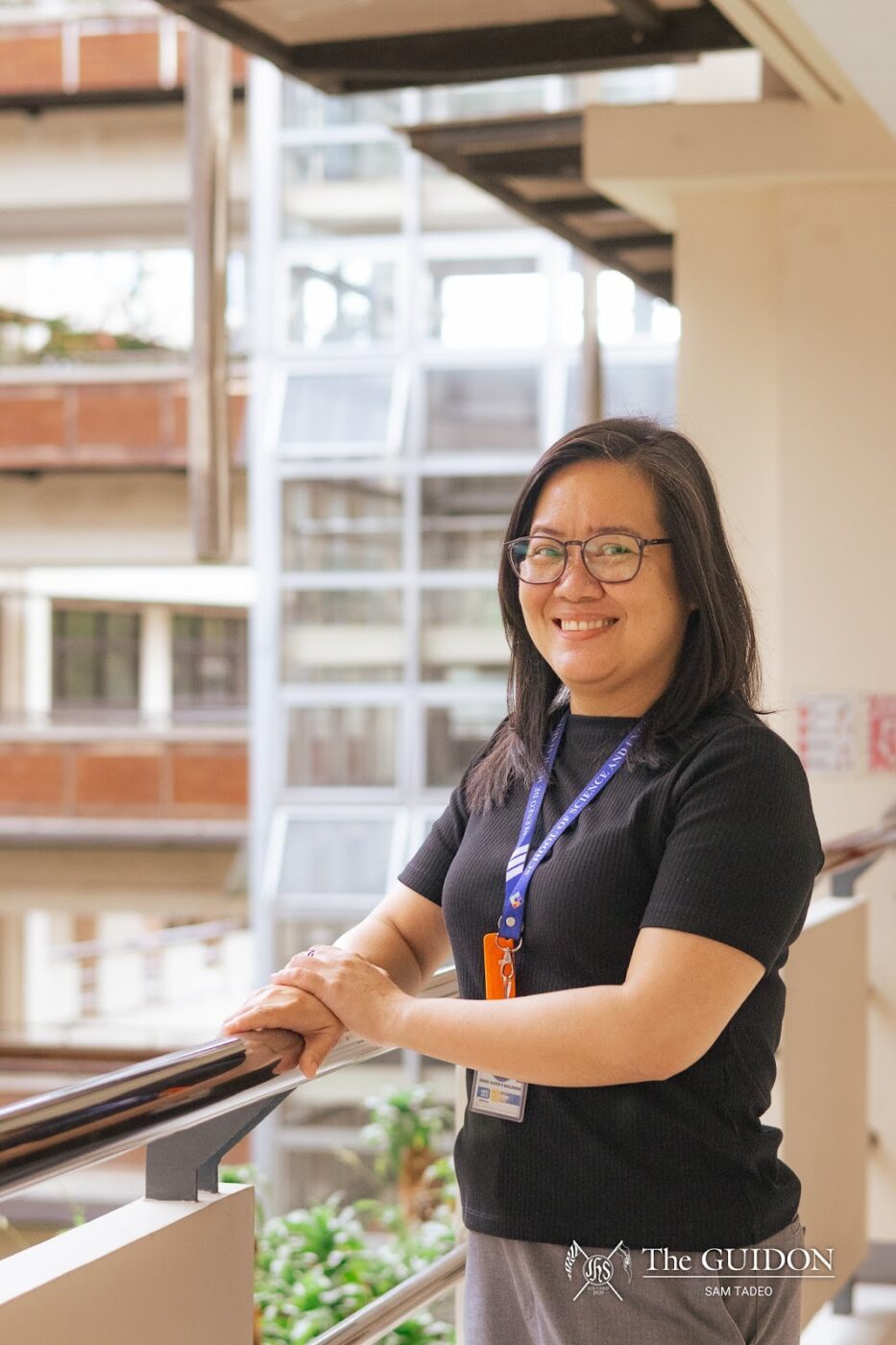
MACABEBE: Erees Macabebe, chair of [the Electronics, Computer, and Communications Engineering] Department and head of the Energy Research Laboratory. My research topics range from isolar cell characterization, energy solutions for communities, […] solar-powered aquaponic systems, applications of solar [photovoltaic] systems in agriculture, […] and energy management for buildings.
BUENAFE: Olivia Erin M. Buenafe. I’m currently the Chair of the Chemistry Department. My specialization is along the field of biochemistry, analytical chemistry, and biomedical research, specifically, drug discovery and development.
ABU: I’m Patricia Angela. [My] field of study is computer science, specifically computer vision. […] I’m somewhere in between the hardware and the software field, and I have [had] an interest [in] computer vision applications ever since.
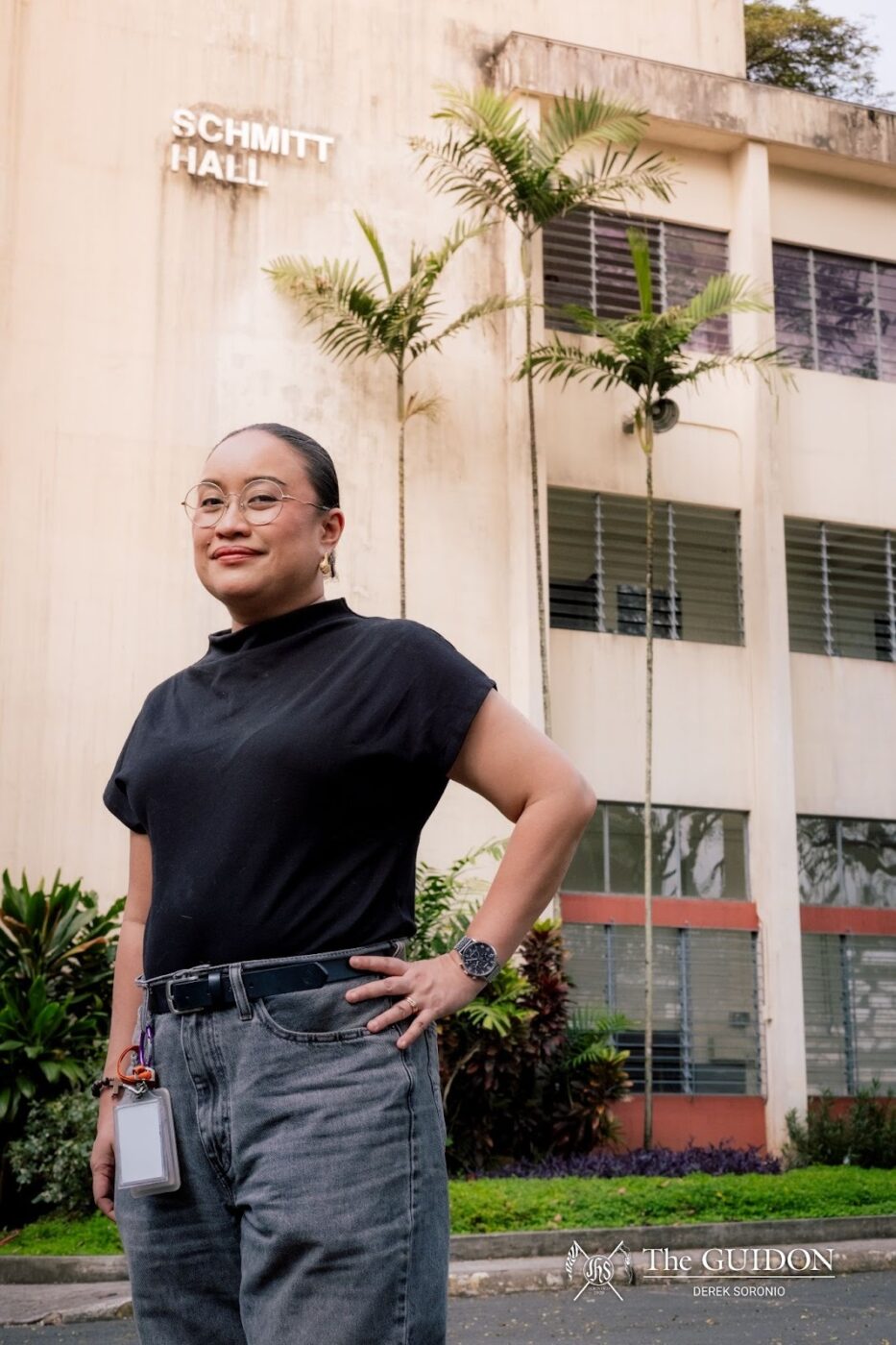
MENDOZA-PASCUAL: I’m Milette Mendoza-Pascual. My students also know me as Eli. In terms of research, what I am doing right now is doing monthly monitoring of lakes here in the Philippines. Specifically, we have projects right now on the seven lakes of San Pablo […] We are monitoring the water quality and also detecting the methane concentrations within the water column. Aside from that, we’re also giving some recommendations on how those ecosystems can be used more sustainably.
Q: How long have you been teaching in Ateneo?
MACABEBE: I started teaching in Ateneo immediately after graduating from my first degree, which was BS Physics with Computer Engineering. I’ve left Ateneo only to pursue graduate studies or post-doctoral work in Italy, the United States, and other places, but I’ve always been with Ateneo. I’ll be awarded for 20 years of service this March.
BUENAFE: I’ve been teaching here on and off since 2006. If you add up all the active years that I’ve been teaching, it comes out to around 15 years.
ABU: I’ve been teaching for 10 years.
MENDOZA-PASCUAL: I started teaching here in Ateneo 2019. First semester of 2019. That’s my first teaching job also. I’ve been here since 2019. For six years now.
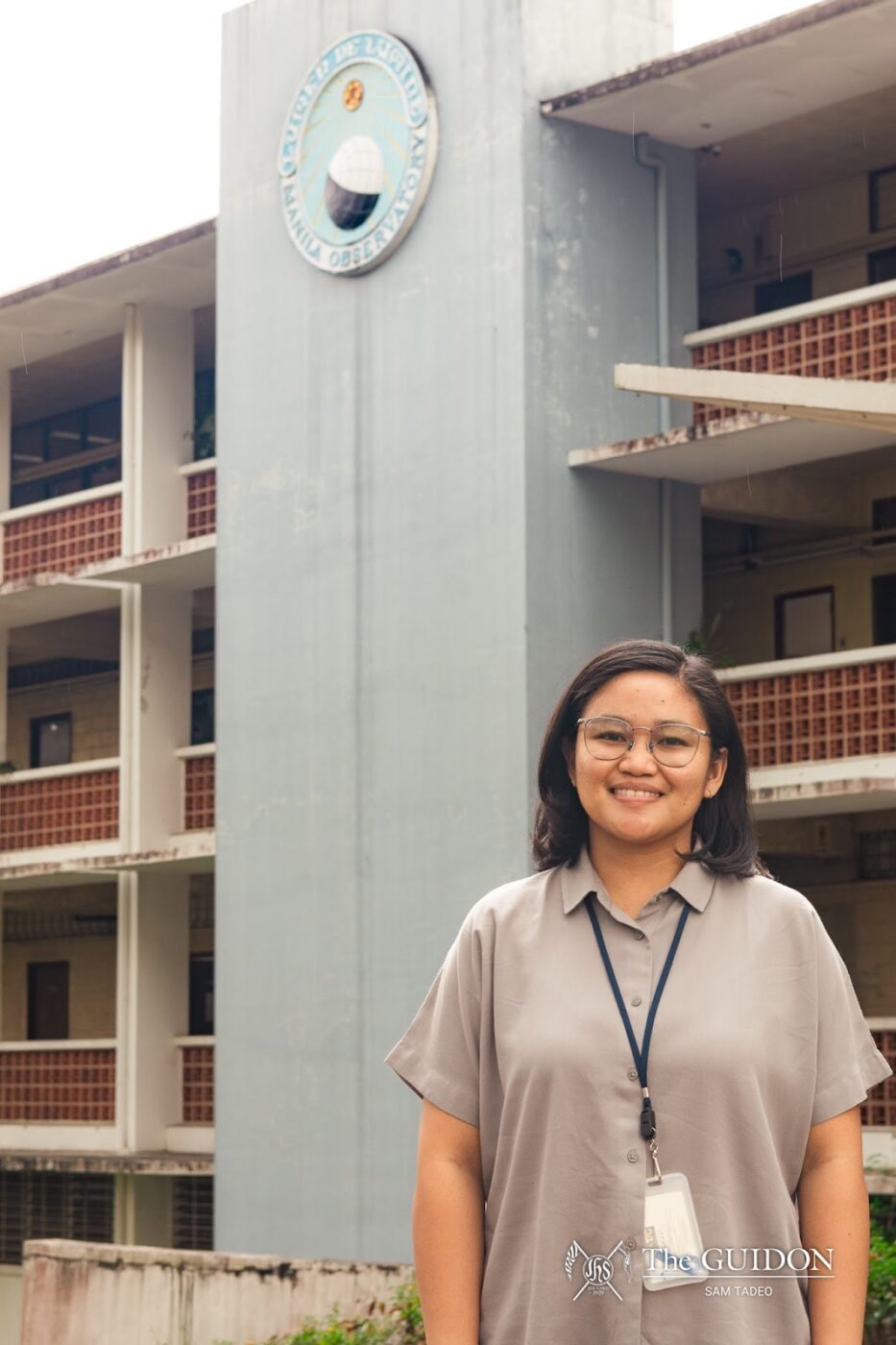
Q: During your years in academia, whether as an undergraduate or a professional, did you encounter any difficulties in the field because of your gender?
MACABEBE: I never encountered any problems related to me being a woman […] compared to our neighbors in the [Association of Southeast Asian Nations], or even in European countries or Western countries. I don’t find it [to be] a disadvantage. […] Even if you look at the positions here, […] our Vice President [for Higher Education] is a woman, our previous deans in SOSE were also women, and even in ECCE we’ve only had one male chair for the past 27 years.
BUENAFE: Actually, the number of females, especially in chemistry, has always been in the majority. We did not actually have any major difficulties locally here in this campus, in this institution, [in terms of] studying as well as practicing our field.
ABU: No. If there have been some difficulties or challenges, it’s not because of the gender. I grew up from a family of engineers […] We’re really into science, engineering, and also teaching. So I think just with that, I already grew up together with them, so the environment is very conducive to learning. […] Of course, there are challenging and very difficult courses in engineering that I will have to go through, [but] I didn’t really feel any challenges because of gender.
MENDOZA-PASCUAL: So, fortunately, I’ve been to a research group that is not so gender biased. Like we have a balance. […] But then, maybe, when you go outside, when you relate to the communities, or when you show your results, sometimes, […] stakeholders […] and decision makers of that particular ecosystem [made me feel] like I’m not considered as an authority. […] Maybe not only because I’m a female, but also because I’m still young during that time. [On the other hand,] It’s also fortunate that I grew up in a generation where there’s already this lessening of gender bias, there’s already talk about equality between genders.
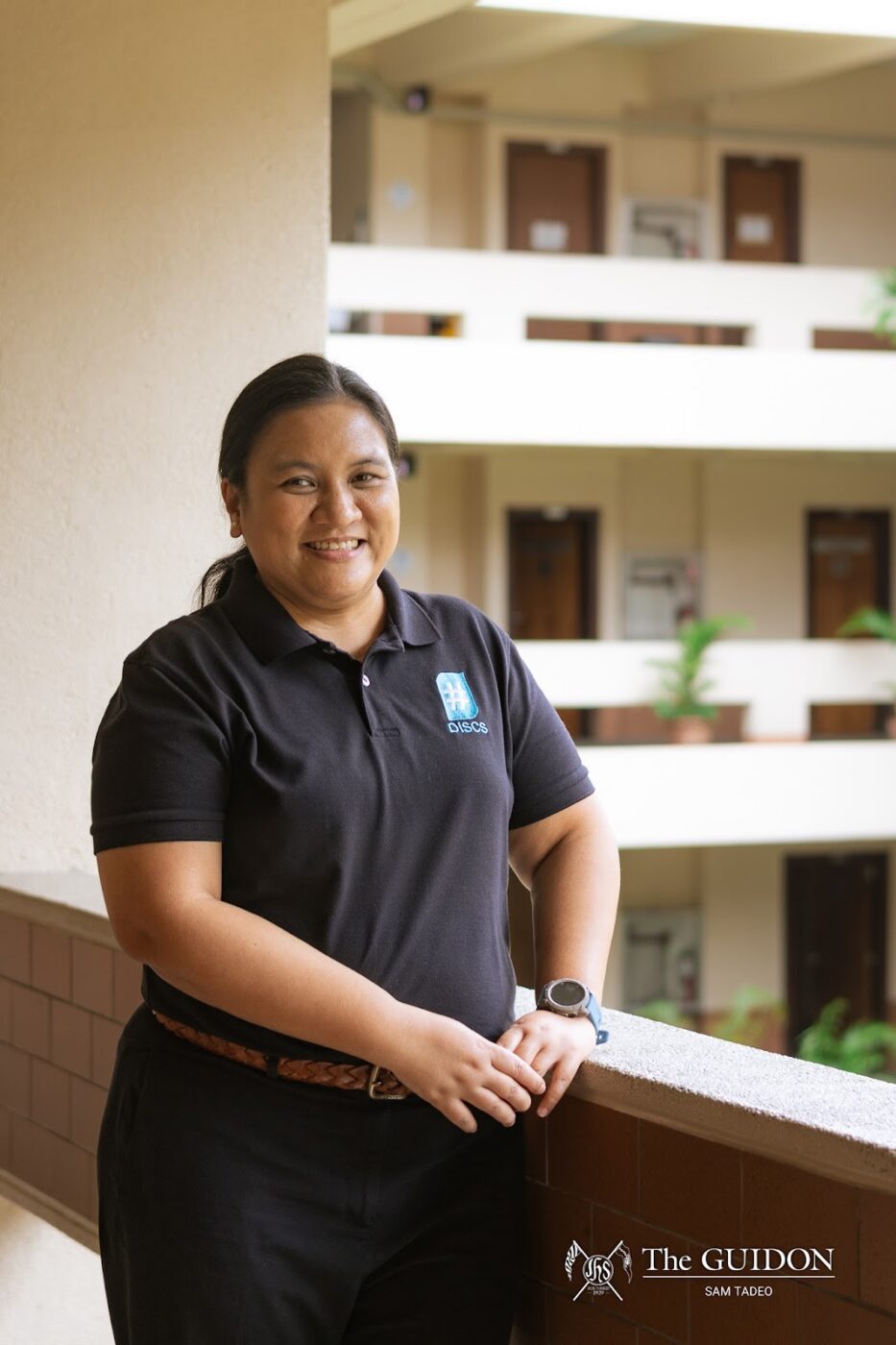
Q: What part of your leadership as a department chair has been shaped most by being a woman in STEM?
MACABEBE: The first thing that came to mind [was that], as women, we’re more compassionate. I think it’s because [of] the nature of women, especially if it’s a matter of health, family, or [the] well-being of my colleagues. […] Also, when assigning [work]load, you have to make sure that it’s balanced because I know it’s also for the well-being of my faculty not to be too stressed and overworked. […] I find value in delegating work so that they are familiar with the work that needs to be done in the department. [Because] there will come a time when I’m no longer chair, [and] whoever takes on that role should know the work that’s needed for the department.
BUENAFE: I guess my femininity, or what it means to be a woman. A woman can be both a maiden, a mother, and a crone—the trifecta. It’s really more along the lines of the teaching aspect and mentorship aspect with the students. When you teach, you’re teaching the younger ones, so you can’t help but be mother-like towards them, especially when you’re mentoring junior professionals in the field. You tell them, “Okay, this is what I had experienced. Maybe learn from it. [But] in case you really want to do something other than what I’ve advised, I just give you full support”
ABU: Coming from an engineering background, I think it has been really very helpful that I came from a […] STEM background because we find solutions. […] The training […] is very logical, [it] gives you a lot of options. […] Technically, we are problem solvers, which is really very helpful if you’re running a department right now for the chairmanship roles. I think that’s an advantage coming from the STEM background, that you really do have the data to support your answers, and also to guide you to finding some options and solutions to your problem as a leader
MENDOZA-PASCUAL: Based on my observations, I don’t know if it’s a coincidence that it’s the personality of the previous chairs, but if the chair is a female, I think that they are more ready to face conflicts. […] Personally, the way I want the department to be run [is to] still [be] guided by the rules of the department and the University, but has empathy, and maybe trying to— if there are any conflicts—weigh and meet-halfways. […] I also don’t know if it’s because I’m a mom right now, which may have been the reason why I want to handle it that way. […] I want the department to have this sense of belongingness, like whatever concerns you have, we can talk it out so that we can settle on something that is beneficial for everyone.
Q: What feels most meaningful about leading a STEM department as a woman today?
MACABEBE: It’s not a secret that there are not many women or girls [who] take STEM, because there’s that perception that it’s hard, especially engineering. Even now, we only have a handful of females in our engineering programs. When I talk to my alma mater in high school [during forums and talks], they see me as a woman leading an engineering department. […] Women or high school girls in the audience can see that “Hey, she’s a girl, she’s in this field, I can also do that,” so maybe being an inspiration because of the opportunities or exposure that I get in this position.
BUENAFE: The most meaningful part for me, being the head of the department as a woman, is really the nurturing aspect. It’s not simply balancing books or making very dry, rational decisions. It’s also considering how everyone within the department and those outside the department who interact with us will actually grow in the medium to long term. Just like how mothers […] see how they raise their children, […] I pretty much see everyone as family, as young ones that need to be tended [and] need to be supported.
ABU: So what is meaningful is that we do have the STEM background. We know how to use our tools [and] we know how to maximize them. And I think what is meaningful there is [that] we translate [our knowledge in using these tools] to solve real-world problems […] and also contribute [to societal good]. […] I know we can just simply do simulations and graduate, but of course, we don’t stop at that point. We also look into how it can be used [to] solve a particular problem.
MENDOZA-PASCUAL: I’ve [only] been a chair since April 20, last year. So wala pa akong one year [of being] chair (I haven’t reached one year of being chair). When I became the chair, it was really unexpected. So, I was a faculty. I don’t know if the other faculty members will respect [me], it’s like you have this imposter syndrome. […] If you’re a female, maybe there’s more questions or more insecurities—there are others who think that males have more authority compared to females. But my key takeaway is to believe in yourself. For me, it’s more of overcoming the imposter syndrome and also trying to accept your own capabilities.
Q: Do you think representation at the leadership level meaningfully changes perceptions of STEM as male-dominated? How?
MACABEBE: As I’ve said earlier, for girls in high school, when they see a woman in a particular position, it opens up that notion [that] it’s also possible for them. I think in any situation it’s like that; being a role model or seeing someone as a role model would give you a concrete idea [of] what you could become. So yes, having women in leadership roles related to STEM, especially engineering, would really help promote it.
BUENAFE: Yes indeed, because we all have this immediate idea that if someone is a scientist, it’s almost always a guy in a lab coat. But we have radicals in the field who have made their marks in history, and they’re women, just like Marie Curie. […] We bring that nurturing aspect that we want for the field to grow, and it’s not simply the field as is, but it’s actually the people in the field.
ABU: There’s a lot of women in STEM, women in science. There are even some national awardees on women in science, so they’re being recognized. […] There’s this stereotype that engineering is for male. But my mom was already in engineering. It’s always like, “Oh, ilan tayo dun sa batch na babae? (Oh, how many [students] from the batch are women?” That’s always the question. So I think it’s good that women are already being recognized [as] leaders in STEM. […] The representation is a good example that shows that women can actually excel under STEM.
MENDOZA-PASCUAL: Of course. People are now seeing what are the capabilities of females as leaders, right? So we’re able to see the difference [in] how males solve conflicts, compared [to] if the leader is female.[…] I’m not saying that female leaders are soft, but there’s this softness if [a woman is] the leader, then there are conflicts that are solved this way because she’s a [woman compared to [a man].
Q: What advice would you give to young women who are interested in pursuing a career in science?
MACABEBE: Just do it! Don’t get intimidated by the stereotypes. Women can do as much, maybe more than what males can. Don’t be afraid if you think you are weak in STEM. Any weaknesses or challenges can be overcome if you are determined to pursue them.
BUENAFE: Just keep going. It’s not simply leaning in that is important. Be confident in what you want to do, regardless of gender or orientation. If you have a clear line of thought, be brave enough to just share it and pursue it. […] We should not forget that we are free to choose. At the core aspect, you really have to choose. Kahit mahirap, kahit iiyak ka, you really have to choose. Even giving up is a choice, so I don’t blame people who choose that; we respect that.
ABU: I think the first step is really knowing […] [if] going into science is a field that you will really want to be in for years or all throughout your life. I mean it’s like, [if] this is something that you want, and you also have a passion [in], I would say, go for it. […] We’re in engineering and science, we do have a lot of science subjects and math subjects, right? Is this something that you really want to take? So that’s a decision to make. So once you have decided that this is really your passion and this is what you love to do, then things would be easier.
MENDOZA-PASCUAL: Based on my experience, the first suggestion or encouragement is to really believe in yourself. To believe in your own capabilities. It doesn’t mean that if you’re not masculine enough, you’re not qualified to be a leader [or] that they won’t believe in you and that you don’t have authority. Don’t believe in those perceptions. Don’t let other people dictate what you can be. At the end of the day, you really need to believe in yourself first before others could believe in you. […] Since the beginning, never ko naman din nakita na when you’re a female, you’re limited. Believe in your own capabilities then people will see you as someone they can look up to and they will also be inspired.
ERRATUM: The article has been updated to reflect the correct spelling and nickname of Environmental Science Department Chair Milette “Eli” Mendoza-Pascual. Moreover, we have edited the article to reflect her correct quote, “Believe in your own capabilities then people will see you as someone they can look up to and they will also be inspired.” We apologize for the oversight.