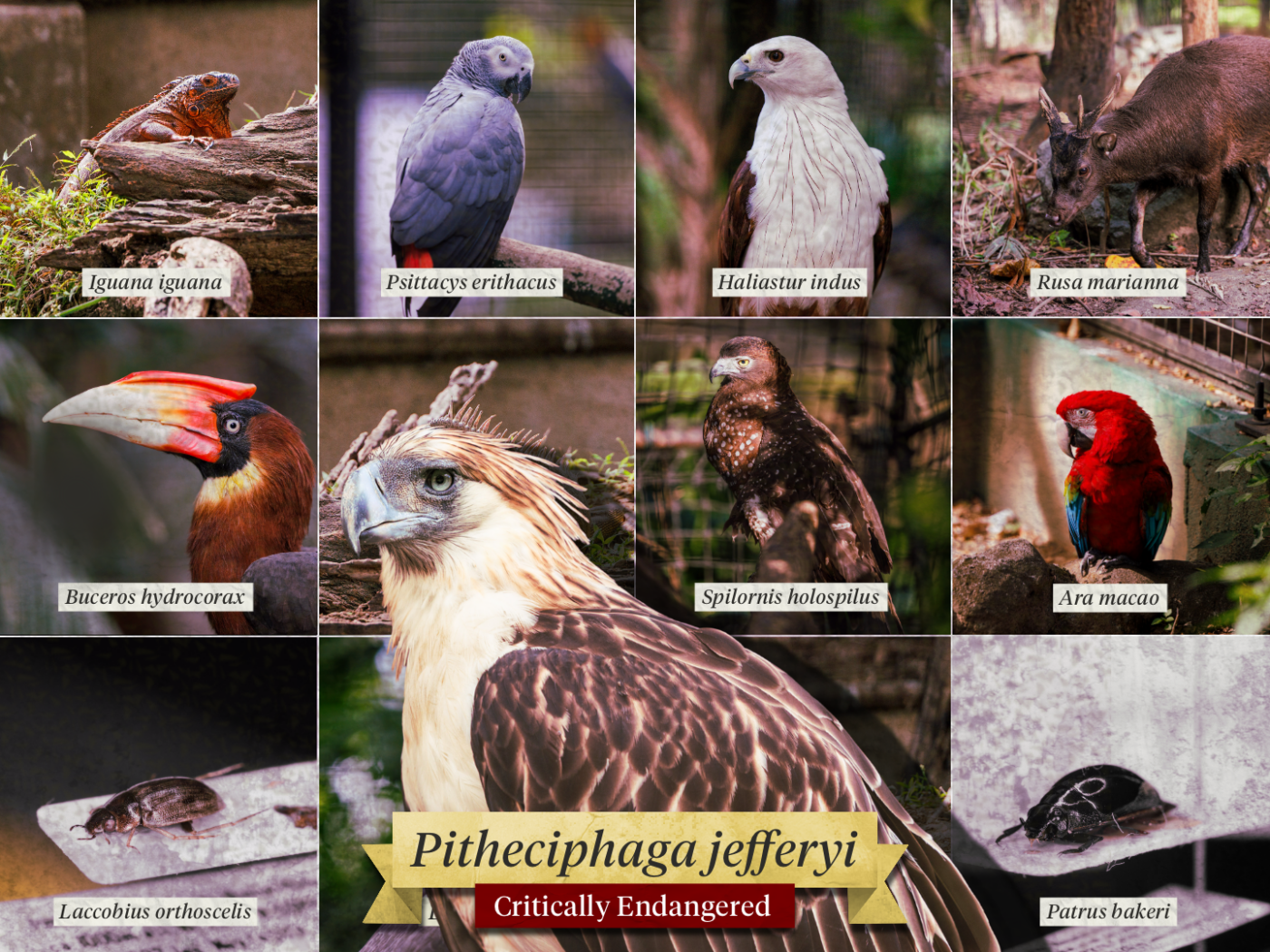
AS LIMITED resources challenge conservation efforts, less attractive species continue to be sidelined, unassessed, and underfunded in favor of charismatic megafauna.
Charismatic megafauna are endangered species used in conservation campaigns. They are prized for being beautiful and impressive, often including flagship species like elephants and rhinos.
While this strategy draws in public support and aid, resource inequity remains. Data from 14,600 global conservation projects revealed that vertebrates receive 82.9% of the funding, while less than 6.6% go to threatened but less charismatic species.
Leading the pack
Conservation funding is affected by threat level data. Notably, the International Union for Conservation of Nature’s (IUCN) Red List of Threatened Species tracks population, endemicity, and threats for categorization. As such, data deficiencies on population trends and habitat protection for less charismatic species hinder categorization.
Locally, the Department of Environment and Natural Resources (DENR) safeguards biodiversity through the Philippine Biodiversity Strategy and Action Plan (PBSAP), a 20-year plan on wildlife conservation through restoration and rehabilitation.
In preservation efforts, DENR Biodiversity Management Bureau Biodiversity Policy and Knowledge Management Division Chief Nancy Corpuz confirmed 27 priority fauna due to habitat loss and fragmentation, though she affirmed that flora remains supported by the Forest Management Bureau through forest restorations.
Despite the PBSAP report finding a narrowed 20% financial gap, Corpuz disclosed that conservation resources focus on the prioritized threatened species.
Apart from resource constraints, research gaps also inhibit effective conservation planning. For instance, the IUCN Red List mainly features well-studied vertebrates, overlooking local invertebrates and plant species.
To boost local biodiversity data, Corpuz reported collaboration with the IUCN. Similarly, conservation foundation Haribon also contributes to the Red List as a member of Birdlife International.
Haribon Conservation Research Department Head David Quimpo shared that they supplement the DENR in tracking bird migration over Asia. While they focus on popular birds, such as the Philippine Eagle, he affirmed that they also include other species.
“Lahat sila (species) importante […] kasi hindi naman magth-thrive ‘yung single species kung wala ‘yung the rest of the biodiversity. (All species are important […] since a single species will not thrive without the rest of the biodiversity),” he explained.
He added that less attractive species are likewise included in awareness programs and site surveys of charismatic species to mitigate the lack of baseline data for categorization.
The story of discovery
Among the less charismatic invertebrates are insects, which are poorly perceived as a cause of disease and infestation despite their ecological roles. To augment insect research, the Ateneo Biodiversity Research Laboratory is among the four labs worldwide that study the aquatic beetle family Limnichidae.
In their studies, Laboratory Head Emmanuel Delocado, PhD, and his thesis student, Covy Angeles (5 BS BIO) remarked that population and habitat data are key in policy-making and the Red List categorization. Deficiencies make the threat status uncertain, resulting in a lower priority.
This has local relevance, as the country hosts unstudied endemic species. With this, Delocado cited that species discovery influences policy, as the discovery of two Negros beetles in 2021 urged the local government to safeguard their parks.
Further, the responsiveness of species preservation is influenced by social conditions. Delocado shared that the lab assesses the impacts of community life on the river as pollution harms beetles’ habitat, health, and population.
As such, Delocado emphasized balancing community needs and the beetles’ habitats, saying, “The challenge really is navigating the tensions on what the environment needs and what the society needs.” Thus, organizations are crucial for responsive and collective action.
Stewardship among students
In practice, youth-led biodiversity action focuses on awareness. Angeles also shared that ecological education is vital in shaping public perception. In Ateneo, the Ateneo Biological Organization (BOx) and Ateneo Environmental Science Society (AESS) run awareness-raising initiatives.
BOx’ Into the Wild shows students Ateneo’s biodiversity. As one of the project pioneers, Angeles shared that appreciating one’s immediate biodiversity is the first step in promoting care for it.
Meanwhile, AESS partnered with Save Philippine Seas for marine biodiversity conservation during their annual fundraising at Pledge Week. Vice President of Environmental Science Affairs Chantal Cruz shared that just conservation starts with educating people on lesser-known animals and environmental impacts.
Translating ecological principles to practice is critical in species conservation. As such, equitable and empirical wildlife protection must reframe biased perspectives and develop informed policies.