WITH 7.8 seconds left on the clock, Gec Chia stops, pops and pulls up for the ice-cold, game-winning jump shot that propels the Ateneo Blue Eagles to the finals round against the De La Salle Green Archers. The year is 2002, and the Ateneo will go on to win that series and bag their first championship title in 14 years.
Chia’s unforgettable clutch performance in that semifinal matchup against the University of the East Red Warriors in Season 65 of the University Athletic Association of the Philippines (UAAP) sealed his legacy as one of the Ateneo’s most iconic basketball players.
What few know, however, is that Chia was not one of the highly sought after players for recruitment during his time. In fact, he had started as just a playground legend in the intramurals, which we know today as the Intramurals Athletic Council or the IAC.
A student-run organization that seeks to promote the importance of sports among students outside of the official teams, the start of the IAC season has become one of the most anticipated events of each school year.
Benefits
College students are expected to be masters of time management. This is even truer of student-athletes, who are expected to balance the responsibilities they shoulder both inside and outside of the classroom.
However, not every Atenean sports enthusiast has the skill or the time to carry out the balancing acts required of varsity players. Thus, the IAC opens the door to students who would also like to play competitively.
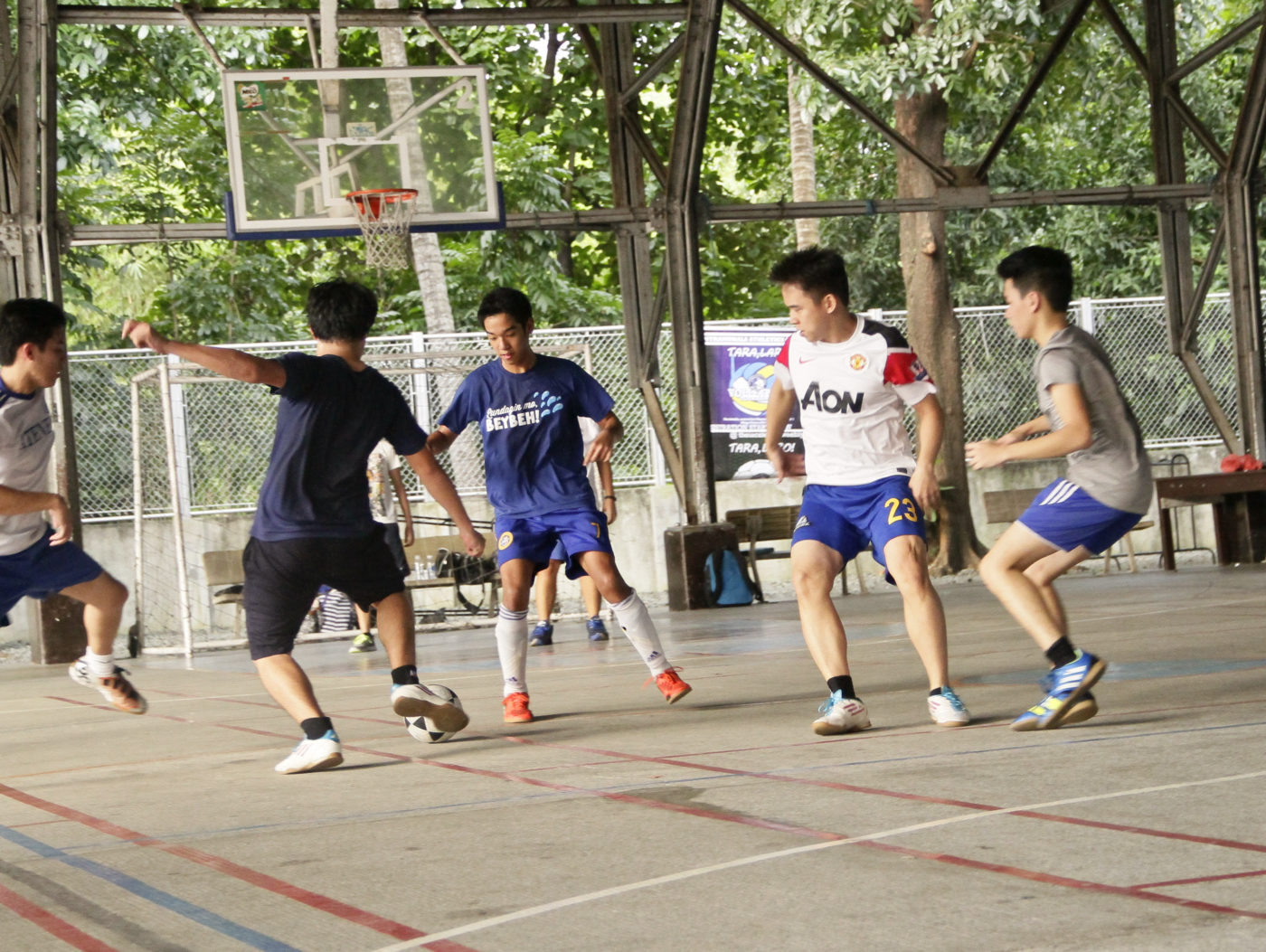
As the Loyola Schools’ (LS) official intramurals council, the IAC holds tournaments for basketball, volleyball, futsal, Ultimate Frisbee and flag football. It gives students the opportunity to participate in organized sports, be it for simple recreation or for a chance to relive the thrill of competing in their high school intrams.
However, for these students, focusing on their academics is usually their main concern; spending time off the books to play in a tournament entails certain sacrifices. One is required to pay the fees, spend time for practice and adjust his or her schedule on the game days all for the purpose of participating in a tournament for leisure.
President of the student-officers of the IAC Arvie Dagatan argues that such sacrifices are worthwhile. According to him, the intramurals encourage the growth of the players through the building of their relationships. “Not only are people encouraged to form teams with old friends but there are also a lot of teams made up of complete strangers,” he says.
Dagatan further emphasizes the importance of building a sense of camaraderie, saying, “These are lessons that are easier to learn through experience rather than taking down notes in class.”
Even from a student-athlete’s point of view, the intramurals play a vital role in one’s development. Alyssa Valdez, a veteran player of the Ateneo Lady Spikers, shares that it is a perfect avenue for students to enjoy themselves and not just to focus on their academics. “People get to know each other from different batches and it forms a sense of unity within the community,” she says in a mix of Filipino and English.
Training grounds
With the intramurals council being led by students, it also serves as a training ground for the members of the organization. According to David Puen, the moderator of the IAC and a lecturer at the Physical Education and Leadership and Strategy departments, the students who run IAC experience a certain professional environment. “Dealing with demanding players and ensuring referee payments are on time can be challenging and so is working in an environment with people of different personalities,” he says.
Dagatan echoes this sentiment when he points out the number of negative comments the league has to deal with. For instance, they regularly get complaints about the inconsistencies of the calls their officials and referees make, and Dagatan and the rest of his officers must make sure that they manage these problems well. “We hold meetings regularly to discuss these issues and formulate solutions,” he says. “We keep track of these problems as we try to implement the solutions, gathering data along the way so that the next set of officers can pick up from where we left off.”
But Dagatan remains modest, saying, “In the end, we know we’re far from being the best league, but the important thing is that we continuously improve. We welcome criticism because we need it; we need the feedback so we can move forward.”
Service to the community
According to Puen, the IAC serves the student body in two ways. The first is developing student leaders through sports. In particular, he emphasizes that sports is a good way for students to learn how to accept failure graciously.
“Dealing with peers who are customers of IAC as well as employees who are older than them can be challenging experiences that they can learn from,” he says. “They learn how to manage projects, allocate resources to deliver value, and also market the sports to the community. It’s as close to sports management as they can get.”
Secondly, the IAC provides an avenue for the Loyola Schools community to come together and play under the slogan “Tara Laro.”
“It basically reflects the pureness of simply just wanting to play and inviting other to join. So for us, I think it was a good starting point since IAC is all about inviting other people to join the intramurals, have fun, meet people and stay fit,” Puen says.
With the IAC continuing to grow as an organization, Dagatan says that they’re ready for improvement. “I speak for everyone in the org when I say that we work really hard to improve ourselves, our events and IAC itself. This is our passion and we want to share it with the rest of the LS community. We want them to enjoy our passion.”
The IAC hopes to continue in helping develop students with a greater sense of camaraderie; whether the players are meant to be the next Gec Chia or not, the IAC focuses on implanting the value of sportsmanship in every member.
What do you think about this story? Send your comments and suggestions here: tgdn.co/2ZqqodZ