Written with Sass
ljoson@theguidon.com
The Philippines is apparently, the 6th most corrupt country in Asia.
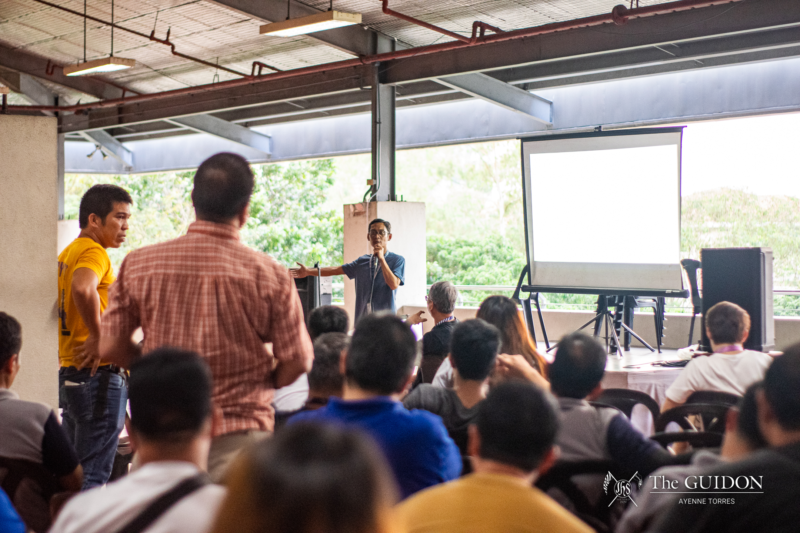
That’s what the Junior Term Abroad (JTA) lecturer said during one of our mandatory pre-departure JTA talks. I wasn’t surprised, because news like that is typical in the Philippines, kind of like how no one bothers to bat an eyelash when they hear that the MILF found themselves a new, sparkly hostage again.
But what did set me off was the cheers and applause that little piece of news got from an audience of globetrotting Ateneo juniors, all of whom are leaving the country within the year to represent the Philippines in prestigious universities around the world. ‘The Philippines is the 6th most corrupt country in Asia’ got more of a reaction than ‘The Filipinos, are of course, very well-known for their hospitality!’— a signal that should be more than enough to set off bright, blaring alarms among this little community of jet-setting college achievers.
Mention the word “Filipino” to someone outside of the Philippines, and you’re going to have difficulty convincing that somebody that “Filipino” also translates to ‘doctor’, ‘lawyer’ or ‘CEO’. Because to the majority of different nationalities in the world, the face of the Filipino takes shape in that of a domestic helper, a seaman, a caregiver or a factory worker.
Now, while none of these jobs are shameful or embarrassing to own up to, they aren’t exactly as prized as a corporate position or an occupation in a highly specialized field. Which brings me to my point— programs like JTA allow Filipino students to deepen their knowledge in a specified matter, yes; but they’re also an opportunity to show off, to flash in neon lights what the Filipino is made of to the world.
Student exchange programs like these let the rest of the world see that the young Filipino is eager, excited, willing and thirsting to learn. That the Filipino is just as smart and hard-working as his other Asian counterparts, and as a result, that the Philippines is as globally competitive as it claims to be. And because of that, we cannot waste time by laughing and hooting over some statistic claiming our country is one ridden with bad governance, no matter how factual it may be.
Because that little fact is something the world tirelessly knows, and there’s no reason for us to remind them of it. What we can do, however, is help slowly change this pitch dark picture the world has of our country by embarking on our “junior terms abroad” with responsibility and respect. We will do well in our classes; we will revere the cities that we will soon be stepping on, different lands that aren’t our own.
We will be courteous to the new faces that we will meet, and tell them that in a splattered archipelago south east of Asia, everyone was taught to be warm and welcoming. We will show them, little by little, that the Filipino they know is no longer that of a domestic helper, a seaman, a caregiver or a factory worker.
The Philippines has so much more to give, and we have so much more to offer. August is looming; let’s show them what we’re made of.