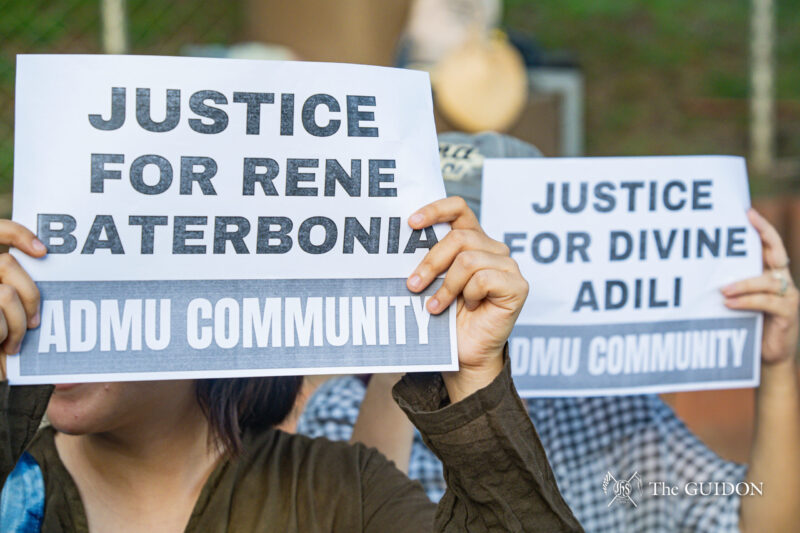
CALLS FOR accountability have been the cry of the Ateneo community since the tragic passing of Rene Clert Baterbonia and Chukwuemeka Divine Adili. Moreover, the June 8 incident not only claimed the lives of two beloved student-athletes of the Ateneo Men’s Basketball Team (AMBT), but also urged athletic systems to rethink their duty of care.
The University offices responsible for overseeing student welfare have been thrust into the spotlight due to the Ateneo administration’s poor management of the tragedy response. At a time when immediate communication was needed, the bereaved families expressed that Ateneo fell short on providing them sufficient explanation on the incident.
Ateneo’s first response coursed through social media statements were perceived as vague and insincere, as the posts only contained condolences and internal updates on the student-athletes’ remains and the team. This lack of a timely, clear, and immediate physical response then translated into the questioning of the institution’s sports systems, which has affected the rest of the Ateneo athletic community.
While investigations continue, Atenean student-athletes grapple with online scrutiny and uncertain futures.
Clipped wings
According to Ateneo Professor of Finance and Sport Management Aldo Tong, two tragedies occurred: the drowning incident and the lack of accountability from Ateneo afterward.
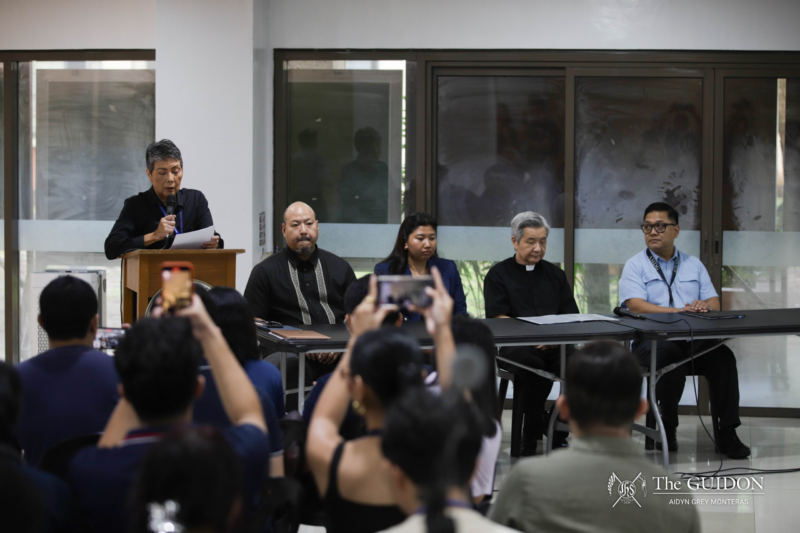
The University was criticized for its initial silence on the tragedy. In response, University President Fr. Roberto Yap, SJ, said that the administration “chose direct, involved action for the families and the members of the team, instead of broadcasting these to the public.”
However, the claim contradicted the families’ statements, which said they did not receive detailed information about what happened in Aurora.
As a former coach of the Ateneo swimming team, Tong pointed out the lack of care and accountability in the University’s response. “A conscientious coach or a conscientious team manager would have still called the family […] the moment it happened […] There’s that fear, but there’s also that standard of care,” he added.
The public uproar over the tragedy then led to the circulation of various discussions online, including speculations of initiation rites, jealousy and class discrimination among the AMBT members against Baterbonia. Consequently, numerous negative narratives surrounding the AMBT persisted, even extending beyond to the rest of the Ateneo community.
For instance, a track and field team member has shared his personal experience of discrimination while on public transportation after being identified as an Atenean. Because of such experiences, community members have grown more conscious of how to present themselves and stay safe in public.
The spotlight on the University further intensified as the Criminal Investigation and Detection Group recommended Anti-Hazing Act charges against the team coaches on June 26. In addition, the National Bureau of Investigation recommended charges of reckless imprudence against coaches and the University Athletics Office (UAO) Athletic Director, Emmanuel Fernandez, on July 13.
Amid these ongoing investigations on Baterbonia and Adili’s deaths, student-manager Clyde Samson (4 BS CH) stated that his team received a directive from the UAO on June 15, prohibiting Ateneo sports teams from participating in off-campus activities, whether it be practices or tournaments.
However, Samson shared that these limitations imposed on the teams and students are “stripping [them] of [their] identity.” While the incident occurred within the AMBT, the whole athletic community bears the cost.
Beyond basketball
With institutional structures being reexamined, Samson shared that “[the tragedy] gave [his team] a lot of worries and uncertainties regarding how they will be treated as part of the athletic community.” Additionally, he stated that they are faced with the reality of having playing restrictions imposed on Ateneo teams.
While Tong cited that the prohibition of off-campus activities serves as a preemptive measure to ensure the athletes’ safety, Samson was disheartened by how teams had to withdraw from competitions.
Tong also believes that the restriction, if continued in the future, may hinder teams’ competitiveness. “You cannot just train by yourself or within the team and not compete, because you don’t know how athletes will perform in a real-world scenario,” the former swimming coach said.
This prohibition of off-campus activities has left questions on how the rest of the academic year will turn out for the Ateneo sports community. Whether it be a suspension or a withdrawal from Ateneo, the idea of not having a University Athletic Association of the Philippines (UAAP) season has caused teams to deal with ambiguity.
Although Samson remains confident that last season’s athletes will retain their scholarships, he expressed concern for the incoming recruits who are relying on competitions for the opportunity to study in Ateneo. “To be able to compete is basically [a student-athletes’s] lifeline,” the student-manager detailed.
Echoing this sentiment, Tong stated that not being able to play in the UAAP may mean athletes losing a platform to be recognized by professional leagues and national teams.
In addition, Samson stressed how the UAAP brings visibility for the University’s “smaller” sports programs. He shared that the league’s platform entices potential sponsors and rookies to become interested in joining the team.
With the dreams of not just one team, but the entire Ateneo sports community possibly on hold, Samson and Tong emphasized the need for quicker and clearer responses to the uncertainties.
Purpose in play
As Atenean athletes wait for investigations to conclude, Tong urged the committees involved in investigating the tragedy to carefully consider who accountability and justice should be sought from.
“They’re [athletes outside the AMBT] completely innocent of this wrongdoing. But even the Men’s Basketball Team, the people in that training camp itself, are victims as well,” Tong responded, after being asked if suspending Ateneo across all sports from Season 89 would be fair.
He then clarified that letting the Blue Eagles play does not mean absolving the University of accountability, but instead directing the sanctions to those who were truly responsible. He explained that aside from the athletes, there were individuals with authority involved in the execution of the “training camp.”
While investigations remain ongoing, the professor discussed that accountability should also be carried out through structural reform. He noted that developing a crisis-management team and a task force to reform the Ateneo athletics system will better safeguard athletes.
To “learn from [the] experience,” the University released a memo via email, stating the Ateneo de Manila Board of Trustees Crisis Oversight Committee’s creation of a Response and Reform Committee for recommendations on systemic improvements.
However, the institution’s efforts are still being closely watched as Ateneo requested to move the deadline for submitting its findings on the incident to the UAAP from July 15 to July 24.
In addition to structural reform, Samson mentioned that he hopes for a student representative dedicated to all varsity teams, aside from the Sanggunian’s Ateneo Sports Club sector. He believes that this is crucial given how athletes, student-managers, and utility personnel—many of whom were not involved in the incident—have borne the brunt of public scrutiny and ensuing investigations.
“Sana magkaroon kami ng genuine representation na part kami ng decision-making process ng Ateneo kasi in the first place kami ang madadamay dito (Hopefully we have genuine representation to be part of the decision-making process of Ateneo because we are the ones that will be affected),” Samson said.
While he agrees with the calls for accountability and justice, Samson’s sentiments also reflect a broader reality: the consequences of an institution’s decisions extend beyond one individual.
The deaths of Baterbonia and Adili urge the creation of a system that provides equal support to the whole community. More than just defending the right to play, the athletics body calls on the University to fulfill their duty to safeguard their students’ present and future.