INTERNATIONAL PEACEKEEPING bodies seek to prevent combat escalation and provide avenues for resolution. However, as observed in the continuing genocide of Gaza and the war between the United States (US)-Israel and Iran, repeated breaches of international law remain inappropriately addressed.
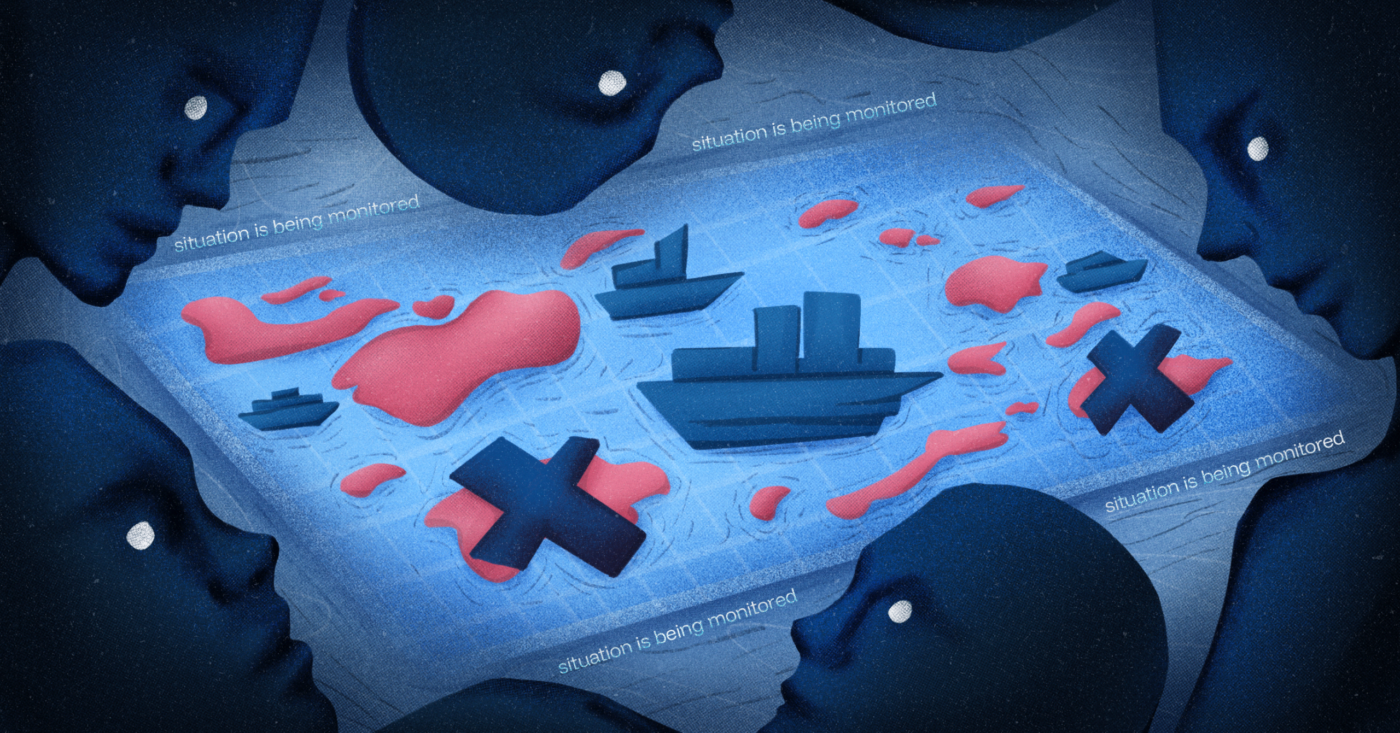
The lack of intervention thus undermines the integrity of international conventions and leads civil society to demand concrete actions beyond merely monitoring the situation.
Tensions in West Asia
On December 29, 2023, the Republic of South Africa initiated proceedings against the State of Israel in the International Court of Justice (ICJ) for acts of genocide in the Gaza Strip in Palestine. Prior to the proceedings, Israel had declared a state of war against Palestine on October 8 of the same year, with Prime Minister Benjamin Netanyahu ordering Gaza’s residents to leave.
Throughout the ICJ proceedings, Israel iterated that its actions in Gaza were permissible under its claimed right to self-defense, framing it as a response to the attacks of the Palestinian armed political group Hamas on October 7, 2023. The offensive by Hamas resulted in around 1,200 Israeli deaths, most of which were civilians, and the abduction of around 240 hostages into the Gaza Strip.
However, South Africa contested that Israel’s military intervention was genocidal in character, citing the death toll of around 23,000 at the time, mostly composed of women and children. At present, Palestinian deaths have surpassed 75,000, according to the Gaza Ministry of Health.
Subsequently, Israel is involved in a conflict against the Islamic Republic of Iran, alongside the US. Tensions between the US and Iran stem from decades of hostility over the development of nuclear armaments, but escalated in February when the US and Israel launched joint missile strikes on Iran. This resulted in the death of Iranian Supreme Leader Ayatollah Ali Khamenei.
Many states have since criticized US military intervention as illegal. Political Science Department Professor Ricardo Sunga III, LLM explained that the United Nations (UN) Charter provides the basis of the rights and duties of states, and the use of force is prohibited and should be considered a last resort. The Charter dictates that the “use of force” is permitted only when the United Nations Security Council (UNSC) authorizes military force or in self-defense when a nation is subject to an armed attack.
In reality, the US had not consulted the UNSC on its use of force against Iran, nor had the council authorized intervention. Secondly, Iran had reportedly not attacked the US or Israel prior to their joint missile strikes, thereby weakening their claims of self-defense.
These involvements have led to international scrutiny, for the scale of the US and Israel’s military operation and their direct participation in regional escalations. As hostilities persist, the disputes intensify debates within the international community over the enforcement of the UN Charter, the limits of military action, and state accountability.
From actors to observers
As one of the first established modern alliances, the UN helped pioneer diplomatic spheres, and organizations like the North Atlantic Treaty Organization, the European Union, the African Union, and the Association of South-East Asian Nations built their foundations around its mandate.
However, as decades passed, diplomatic channels across these organizations appear to actively evolve their core values and strategies. As modern international law continues to develop, there have been noticeable shifts toward mediation, neutrality, and sanctions compared to direct confrontation.
The Myanmar coup d’état in 2021, the Russo-Ukrainian war in 2022, and the US-Israel conflict with Iran in 2026 show that international organizations tend to impose sanctions on aggressor states through imposing economic consequences. However, these sanctions do not always address conflict, as aggressor states with vast military power remain capable of engaging in long-term combat.
The involvement of the US in the West Asia conflict exemplifies this, with US President Donald Trump noting that he is ready to engage in long-term combat with Iran.
Furthermore, as sanctions are made either on a majority or unanimous decision by international organizations, they are significantly hindered by member-states sharing strategic economic or military interests with aggressor states. A prime example is the US’s use of veto power to block UN General Assembly resolutions condemning Israel’s actions in Gaza. Notably, the latter state has historically served as the US’s prime arms dealer.
Sunga explained how these loopholes and contradictions in international norms further propel states to continue violent actions. He stated that powers like the US, “just go ahead and [violate international law] because there is no stronger state that can prevent them from taking action.”
According to him, this leaves the international community feeling frustrated, and states merely observing ongoing conflicts with the hope that they would soon end.
These frustrations then leave states and international organizations at an impasse. As states deliver basic medical or humanitarian aid to civilians of states in conflict, and make humanitarian issues more internationally visible through news coverage, the actual conflicts are left unresolved.
In return, the international community is left to question the effectiveness of international law and related interventions.
People as the frontlines
Delving further into these conflicts, Sunga shared similar concerns of the international community: “It’s really frustrating that international law is being trivialized—putting into question [its] whole raison d’être.”
As much as international law approaches conflicts with several limitations, many avenues have opened for peacebuilding efforts through mediator states that convene affected nations to a neutral ground to discuss conflict resolution.
An example is the Islamic Republic of Pakistan’s peacebuilding mediation efforts between the US and Iran. While these efforts are said to be Pakistan’s attempt to secure economic and regional power through the US, its mediation effort successfully brokered peace agreements, albeit briefly, between the US and Iran.
Civilians have also attempted to address ongoing international conflicts by advocating and organizing as civil society organizations. Notable examples include these organizations providing humanitarian relief in conflict-stricken areas and holding continuous demonstrations to request states to uphold human rights.
Moreover, multiple sector-based groups have continuously echoed statements that recognize the conflict and hope for its better handling. Some instances of these include the Resolution of the International Association of Genocide Scholars condemning the acts of Israel on Gaza; and as a local example, the Filipino-Muslim community organizing protests in solidarity with the Palestinians.
Ultimately, the presence of these types of initiatives shows the complex nature of international institutions—at times, appearing restrictive, but with the potential to mobilize non-state actors. Although these actors are only one of many ways to make the discussion of global conflict accessible to the civilian masses, decisive action rests with states.
As the world continues to watch the conflicts in West Asia unfold, the international community is reminded that institutions matter in addressing all actors caught between the crossfire.