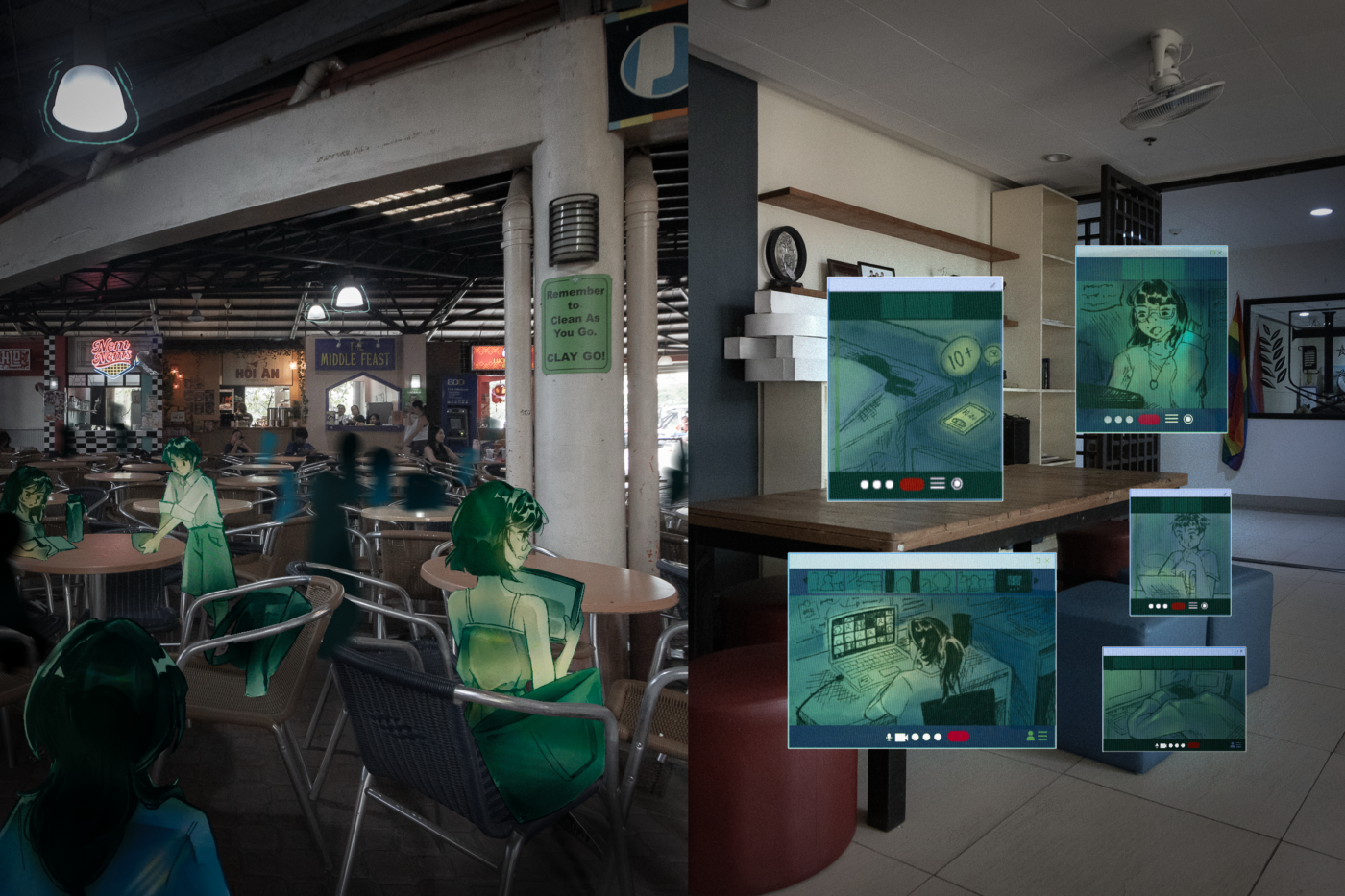
AMID SURGING global fuel costs, the Ateneo has adopted measures to mitigate energy consumption, such as implementing synchronized digital days and adjusted operational schedules, in hopes of minimizing resource consumption and supporting student life.
In particular, a two-day online schedule along with shortened facility operating hours has been implemented since the beginning of April. Additionally, international and domestic travel has been suspended for students, faculty, and staff, as well as Summer Term Abroad.
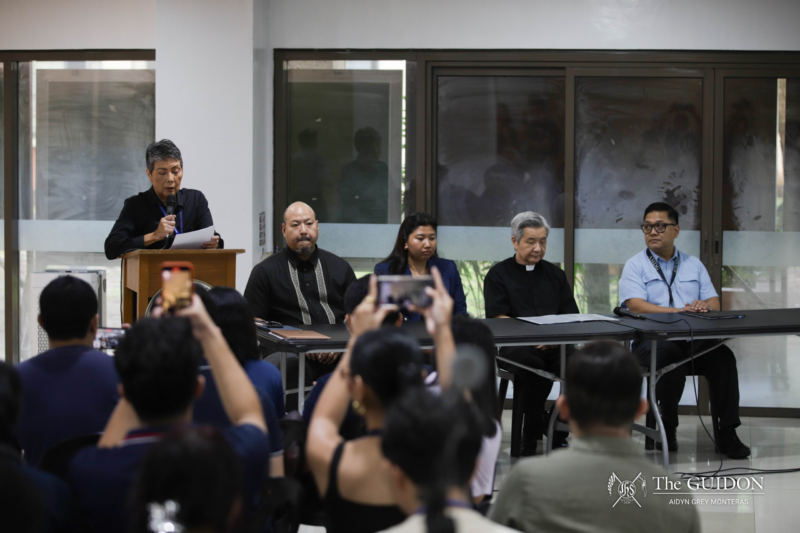
Vice President for Higher Education (VPHE) Maria Luz Vilches, PhD further noted that due to the uncertainty surrounding the US-Iran conflict’s end, it is unclear whether the University will maintain the current setup or not in the coming academic year.
For the time being, however, synchronized digital days have been extended to AY 2026–2027 Intersession, with one designated day serving as an online synchronous day each week.
Necessary shifts
On the implementation of digital days, Agatha Fernandez (4 AB MEC) highlighted that an online setup is not as effective as onsite learning. Drawing from her online experiences from her first two years in the Ateneo, she recalled how difficult it was to pay attention during classes, especially in longer ones.
While Fernandez understands that the move to adopt digital days is necessary to save energy, she stated that it “defeats the purpose if the students aren’t learning.”
Aside from the online classes’ impact on learning, the crisis also brought financial challenges for both students and employees. To help address these burdens, the University has launched a number of financial aid initiatives for the Ateneo community.
According to Fernandez, who is a scholar, the Office of Admission and Aid released applications for emergency transportation subsidies, aiming to primarily support children of transport workers. Sanggunian President Annika Torres added that the same benefits extend to student commuters.
Moreover, Ateneo employees received one-time payouts ranging from Php 2,000 to Php 4,000, and were also given the option to avail a loan of up to Php 15,000. These forms of financial support, according to the University, serve as an “augmentation” to employees’ personal budgetary needs.
Alongside this, flexible work arrangements have also been adopted for staff members, but are subject to approval by unit and cluster heads.
In the long run, Vilches stated that the University will think about how it can integrate its existing mitigating measures after the energy crisis to continue being more prudent with resource consumption.
“[When strategizing], we have to [strike] a balance between saving energy for all, learning and teaching, and other mission-critical work,” Vilches emphasized.
In light of these measures, Torres hopes that the University further examines its current strategies at the national level. While subsidies are indeed helpful, Torres added that there is also a call for the University to urge the government to solve the country’s issues.
Voices during crisis
In response to digital days, students have flagged the consequent strain on learning quality, organizational activities, and access to campus spaces. In particular, Fernandez shared that the crisis disrupted the academic life of students across all year levels and programs.
“Prices have gone up not just on campus, but outside as well. The Php 500 I used to spend in a day used to be enough, but now it’s barely enough. […] At the same time, study spaces are already limited, so students have to spend extra at nearby cafes, and cafes in Katipunan are expensive,” she explained.
To propose better initiatives for the student body, Torres mentioned how the Sanggunian measures student conditions through feedback forms, sectoral consultations, and coordination with University offices such as VPHE.
Notably, Torres shared that since the start of the crisis, the student government has continuously conducted constituency checks to document how students are responding to the changes and has consolidated findings for the VPHE. Beyond university procedures, she also stressed the need for broader, systemic action at the national level.
“While there is support that can be given by the University, there is also a call to urge the [national] government to address the crisis. This [call] is so that [ensuring the continuity of education] does not become […] the sole discretion of a university on how [it] can best continue the learning and education of its students despite the crisis,” Torres emphasized.
Furthermore, she also advocated academic leniency for students affected by the crisis, calling for broader protections that cover not only physical attendance but also academic requirements, especially for working students and those exhausted by rising costs.
Staying optimistic
Despite ongoing interruptions, both the VPHE and students remain hopeful that the University will continue to address this crisis. However, while current measures have provided relief, Torres said that the University needs more initiatives that reflect and support the lives of students.
“I think the most helpful thing that the admin[istration] can do is transparency. [It] is not just about releasing announcements, [but] also coordinating with the student body [and] staff […] to understand how they can help [them] during this difficult time,” she highlighted.
On the other hand, Vilches noted that consolidated concerns are mainly focused on the rising gas prices and extreme heat that make commuting more costly. She also urged the Ateneo community to consciously practice sustainable strategies, as initiatives from all community members count a lot in creating change.
Reaffirming this responsibility, Torres said that students have to become a “united front,” highlighting the need for solidarity with other affected sectors against the crisis. She also mentioned that the Sanggunian is discussing possible transportation initiatives to better support students beyond University mandates.
Ultimately, Torres highlighted that the weight of the crisis should not be left merely for universities and individuals to solve, but for national leaders to better support their constituents.v