WE LIVE in a world of diversity. Within ourselves, we experience a mix of everything—from the place we were born, the people we are surrounded with, the hobbies we try to be good at, and the individuals we meet along the way who contribute a little to who we become.
As Filipinos, we are perpetually exposed to the historical dimensions of our society. Our identity is a palimpsest; we were colonized by various nations for significant periods, which profoundly shaped our cultural perspectives and social modalities.
While the scars of colonization may not be as overt today as they once were, their impacts remain palpable in our adjusted behaviors and hybrid influences. We see these influences in our daily lives, and for some, there is a distinct opportunity to engage with them—slowly deciphering the nuances in mindset and experience, and discovering how to achieve intercultural synergy despite historical friction.
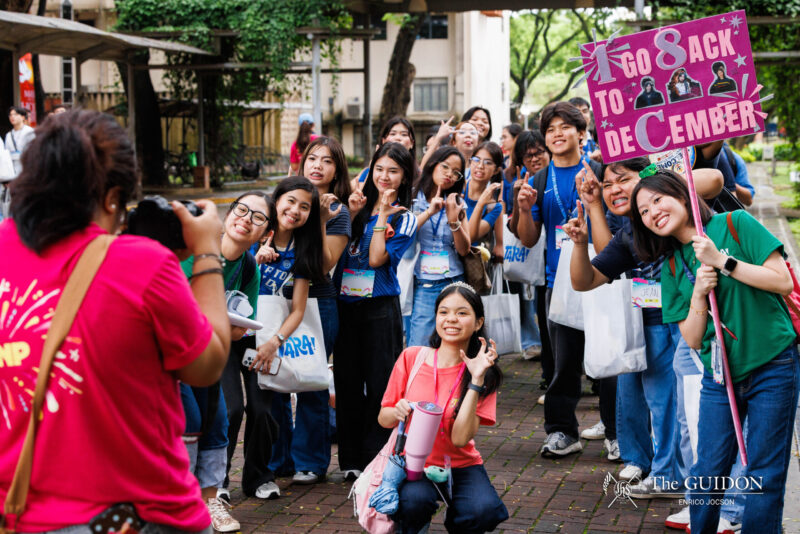
In 2019 and 2023, I was given the opportunity to be involved in the Ateneo Cultural Encounters. Both times, we welcomed Taiwanese students from the National Kaohsiung University of Science and Technology to guide them as they navigated the English language within a Filipino cultural setting.
During their immersion, they experienced first-hand the Philippine habitus through direct engagements not only with students but also with locals and cultural workers. Through this opportunity, it became evident how transformative experiential cultural learning truly is.
In hindsight, we recognize the distinct socio-political trajectories of Taiwan and the Philippines. Yet, through this program, we identified transcultural affinities and expanded the foundations of a shared culture built on genuine, non-performative engagement.
In our student exchange programs at Ateneo, where I am frequently invited to discuss Cultural Sensitivity during Orientation Seminars, I often observe this theory in practice. I frequently host international students in my sociology classes, fostering an environment where individuals from disparate cultures—not only from other nations but from various Philippine provinces—interact.
Given this proximity to the “Other,” I consistently emphasize to my students that a lack of cultural relativism is no longer defensible.
In an era characterized by the democratization of information through social media and the accessibility of diverse texts, we have a profound intellectual responsibility to understand our differences. We have the opportunity to be more open and intentional with the people we converse with and the communities we inhabit.
Ultimately, these cultural encounters serve as a microcosm of a globalized necessity. When we move beyond mere tolerance and toward intentional immersion, we participate in the active deconstruction of perceived boundaries.
Cultural sensitivity is not a static skill acquired in a lecture hall; it is a dynamic, reflexive process of unlearning biases. As we leave our own “chalk marks” on the lives of those we encounter and allow them to leave theirs on ours, we contribute to a pedagogy of empathy.
In this shared space of vulnerability and curiosity, we truly embody a diverse and inclusive literacy, ensuring that our differences do not function as barriers, but as the very fabric of our collective human experience.
Rosselle Trishia R. Carbaja is a Lecturer from the Department of Sociology and Anthropology at the Ateneo de Manila University. She’s also engaged with the Institute of Philippine Culture and Associate Director for Research and Fellowship for Tagpuan Ateneo.
Editor’s Note: The views and opinions expressed by the opinion writer do not necessarily state or reflect those of the publication.