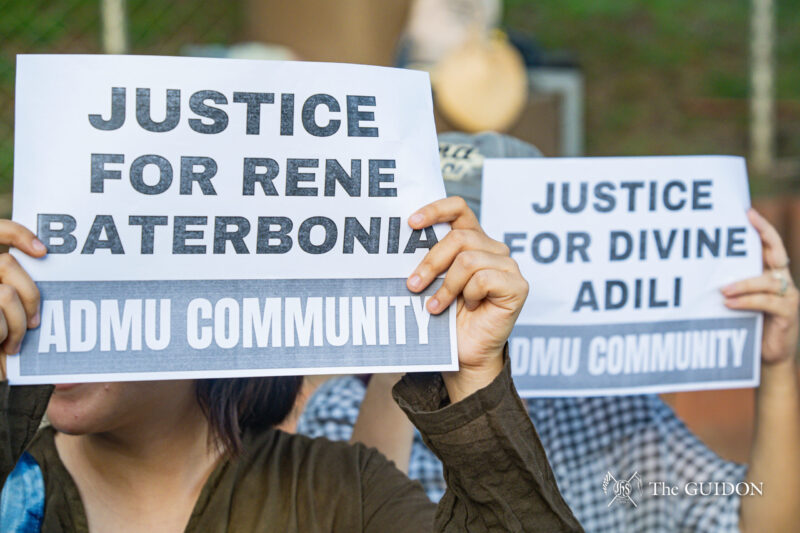
WITH THE labor dispute between the Ateneo Employees and Workers’ Union (AEWU) and the University administration still unresolved, the Department of Labor and Employment (DOLE) assumed jurisdiction over the case on December 1, 2025.
In their statement, DOLE asserted that their intervention was necessary because a work stoppage in an academic institution would disrupt student learning, and a strike could expose employees to lost wages.
Notably, the labor dispute concerns worker suspensions, the Work Rotation Program (WRP), and alleged Unfair Labor Practices (ULP) by the Ateneo administration.
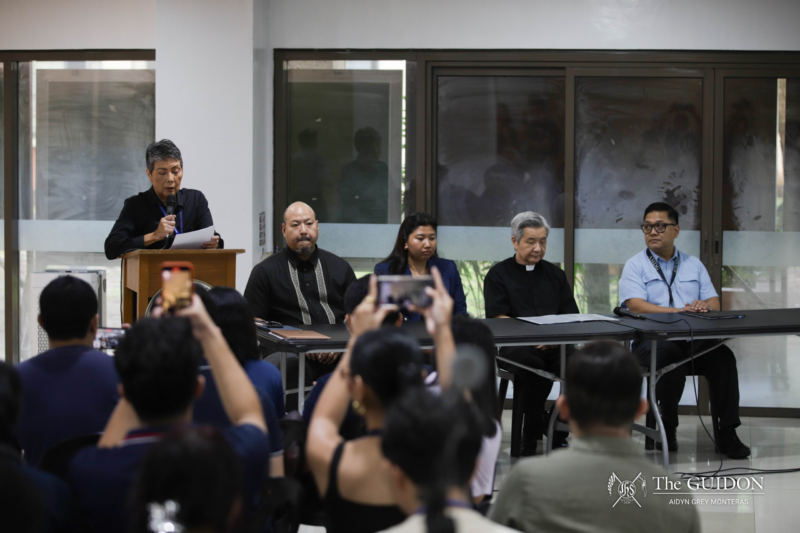
As of writing, AEWU President Raymond Tano stated that substantial agreements still have not been reached concerning the ULP, following their December 12 conciliation meeting with the administration.
With this, he mentioned that the AEWU and the University were set to submit a position paper to DOLE, explaining their respective stances, on December 22.
Policies in question
To contextualize the root of the dispute, Tano shared that it started last August 2024, when the Central Facilities Management Office (CFMO) announced the implementation of Phase 1 of the Area Rotation for the CFMO Housekeeping Services Section.
Acknowledging that WRP is the root of the current dispute, the administration emphasized that the program was designed to “enhance flexibility, morale, and professional development,” which was one of the key recommendations during the CFMO organizational restructuring.
They also enumerated in their position paper the WRP’s objectives, such as broadening employee experience and capability, promoting well-being, preventing burnout, and optimizing workers’ performance.
However, despite WRP’s benefits outlined by the administration, Tano asserted that the WRP still violates Article V of the Collective Bargaining Agreement (CBA) since the Union was not consulted for its implementation. Moreover, he argued that the week-long job shadowing period was also insufficient to orient the workers on the change.
“Ang sinasabi namin [sa administration], bago kayo magpatupad ng bagong polisiya, kailangan kasama ang Unyon sa pagbabalangkas para alam namin kung tatamaan ‘yung benepisyo, karapatan, kalusugan at kapakanan ng manggagawa,” Tano stressed.
(What we explained to the administration is that before they implement new policies, the Union needs to be present in the drafting of any new systems to ensure these policies will not affect the benefits, rights, and health of the workers.)
Extending the concerns over the WRP, Tano argued that the recent mass suspensions of the Union officers violate the CBA due to the administration’s interference with the Union’s internal processes and union-busting.
According to the Labor Code, workers have the right to self-organization, collective bargaining and negotiations, as well as the right to strike.
Following the Union’s grievances, the University released a statement on November 6, 2025, to “firmly deny” the ULP allegations against them. They also countered the allegations of CBA violation, stating that they conducted consultations and drew lots for the area assignment from March to April 2024, followed by dialogues and rotation orientations on April 17, 2024.
Furthermore, the administration argued that the AEWU and the CFMO had a dialogue last May 31, 2024, in the presence of the University Human Resource Operations Shared Services Office. In this dialogue, the administration articulated that the Union complied with WRP “under protest.”
The administration also asserted that although the AEWU initially agreed to the WRP “with reservations,” some officers and members eventually refused to comply during its initial implementation last September 9, 2024. The following day, the AEWU filed a grievance regarding the rotation program. After a week, the University issued Notices of Charge (NOC) to the 51 maintenance personnel who did not comply with the WRP.
Amid growing tensions over the WRP, the suspension of several AEWU members and officers later formed the Union’s basis for initiating the Notice of Strike (NOS) that was filed onlast October 23, 2025. With this, Tano questioned why the University took a year to suspend the charged workers.
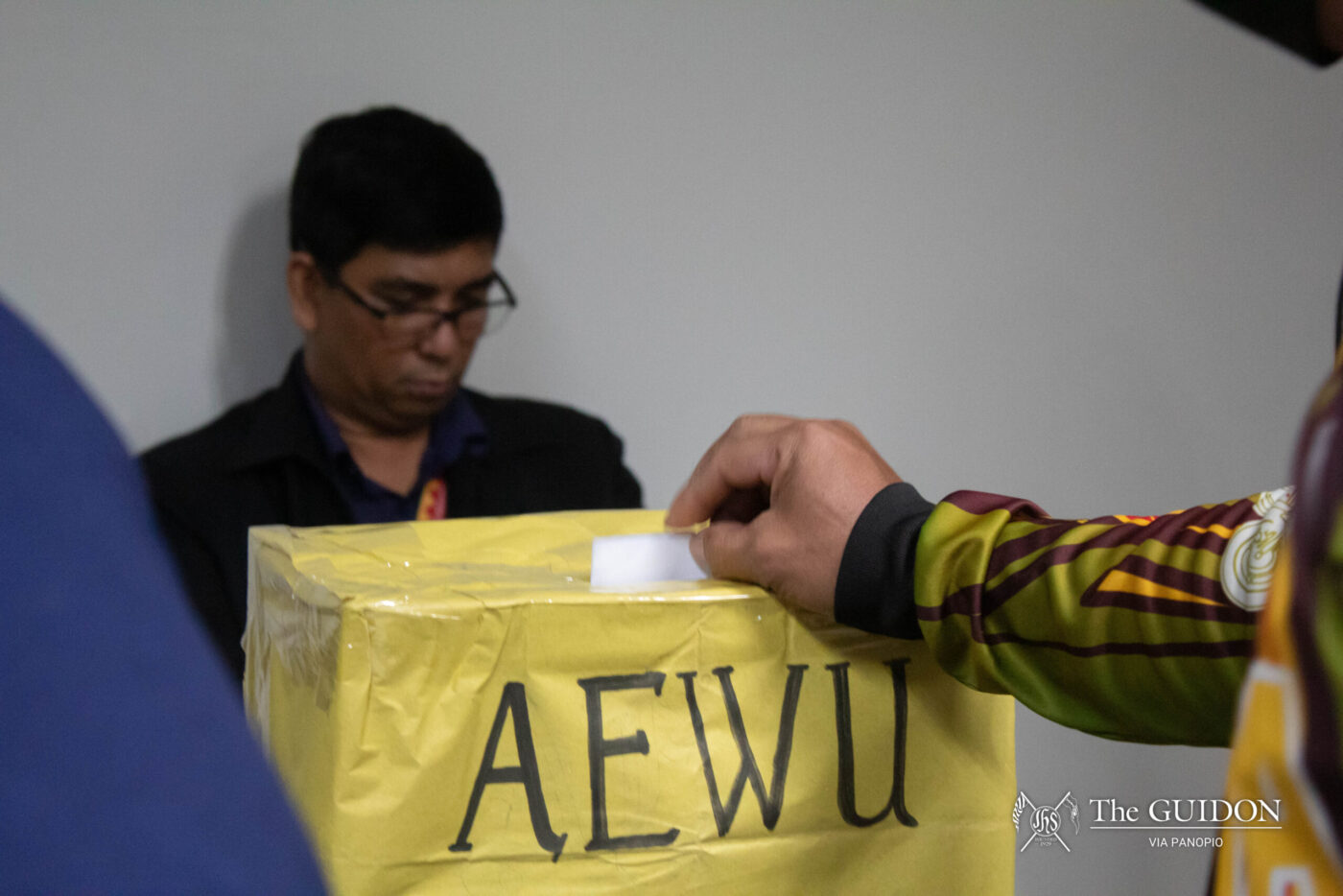
This inquiry then led the Union to file NOS. Hence, last November 21, AEWU voted to proceed with the strike, with 162 members voting in favor and 66 voting against.
Notably, Tano mentioned that, since the Union’s establishment, this was the first time that they faced numerous sanctions in a short period of time.
Disciplinary measures
According to the University’s statement, two disciplinary cases were filed. For the first case of non-compliance with the WRP, 51 maintenance staff were found to have committed insubordination and willful disobedience.
Meanwhile, both Union officers and non-officers were investigated in the second case, where charges against 18 non-officers were dropped, and 30 were found liable for loitering, attending to personal business, or holding non-work-related meetings. This then resulted in 27 one-day suspensions and three warnings.
With these impositions of sanctions on AEWU members, Tano asked about the fairness of the University Disciplinary Action Committee (UDAC), arguing that the administration took advantage of the University Code of Discipline to exert control over employees.
He asserted that many workers who received charges did not fully understand the Code’s provisions and were left vulnerable to unfair sanctions, since the Code was written in English.
Building on these concerns, Tano explained that charges from the administration were often filed without a clear explanation, leaving workers uncertain about the Code’s provisions as the basis for the sanctions.
Moreover, he mentioned the inconsistency of the suspension durations, noting that the Union officers received varied lengths of penalties despite similar infractions. He cited that the president was to serve 10 days, the vice president seven days, the treasurer one day, and the auditor and two other board members with five days each.
Tano also specified that one of the reasons for the NOS is the alleged harassment and “power-tripping” of some supervisors toward the workers, especially with their failure to conduct proper investigations for the allegations.
Meanwhile, the University emphasized in their statement that suspensions were not related to Union membership, as both Union members and non-Union members were subjected to disciplinary action due to violation of workplace policies. They also stressed that their disciplinary actions were proportionally imposed.
On the presented evidence by the administration, Tano raised an issue over the use of closed-circuit television footage, citing The GUIDON’s article in which University Data Protection Office Director Atty. Jamael Jacob stated that access to footage is used only for valid reasons such as criminal investigations and insurance claims.
He argued that using the same recordings for disciplinary actions contradicted these guidelines, questioning whether brief recordings alone were enough to justify the suspensions and capture the context of the recorded situation.
In response to these matters, the administration asserted in their position paper that all disciplinary actions were carried out after due process, and such penalties were in correspondence to each employee’s case.
Explaining their position on the filed NOS, the University viewed it as related to the ongoing disciplinary proceedings rather than a separate labor issue. They argued that the strike did not represent a collective grievance, but rather served the “individual interests” of a few Union officers.
Rifts and resolutions
Following the strike vote, a mandatory seven-day cooling-off period was observed in line with the DOLE regulations, giving both parties time to resolve the dispute. The strike was initially set to begin on December 2, 2025 if no settlement was reached.
However, since DOLE already issued an order, it effectively enjoined any intended strike or lockout and required both sides to maintain the status quo while the matter is under review.
To move toward a resolution, DOLE’s assumption of jurisdiction measure provides both parties with an avenue to peacefully settle their issue and ensure continuity of business operations.
After the suspensions took effect, Tano shared that misunderstandings grew, with some members believing the Union officers failed to defend them in the legal cases. He further stressed that the administration took advantage of this confusion by indirectly turning Union members against the officers.
Under these pressures, internal rifts within AEWU deepened, with officers facing criticisms from its members over decisions on the strike and the filing of related labor cases.
In response to the concerned members’ criticism, Tano clarified that some concerned members tend to compare the current officers to the previous administration of the Union.
However, he explained that current officers began filing multiple cases that had not been raised during the previous leadership, including the ULP cases linked to the filing of the strike. He then pointed out that, as these cases progressed, the administration responded with stricter measures, including NOCs, suspensions, and monitoring of Union activities.
Nonetheless, Tano acknowledged that the confusion within the Union arose from the lack of transparency on the legal basis of these actions, as some feared that the NOS stemmed only from leadership disputes or financial gain, rather than documented labor violations.
Despite the divisions, Tano maintained that AEWU officers’ actions were necessary to protect workers’ rights, emphasizing that all financial gains from legal cases were intended for the employees and their families, and not for the officers.
With the dispute now under DOLE’s jurisdiction, the case will undergo review before any further action is taken. Both parties have agreed to comply with the order and participate in the process as required. Moving forward, both AEWU and the administration expressed hopes for continued dialogue and negotiations. In a statement, the University reaffirmed its “commitment to fair and consistent application of policies, ensuring operational integrity, and maintaining uninterrupted campus activities.”