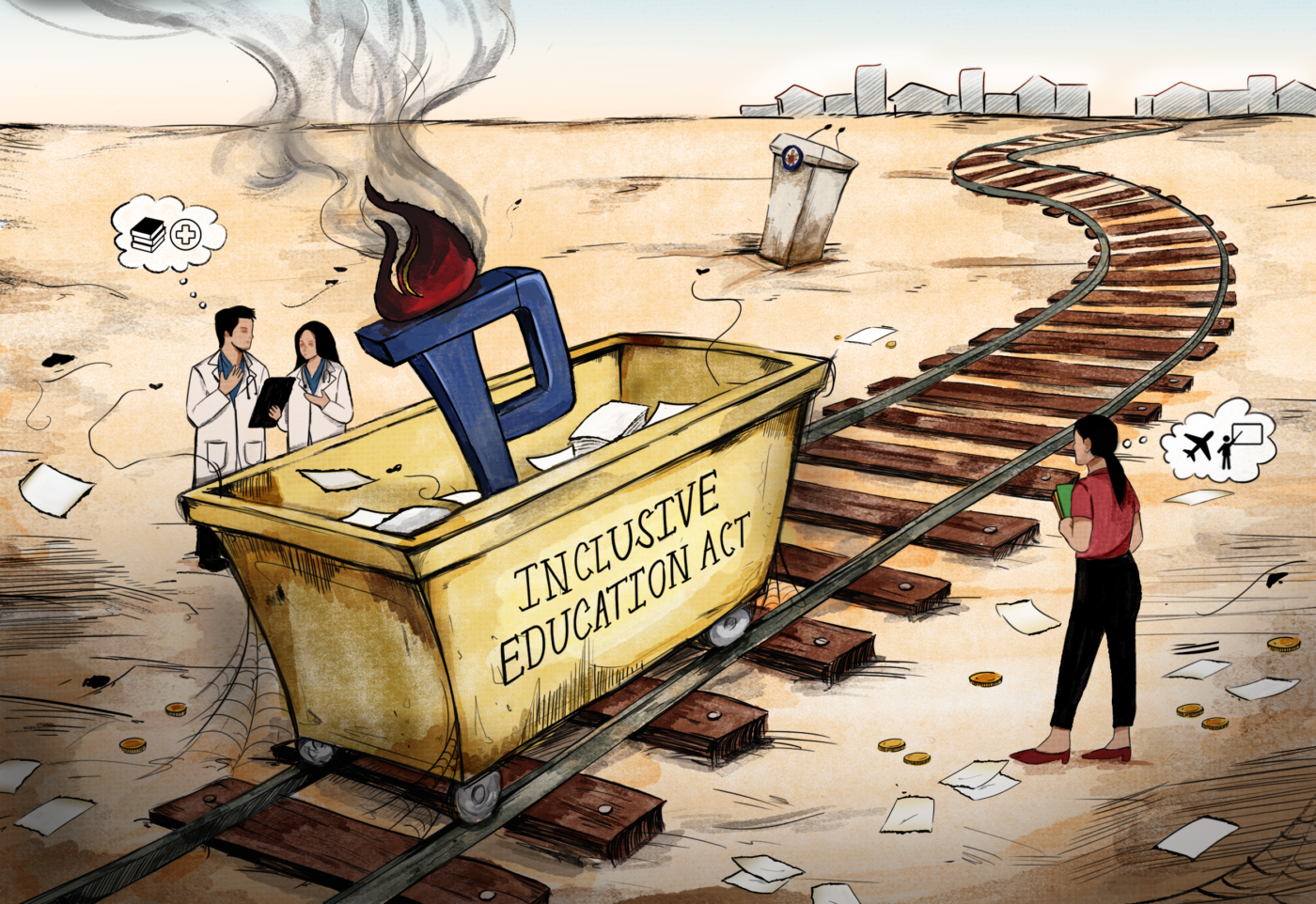
INCLUSIVE EDUCATION promises dignity, access, and opportunity for every learner, regardless of their ability. This premise underpins Republic Act (RA) 11650, or the Inclusive Education Act, which aims to create a long-term inclusive learning environment for students with disabilities.
Three years after its establishment, however, the Philippines continues to face the same challenges, including a shortage of teachers who specialize in Special Education (SPED) and learning centers equipped for quality education.
Moreover, the previous school year recorded 391,089 learners with disabilities enrolled in public schools, accounting for only 8% of the estimated 5.1 million learners with disabilities nationwide. These realities highlight the fact that SPED in the Philippines remains marginalized, underfunded, and underdeveloped.
As another year draws to an end, the continued absence of a clear roadmap for implementing RA 11650 raises a pressing question as to whether the Department of Education (DepEd) truly pursues inclusive education or if their promise remains written on paper.
Structural deficiency
The Inclusive Education Act, established on March 11, 2022, aims to protect and promote the rights of learners with disabilities to quality education through the creation of Inclusive Learning Resource Centers (ILRCs) in all school districts, municipalities, and cities. These ILRCs are physical or virtual centers designed to facilitate learning, ensure equal opportunities, and provide instructional support for learners with disabilities.
In line with the policy, DepEd has converted 32 SPED centers into ILRCs. However, only 12 are reported to be “partially” operational, while the other 20 remain underdeveloped or are still in the process of conversion. This slow progress emphasizes the gap between legislative intent and real-life implementation.
Beyond infrastructure, DepEd also planned to integrate Individual Education Plans (IEPs) into ILRCs to meet unique educational needs. Yet, due to a shortage of health professionals, excessive documentation requirements, and inadequate training for SPED teachers, only 13% of teachers currently utilize IEPs.
Progress for RA 11650 is further hindered by persistent systemic issues, including inadequate assistive technology, poor infrastructure, the absence of a clear strategy to involve Local School Boards and the Special Education Fund, and limited access to learning materials.
All these shortcomings reveal a deeper problem beyond incomplete conversions and underutilized plans. Without effective execution, a law meant to ensure inclusion risks becoming performative. Despite its legal foundation, DepEd’s failure to provide necessary structural support and sustained teacher training renders the policy rhetorical rather than transformative.
Moreover, the lack of transparent updates and urgency from DepEd ultimately harm children with disabilities as they are stripped of their right to quality education.
Mislaid authority
Beyond these issues, the country also faces unstable teacher progressions, resulting in severe shortages for teachers who specialize in SPED. Moreover, many educators from institutions like the Philippine National School for the Blind and the Philippine School for the Deaf choose to work abroad for better compensation and institutional support. This results in public and national schools struggling to sustain inclusive programs, let alone expand to ILRCs.
To address these gaps, DepEd has turned to the Department of Health (DOH) for assistance. While collaboration with the health sector is vital in providing medical and therapeutic support to learners with disabilities, the core of inclusive education lies in pedagogy, classroom management, and specialized instruction—competencies rooted in educational, not medical, expertise.
However practical the partnership with DOH may seem, it only reflects a misplaced delegation of responsibilities. The training, retention, and adequate compensation of teachers and therapists fall squarely under DepEd’s mandate, not the DOH’s.
By shifting this burden elsewhere, DepEd risks diluting accountability and slowing progress toward systemic reform. Instead, the department must work towards training educators, offering competitive salaries, and providing sustained professional development. Only by assuming full responsibility for these functions can DepEd fulfill its constitutional duty to guarantee quality and accessible education for all learners.
The urged tenacity
These systemic shortcomings ultimately undermine both the academic growth and dignity of learners with disabilities. With existing barriers to schooling, mobility, and access to therapeutic services, their opportunities diminish further when educational disadvantage compounds these challenges.
The failure to provide equitable access to meaningful learning erodes not only students’ intellectual development but also their fundamental right to dignity and participation.
Learners with disabilities were already twice marginalized before the pandemic; today, they face increased risk of exclusion due to gaps in distance-learning support and assistive services. If inclusive education is to become more than a policy statement, these structural and attitudinal barriers must be addressed with urgency.
This leads to a necessary truth: DepEd bears primary responsibility for the slow progress of inclusive education in the country. While the intent behind existing policies is commendable, weak structural support continues to blunt their impact.
As such, robust teacher training, fair compensation, proper implementation of ILRCs, and stronger resource management are necessary to ensure that inclusive education becomes a lived reality for learners with disabilities, rather than a promise on paper.
Likewise, transparency and urgency are equally crucial, particularly in the implementation of ILRCs nationwide. Without clear timelines, adequate funding, and public accountability, these initiatives will continue to fail learners with disabilities and deny them the opportunity to reach their full potential.