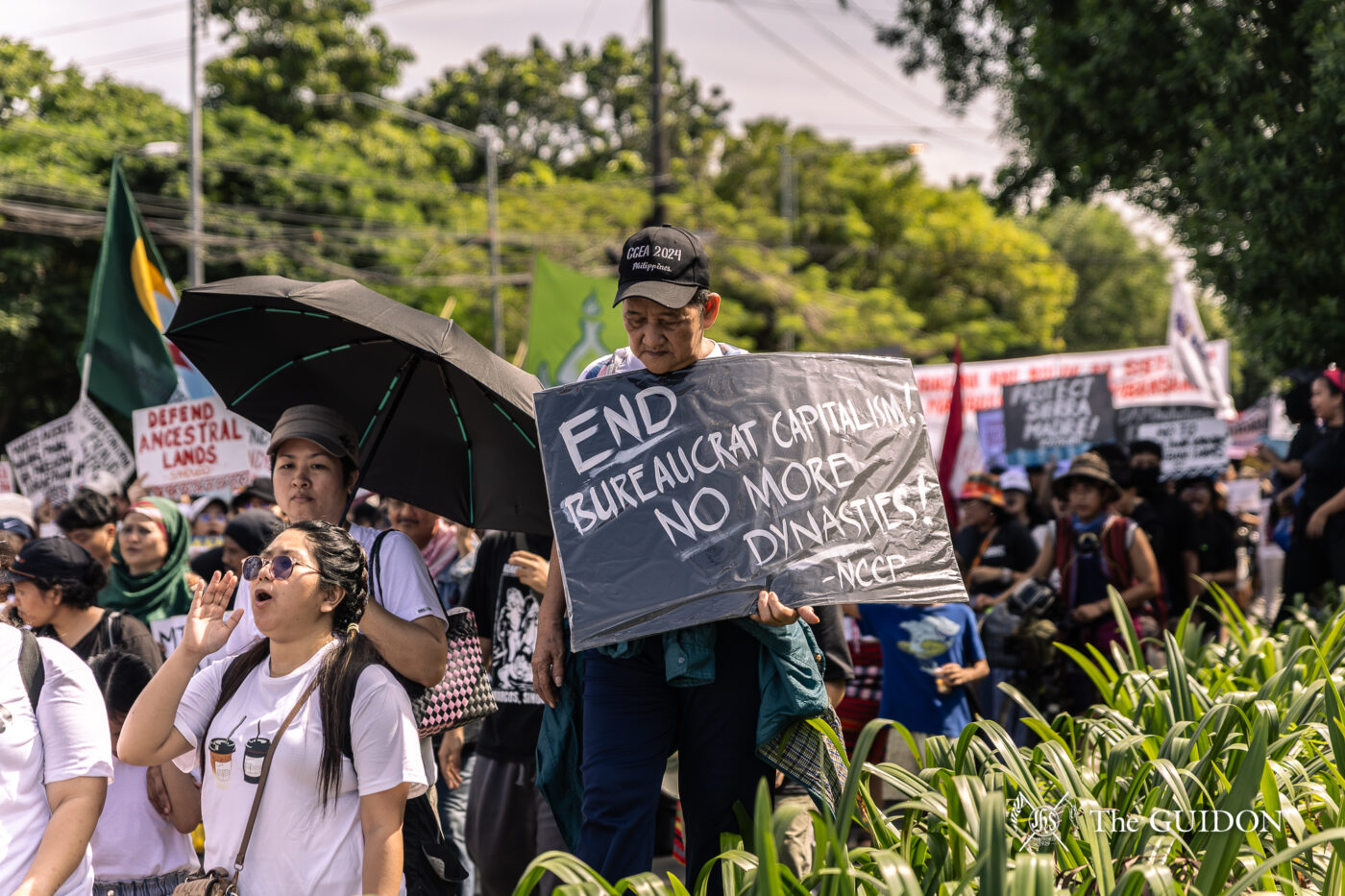
MASS PROTESTS over flood control projects in the Philippines expose deep political crises, echoing the Global South’s wider struggles for democracy, accountability, and justice.
These demonstrations stem from colonial legacies that have destabilized nations through deep social inequalities, exploitation, and uneven development. At the same time, Filipino movements such as the Trillion Peso March and Baha sa Luneta resonate with movements in Indonesia and Nepal, where citizens demand accountability and political reform within their local contexts.
Legacies of power
These protests are reactions to political systems that still reflect colonial-era systems, which were designed to maintain control rather than foster democracy. They concentrated power, extracted resources, and created hierarchies that entrenched social and class inequalities. These structures left populations dependent and fragmented, enabling ruling powers to perpetuate state control and aggravate inequality. Despite gaining independence, the former colonies’ new leaders inherited the same hierarchies, continuing patterns of exploitation that still shape their political lives.
In the Philippines, centuries of Spanish and American rule entrenched elite land ownership. University of the Philippines Asia Center Associate Professor Ariel C. Lopez, PhD explained that the Philippines’ colonial economy during the 19th century depended on the export of select cash crops. “Think about the azucareras—many of these families who owned large lands still remain part of the Philippine elite,” he expounded.
In Indonesia, the country’s present power dynamics stem more from the Indonesian Revolution against the Dutch (1945–1949) than from colonial rule itself. Lopez explained that the revolution handed the military outsized authority, giving them extensive political influence. This influence was formalized under Dwifungsi—a doctrine that allowed the military to act both as defenders of the state and as active participants in government. Although Dwifungsi was later dismantled, Lopez added that the possibility of its reinstatement has contributed to discontent in Indonesian civil society.
While Nepal was never formally colonized, its struggles for equality echo broader patterns across the Global South. During the Rana era (1846–1951), a rigid social and economic system of development—reinforced by a pro-British alignment—concentrated power and wealth within a small elite. Although the ruling Rana family was dethroned in 1951, political and administrative power remained in the hands of a few high-profile families. That legacy of elite dominance persists today, as the descendants of Nepal’s top politicians are accused by protesters of flaunting their privilege through luxury vacations and high-end goods.
These historical hierarchies inherited from colonial administrations, revolutionary upheavals, or entrenched local elites shape the landscape for the present unrest. Amid these struggles, citizens across the Philippines, Indonesia, and Nepal continue to challenge inequality, demand accountability, and push for meaningful democratic reforms.
From EDSA, outward
Following a long history of resisting entrenched power, decades after the EDSA Revolution, the Philippines established itself as a symbol of democracy and hope, situating the nation in the middle of a shifting political current across the Global South. From Latin America to Southeast Asia, movements echoing EDSA’s calls for change, accountability, and good governance intensified, advocating for accountability, good governance, and social equality.
Relative to these regions’ changing political landscape, the Philippines stands both as a participant in these movements and an example of how popular dissent can shape political trajectories.
For Lopez, the parallel between the Philippines and other Global South countries lies in class divisions that endure despite decades of reform. “I think it’s about class,” Lopez asserted, “If you look at [the September 21 protest], […] the people in power we have right now [are] abusing [the] said power with the flood control project.”
This sentiment reflects the frustrations in Indonesia, where inequality and elite dominance continue to create unrest. Lopez observed that Indonesians, like Filipinos, are very angry about seeing their local politicians living a good life and benefitting from state resources, while the masses continue to suffer.
From the streets of Manila to the roads of Jakarta, the protests remain the same: when those in power stop listening to the struggles of the masses, people consolidate their voice into a force that refuses to be silenced.
These voices from separate movements have converged into a shared pursuit of change that transcends borders and ideologies. Whether demanding economic reform or political accountability, they reflect a growing refusal to accept that politics belongs only to the powerful.
Distinctive coherences
At the onset of the elites displaying lavish wealth, protests in Indonesia largely sparked on August 28 due to the death of Affan Kurniawan, a motorcycle-taxi driver who was run over by a police tactical vehicle. This fueled the already growing discontent over the wages and living standards among the Indonesian masses, as well as the controversy over parliament subsidies and elite impunity.
Similarly, demonstrations in Nepal erupted on September 4 due to a social media ban on several sites, which was perceived as an attempt to silence the dissent on corruption and nepotism. Notably, the height of the protest transpired when protesters breached security barriers, and the police responded with teargas and live ammunition.
In the Philippines, similar protests are not a new sighting. The distinction and catalyst of the recent unrest lies in the tangible depth of corruption, with local politicians, government agencies, and construction companies colluding to create substandard infrastructure projects.
These corruption scandals had transpired on August 4, when several lawmakers were revealed to have acted as their own contractors for government infrastructure projects. Subsequently, President Ferdinand Marcos Jr. named only 15 contractors who had acquired Php 100 billion worth of flood control projects since 2022; most of the projects were not located in the most flood-prone places in the country.
Lopez further added that a significant reason for these demonstrations is connectivity, which leads to mass solidarity with the goal of becoming “a real social and political force.”
At large, the recent protests in the Philippines attest to this connectivity through their shared sense of resisting unresponsive political systems due to decades of upheavals. As a result, these circumstances have inspired new generations to expose fraudulent governance and challenge historical hierarchies conspiring at an uncontrollable pace.
To harness a political force larger than local geographic regions demands a unifying thread that acts coherently across different countries. Thus, a grounded aim is clear: to keep the political momentum undiminished in all its fervor toward true justice and accountability.