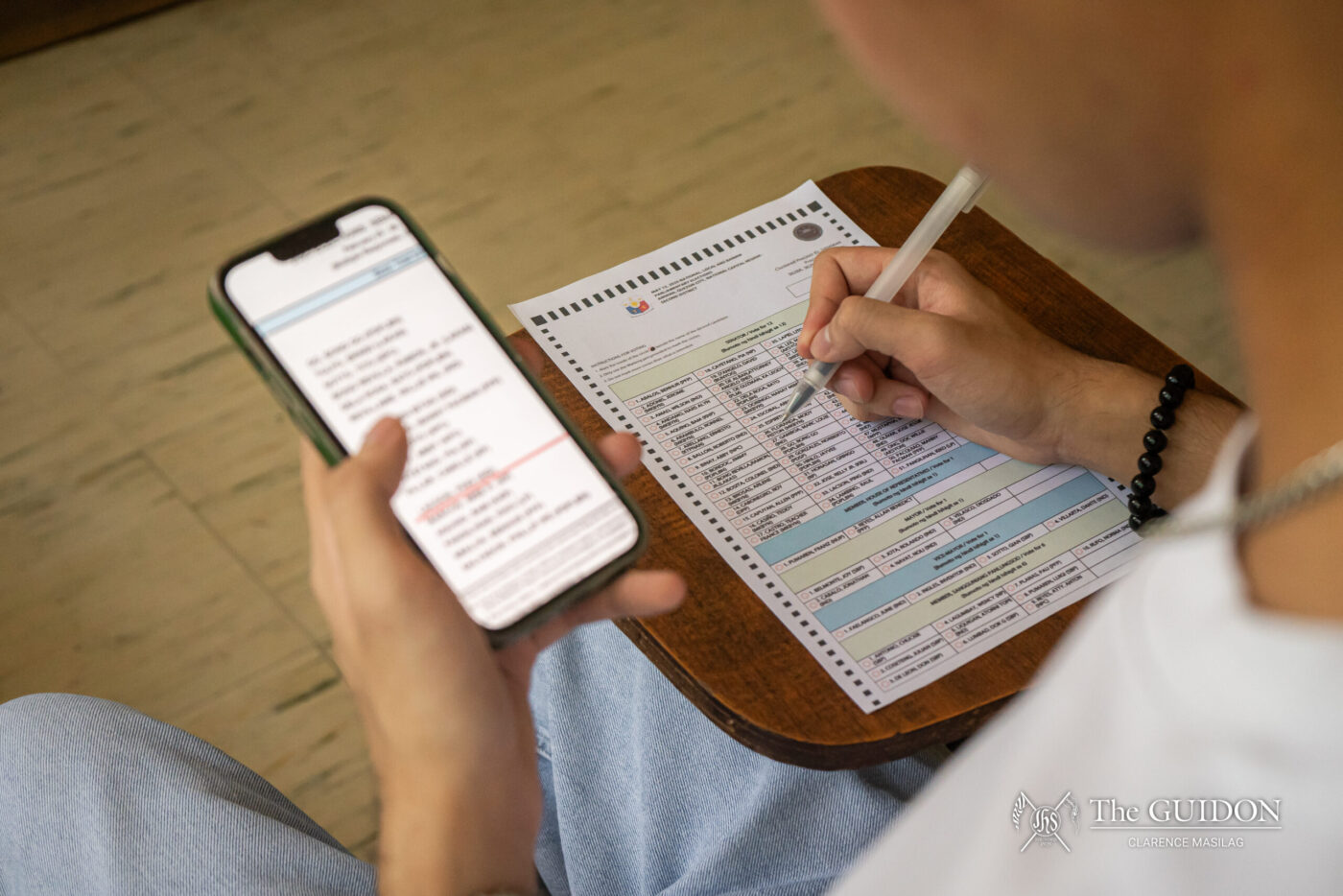
EVERY ELECTION season, survey research institutes like Pulse Asia and Social Weather Survey (SWS) proliferate news on the current standings of electoral candidates. Drawing public attention to these surveys is the winning bracket, collectively referred to as the “Magic 12,” which reveals the senatorial aspirants projected to win one of the twelve seats in office.
More than predicting the election results, however, these surveys reflect the behavior and sentiments of Filipino voters. In view of the 2025 midterm election, polls serve not only as forecasts but as instruments of political expression that could shape the course of the nation.
Numbers name names
Pre-election polls have long been a staple in Philippine politics. Leading candidates tend to gain more exposure—they are interviewed more often, mentioned frequently, and featured on primetime news and media.
Such increased visibility of the frontrunners can be advantageous, as polls can stimulate public discourse and shape how voters perceive candidates’ viability. Associating candidates with numerical rankings or vote percentages changes the narrative of the competition itself.
For Ateneo de Manila University Psychology professor Joshua Uyheng, PhD, surveys “serve many functions for different stakeholders” and could aid candidates and their campaign teams in assessing progress and identifying areas of improvement.
“We are interested not only in what the numbers denote mathematically, but also what they mean psychologically and socially. Polls can elicit emotions: when our favored candidate is winning, we are happy, and when our favored candidate is losing, we are sad, angry, or afraid,” he said.
This emotional response is crucial in understanding how polls influence voter behavior beyond statistics. According to Uyheng, it could either encourage voters to disbelieve polls altogether or motivate them to campaign better for their political preferences. Still, the effects of pre-election surveys on voters’ tendency to shift alliances remain a question.
Magic ball for Magic 12
One interesting effect of these polls is the shortlisting of the most favorable candidates, whose names are quickly disseminated across social media. This digestible presentation of the pre-election polls can shape public opinion by reaffirming or prompting voter decisions before election day.
Due to the repetitive appearance of some candidates in surveys, the polls may reinforce name recall, which can favor popular candidates. In addition to this, the perceived accuracy of these surveys can also sway undecided voters to the advantageous candidates based on rankings. As well-known names dominate, voters become reluctant to support candidates with a lesser likelihood of success.
The prevalence of pre-election surveys has thus prompted the Commission on Elections (COMELEC) to approve a resolution regulating the release of national election surveys. COMELEC Chairman George Garcia explained that this was done to mitigate the alleged tendency of surveys to influence voters.
While polls increase the chances of recognizability, Uyheng noted that other strategies—such as advertisements, posters, and door-to-door campaigns—also influence voter decision-making. As such, the outcome of the election cannot be attributed solely to pre-election polls.
Margin of error
Beyond the influence of pre-election surveys, their credibility has also come into question, as the variation of methodologies used by polling organizations can affect results. Differences in sample size, question framing, geographic distribution, and timing make comparisons between different surveys difficult and results almost non-uniform.
While conducting surveys is an effective way to gauge public opinion, Uyheng asserted that it must also responsibly and accurately reflect the sentiments of the population it claims to represent.
During the 2022 national elections, the credibility of both Pulse Asia and SWS faced scrutiny. Several claims surfaced regarding the overrepresentation of older generations and underrepresentation of younger voting population in some surveys.
Addressing these issues, the organizations emphasized that while they employ probabilistic sampling, no methodology is without errors. With the variation in the country’s social demographics, it is difficult to ensure that all sectors are equally represented.
Uyheng reaffirmed that survey results are not definitive reflections of national sentiment, but rather instruments that capture current preferences from a small portion of the voting population. “Polling should establish not just scientific validity, but also social trust. It is critical to engage with polling results the same way we engage with any political project—as unfinished stories we have power to change,” he explained.
While numbers appear to dictate narratives and sway public opinion in the Philippine political scene, they do not determine the final outcome of the elections. In the end, it is still the voters who hold the power to overturn predictions and redefine election outcomes.