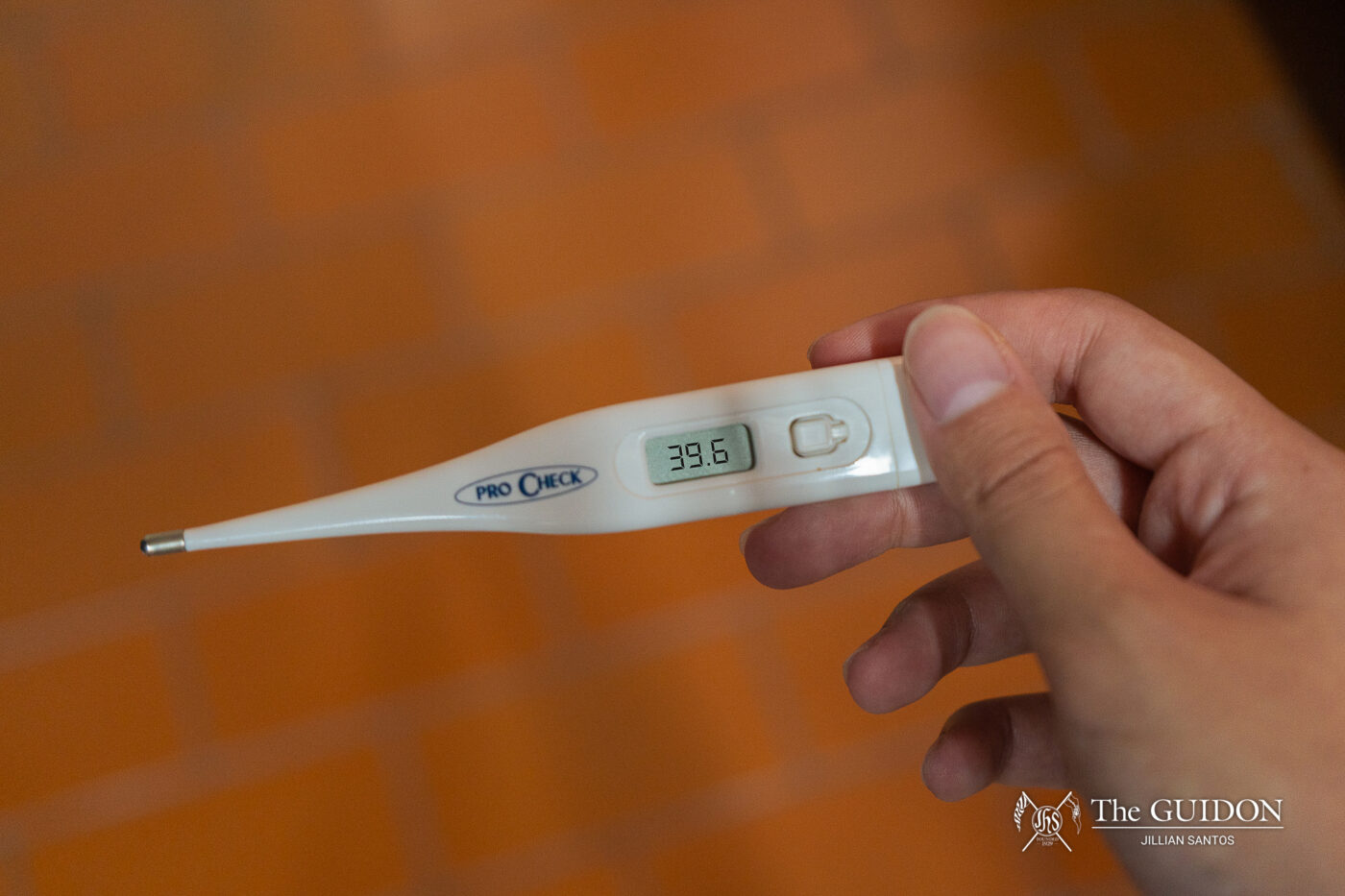
INCUBATED IN a rapidly changing climate, dengue virus cases continue to increase and spread amid rising temperatures and heavier rainfall. Between January and March 2025, the Philippines saw over 70,000 cases of dengue, well ahead of the rainy season from June to November.
Beyond being a long-standing public health concern, the mechanisms of the dengue virus reveal a wealth of information on the Philippines’ position in the world, both geographically and socially.
Dengue fundamentals
Situated directly above the equator, the Philippines is particularly vulnerable to tropical diseases, which are either endemic or prevalent in regions along the tropical rain belt.
Dengue fever is among these illnesses—triggered by any one of the four strains of the dengue virus (DENV) and transmitted through the bite of the female Aedes aegypti mosquito. DENV, a vector-borne disease, enters the human body through the mosquito’s salivary glands. Its saliva is then injected into the human host to facilitate feeding and clot the blood.
After obtaining enough nutrients, the mosquito lays its eggs in stagnant water—often found in outdoor containers or ponds that accumulate rainwater. Because of this, dengue cases usually peak during the country’s rainy season.
Getting warmer
Beyond rainfall, temperature also influences the spread of dengue. DENV can be propagated in temperatures as low as 18 degrees Celsius and as high as 32 degrees Celsius. Meanwhile, the optimal temperature range for the development of dengue-carrying mosquitoes is between 25 degrees Celsius and 30 degrees Celsius.
According to Senior Research Fellow at Ateneo Center for Research and Innovation Xerxes Seposo, MD, PhD, this temperature range is referred to as the “sweet spot” for viral replication. Temperatures outside this range can make the virus unviable.
Assistant Vice President for Health, Care, and Well-Being Norman Dennis Marquez, MD, expounded on this factor, noting how mosquitoes are drawn to body heat especially in active, social settings.
“Mosquitoes are attracted to the warmth of your body. They’re looking for it. […] If there’s something like that, you attract the mosquitoes to a lot of people, […] especially if you have active kids, playing, gathering,” Dr. Marquez explains.
When asked about the mechanisms behind dengue surges, Ateneo Health Sciences Department Lecturer John Q. Wong, MD, Msc referred to the concept of the epidemiological triangle in relation to DENV. The model connects three key elements: the host (people), the agent (dengue), and the environment. With any change in the elements, the triangle becomes unbalanced and disease emerges.
Notably, the unusual spike of dengue cases earlier this year may be linked to increased temperatures. Dr. Seposo commented that climate change may be shifting the seasonality of dengue outbreaks. “[Infections] can actually move forward or move later [in the year]. The peak of a certain disease, in this case dengue, can be moved in either aspect,” he said.
Adapting to the heat
The spread of dengue also depends on the socioeconomic dynamics of developing countries. According to Dr. Seposo, the risk of contracting dengue is higher in dense, poorer areas with inadequate housing.
Adding to this risk is the concept of the rural-urban continuum, where denser urban centers would have better access to healthcare resources than their rural counterparts.
Similarly, Dr. Wong mentioned that the management of utilities, especially water, can also affect how dengue is propagated in urban environments. He explained how rapid urbanization—combined with poor waste management and the impacts of climate change—could add to the threat of dengue.
As such, local policymakers are challenged to integrate climate considerations into public health strategies.
One approach is early warning systems based on rising temperature patterns, which Dr. Seposo explained can alert communities months ahead. He also stressed the importance of adapting a climate-informed outlook—starting with education reform.
“Apart from the warning systems, it’s towards education that we try as much as we can to really let the education be more climate-inclined or climate-informed,” Dr. Seposo shared.
Sharing similar sentiments, Dr. Wong discussed the significance of systems thinking and interdisciplinarity, which enables health professionals and policymakers to look outside individual behavior.
“[W]e have to work across silos, across disciplines. We have to work with climate scientists, sociologists, economists, and start thinking, mapping out the whole system—looking at factors outside of the health sector that are causing these outbreaks,” he asserted.
In a world of constantly evolving vulnerabilities, understanding the different dimensions of development, such as water and sanitation, can be key to navigating an increasingly volatile climate. Dengue, and other climate-sensitive diseases, thus call for integrated development and public health strategies that are responsive to the interconnected realities of a changing climate.