CORAZON AQUINO’S death was déjà vu; everything seemed like a throwback to the dramatic ‘80s. Yellow ribbons tied to jeeps, yellow confetti all over Makati, a nation singing “Magkaisa” in chorus—this was Cory Nation.
More than just a window to our storied past, the incredible reaction to the late president’s death also turned out to be something nobody expected: it was also a glimpse—nay, the birth—of a brand new future for the Philippines.
Less than a year later, Cory Magic would hold its sway: the thousands of people who marched Cory to her grave would translate into the millions who’d march her son to Malacañang.
Much talk
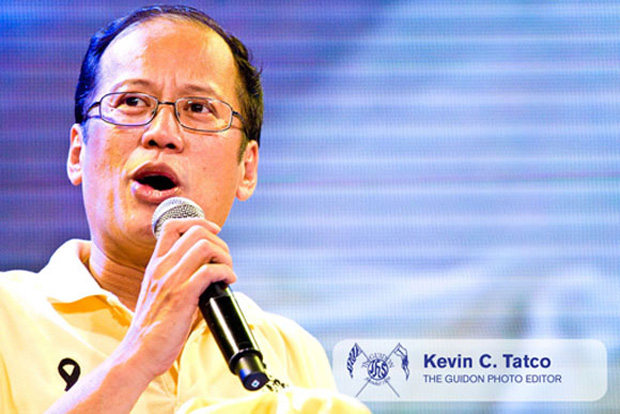
Noynoy Aquino’s phenomenal rise to the top is of great interest to the Ateneo community. The president-elect attended the school from elementary to college, graduating with a degree in economics in 1981.
Nevertheless, Ateneans have refused to rally behind the senator as one bloc. Gibo Teodoro, a Lasallian, even beat the senator in December’s campus mock polls.
The results of the mock polls highlighted the sentiment prevalent among Aquino’s critics: he isn’t quite ready for the job. Critics have lambasted his lackluster legislative record, and his alleged opportunistic exploitation of the EDSA legacy.
Fortunately, much talk and debate about relevant issues still transpired during the campaign. And for a university home to academics promoting good governance, students rallying for land reform, and institutions advocating human rights, such talk means and matters a lot.
‘Untainted’
A large part of Sen. Aquino’s campaign strategy focused on his ‘untainted’ image. Through one of his campaign slogans—“Kung walang corrupt, walang mahirap! (Without corruption, there’s no poverty!)”—Aquino has effectively positioned himself as a crusader against corruption.
Aquino strikes a particularly timely chord because as Liberal Party (LP) guest candidate and now Senator-Elect Serge Osmeña says, “Under [outgoing President Gloria Arroyo and her husband], corruption has gotten worse… The involvement of officials in corrupt activities was not only highly tolerated, but even encouraged.”
“I don’t want to have to put so much on his shoulders, but [Aquino] is inheriting a lot of problems,” says Leah Navarro, Executive Director of the Black and White Movement.
“You can’t do very much in six years… but I’m hoping he can start us off,” she says.
For Osmeña, it is too early to predict how the fight against corruption will fare. However, he’s convinced that Aquino is a “very honest and upright public servant.”
But despite his faith, the senator-elect has expressed discomfort with some political decisions of the Aquino camp.
“While I was very supportive of Senator Aquino’s presidential bid, I was extremely uncomfortable with the Liberal Party’s ‘business as usual’ practice of recruiting traditional politicians who had been adoring allies of Arroyo,” he says.
He cites Aquino’s acceptance of Ralph Recto into the LP senatorial slate, despite how the latter “had been a very active supporter of Arroyo.”
“Some may have been able to live with this contradiction, but I could not,” Osmeña says.
In defense of Aquino, Navarro says: “There were many people who supported Noynoy. If there were some people of questionable reputation [who supported him], that does not mean he’s a bad person.”
“We all know, though,” she says, “that if these people subscribe to [Aquino’s] leadership now, they will have to live the way he expects them to.”
Human rights is another issue that Aquino will have to address. For many observers, the human rights situation in the country has worsened under Arroyo.
“The Arroyo administration’s human rights track record is… next only to the grim record of the Marcos dictatorship,” says Rep. Satur Ocampo of Bayan Muna.
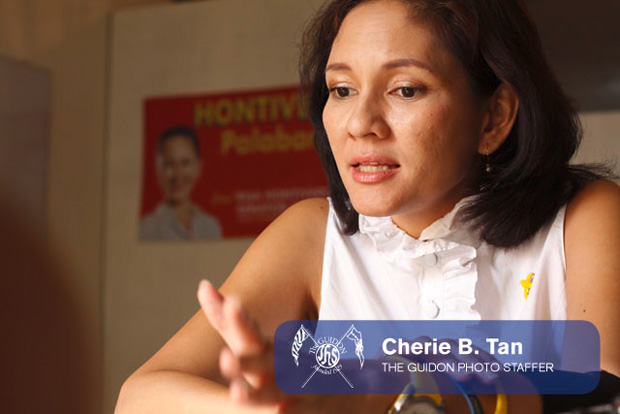
Rep. Risa Hontiveros of Akbayan agrees. “[Arroyo] did very, very poorly in terms of human rights protection and in terms of exacting [human rights] accountability from her own state agents,” she says.
But speaking about the prospects of human rights under an Aquino administration, Ocampo says: “There is no clear signal yet from [Aquino] that he would turn around his predecessor’s record on human rights. If he continues [Arroyo’s] counter-insurgency program backed by the United States government, Noynoy will go the way of Gloria.”
He also adds: “That Aquino has chosen Arroyo’s once presidential adviser on the peace process, Ging Deles, for the same position in his prospective Cabinet does not augur well for a positive turn in this regard.”
Hontiveros, on the other hand, strikes a more optimistic tone.
“A vantage point from which Aquino approaches the issue of human rights is security sector reforms,” she says.
“If [Aquino] puts his money where his mouth is,” she says, “we would have radically reduced—if not totally eliminated—these most notorious forms of human rights violations: the killings and the disappearances.”
For Ateneo Professor and Ang Ladlad Chair Danton Remoto, there is also much to look forward to regarding human rights in the civil arena.
Remoto, who laments the lack of help for human rights advocacy groups from the outgoing administration, is optimistic for a more favorable Aquino response.
“One faction of Sen. Aquino’s group is composed of NGOs who have worked with human rights campaigns,” explains Remoto. “We are more hopeful that, with the new administration’s focus on human rights, we’ll ensure the passage of the [Anti-Discrimination Bill].”
If passed, the law will penalize cases of discrimination against sexual minorities.
Transgressions
For certain, the Cojuangco clan’s lethal love affair with Luisita would dog the Aquino administration. The Cojuangcos are widely believed to be perpetrators of feudal transgressions against the farmers of Tarlac.
“Hacienda Luisita is an issue that will test the moral leadership and political will of our incoming president,” says Ateneo Professor and Pambansang Kilusan ng mga Samahang Magsasaka National Coordinator Soc Banzuela.
“You know very well, forces against social justice are there [in Luisita],” Banzuela says. “No less than the clan itself.”
He asks accordingly: “Will [Aquino] eventually summon the courage of dealing with his clan?”
“Wala talaga kami maaasahan [kay Noynoy].”- Ka Tonying Flores, KMP
For Hontiveros, the answer is yes. “During the campaign, the issue of Luisita was brought up against him,” she says. “To his credit, he was the only presidentiable who then said that he will fully implement the Comprehensive Agrarian Reform Program Extension with Reforms (Carper). He also explicitly said he would have Luisita covered within the five years of the program.”
But for Tonying Flores, spokesperson of the Kilusang Magbubukid ng Pilipinas (KMP), there isn’t much to be hopeful for in an Aquino presidency.
“The peasantry can’t count on the Aquino regime [for agrarian reform]—most especially the farmers in their very own hacienda,” Flores says in Filipino. He also hits Aquino’s support for Carper as meaningless; KMP considers the bill as practically the same agrarian reform program that has “failed” the peasantry for more than 20 years.
“Carper has a lot of killer provisions for the farmers. It’s a land reform bill for the landlords,” he Flores says.
For her part, Hontiveros stands by Aquino and Carper, a bill that Akbayan lobbied for.
“I would expect that, in six years, if Carper is successful, we will have a much more dynamic rural economy, with the productivity and the food security that it would generate,” Hontiveros explains.
Banzuela, however, is not as optimistic. “As far as pushing social justice laws [is concerned]… I’m not that hopeful,” he says. According to him, this is due to Aquino’s pronouncements during the campaign period.
“Who can be inspired by [such pronouncements as] ‘We’re still looking for a buyer’ or ‘I only have little land [in the hacienda]’?” Banzuela asks in Filipino. “If your land is so little, why can’t you just give it up?”
“Start distributing your land now,” he challenges the president-elect.
New start
An Aquino presidency is what many Filipinos consider to be our country’s new start, after a failed regime that reneged on many of the promises it made during the 2001 revolt. His mandate is further augmented by people seeing him as the uniting figure of the current incarnation of People Power, something which can ‘remedy’ the wrongs of recent years.
As the only son of two democracy icons marches on to Malacañang, he has with him the backing of EDSA revolutionaries and probably the most phenomenal electoral win in our country’s recent history. This comes, however, with the excess baggage of being a landowning Cojuangco.
But even the president-elect’s most ardent supporters would have to agree: the gentleman from Times St. still has a lot to prove.
Editor’s note: Writer has no relation to the president-elect.