In history class, my professor would always emphasize that it is dangerous to ask “what if?” According to her, history has already been written—you cannot change the outcome of World War I, for instance, or hope that the leaders then would make a different decision to change what has already transpired.
Thinking about it now, the ‘what if’ question that makes you dwell on the past is not really too difficult to answer. All you have to do is look back at a specific memory and draw conclusions from what could have possibly happened next. It is quite a lazy question to ask, given that it is mostly based on assumptions, and maybe that is why my professor dislikes it so much. I realize it is that specific aspect of the question—assumptions—that makes it so dangerous. It promotes a sort of thinking that is too idealistic.
Sure, asking “what if?” could work for certain circumstances, especially during the early, experimental phase of pursuing something. But when it comes to what has already been done, it is pointless to hope it could have ended better. What adds to the danger of asking “what if?” is the mindset of being too idealistic; wanting everything to be perfect. A question as simple as “What if I studied harder?” could lead to deeper ones like “What if I chose a different course?” or “What if I chose a different school?” The questions could just keep on piling up.
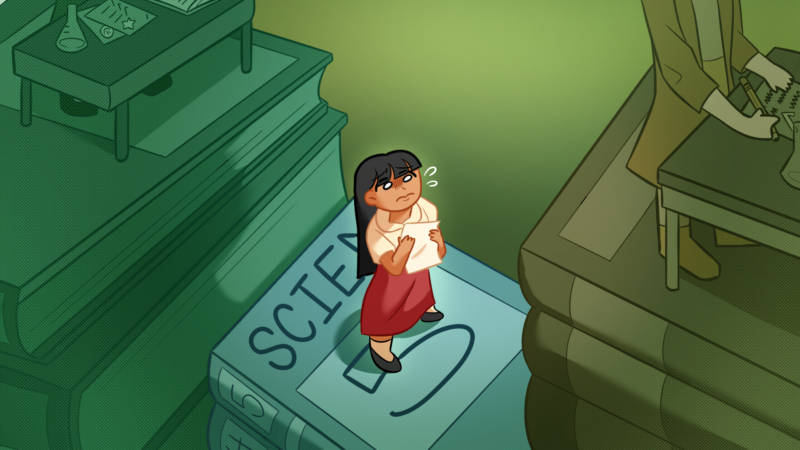
You can get trapped in a spiral of ‘what if’ questions that go on for so long that they eventually affect how you see your life or how you’ll live. You could start to regret everything you have done so far and end up doing nothing about it. What’s worse is that the deeper you go into your questioning, the more fearful the questions become, and you are eventually surrounded by negativity. It is a spiral of thinking that is so difficult to break away from. The ‘what if’ question truly is dangerous—take it from me, who has pondered upon that question for so many times in my life already.
The hard truth that has to be faced when asking the ‘what if’ question is that oftentimes, the responses you formulate are too late to consider turning into reality. Sure, asking this question would generate interesting and relevant insights that could prove useful when it comes to reflection or improvement; but this should not be our sole focus. Instead, the focus has to be shifted to the present and the future where there are still so many chances to be better. Yes, take some time to reflect, but don’t let yourself get stuck there and end up doing nothing about where you ended up.
The ‘what if’ should then be replaced with other, more appropriate questions like “Where do I go from here?” or “What do I need to do to be better?” This fosters thinking that is, while still quite idealistic, practical, as the possibilities are yet to happen. This renewal of mindset does not happen instantly, however, for it will definitely take a lot of time and effort to get back on track.
With shifting the focus more to the present and the future, hope and positivity can be built up in you; both of which are needed for productivity and genuine growth. You could start to feel better again and come to believe that the situation that you’re in is not so bad after all. You could also be more conscious of your surroundings—your family, your friends, the opportunities you can take—which might be enough for you to get back on track and to believe in yourself again. This is easier said than done, as mentioned, but it is possible and necessary.
What do you think about this story? Send your comments and suggestions here: tgdn.co/2ZqqodZ