IN SOLIDARITY with Duyan ng Magiting (Cradle of the Brave), Sanggunian released a statement expressing opposition to the burial of late President Ferdinand Marcos at the Libingan ng mga Bayani (Heroes’ Cemetery), on July 16.
Duyan ng Magiting is a coalition against the burial of Marcos at the Libingan ng mga Bayani. It aims to combat historical revisionism of the Martial Law in the long run.
Sanggunian Deputy for Advocacy Management Karin Bangsoy said that the stand meant to show support for Duyan ng Magiting after the Ateneo was invited to become part of the coalition.
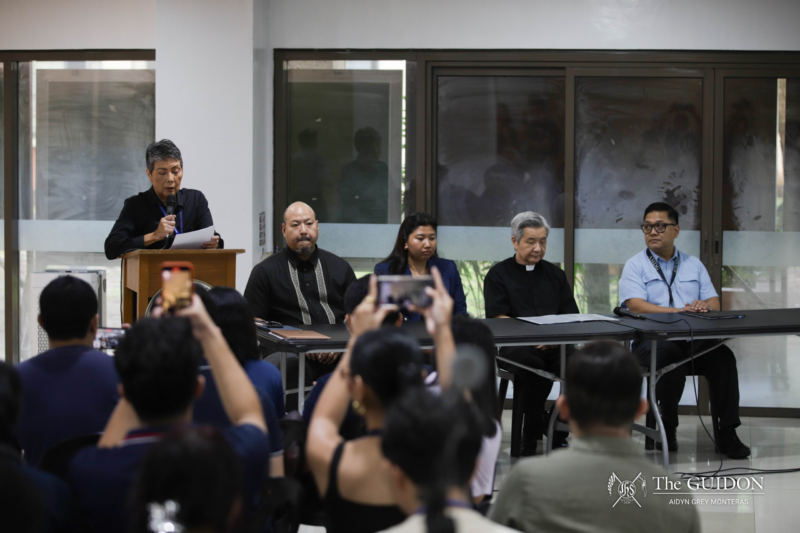
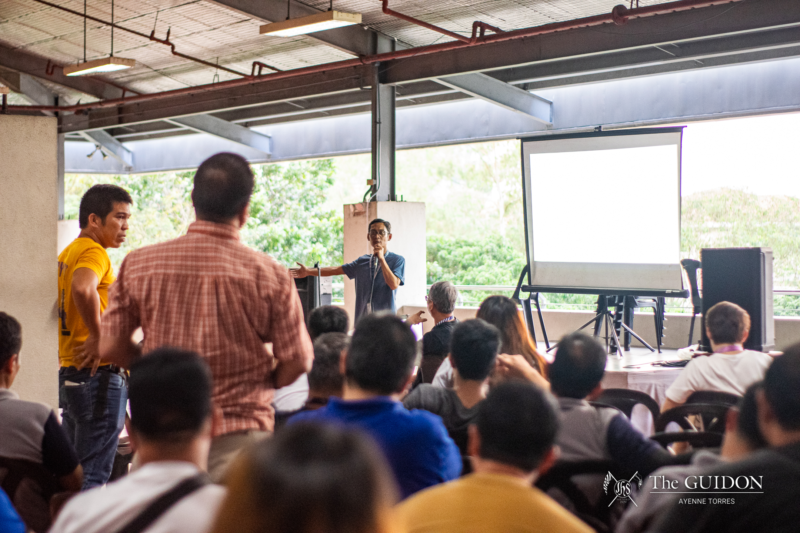
Paeng David and Susan Quimpo of the Martial Law Chronicles Project met with Ateneo student leaders, faculty members, and administration staff to discuss the objectives of Duyan ng Magiting on July 13. Economics Assistant Professor Randy Tuaño, PhD, organized the meeting.
“From that meeting, we came up with a stand care of the Committee on Socio-Political Affairs ng Sanggunian and we published it along with an accompanying signature campaign in order to engage the [Loyola Schools] community,” Bangsoy said.
Engaging the community
According to Bangsoy, there are already plans to hold the #BawatBato initiative inside the Ateneo within the first semester.
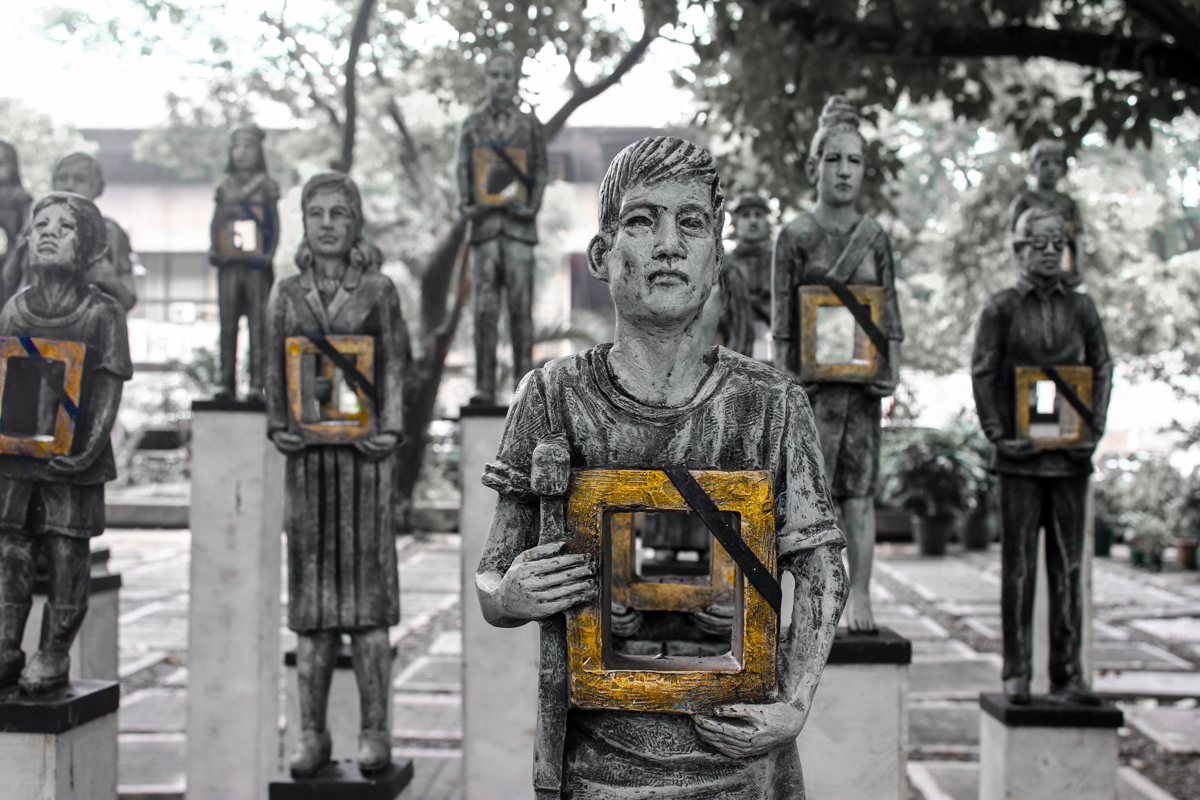
#BawatBato is a non-partisan initiative against the burial that involves stones bearing the names of Martial Law victims.
“For now, coming from the stand and the signature campaign, it’s still very organic. We’re just getting interested individuals and organizations. Eventually, as more people get interested, we’re going to make it more concrete na may working core team,” she said.
Sanggunian Coordinator Carmela Vinzon added that the Sanggunian will try to get as much clamor as possible from students to stop the burial.
“We’re also in coordination with the [Council of Organizations of the Ateneo]. COA’s asking their different organizations to also create stands using the context of their advocacy,” she said.
The Duyan ng Magiting National Launch was originally set on July 19 at the Bantayog ng mga Bayani. However, the coalition wanted to weigh in on what President Rodrigo Duterte had to say about the issue in his first State of the Nation Address, so it was moved to a later date. A planning meeting attended by Vinzon and other organizations and individuals took place instead.
“A big portion of social media and general clamoring for anything comes from the youth and it is our responsibility as the student government of Ateneo to really be proper representatives of the youth,” she said.
“The youth are the most affected by revisionism… it is, therefore, our job as people who know of that fact to let them know the truth,” she added.
On truth-telling
Political Science Associate Professor Benjamin Tolosa Jr, PhD, said that one type of argument supporting the burial is the idea that “moving on” will promote healing. However, he is strongly against this.
“I think the argument there is that you cannot have healing if it’s based on a lie,” he said. “I think, in all places where there have been efforts of healing, it has to do with truth-telling.”
Tolosa emphasized that Marcos being buried at the Libingan ng mga Bayani on the grounds of being a soldier is not an option since Marcos’ claims on his leadership of the guerrilla force “Ang Mga Maharlika” during the Japanese occupation have already been disproved.
Moreover, Tolosa noted that the human rights victims and the people killed during the Martial Law are reason enough to not proceed with the burial.
“The point is, there is a historical record that has to be confronted, so this is not just a question about your opinion of Marcos or your opinion about the Martial Law. There is a historical record and you can actually check the facts,” he said.
Similarly, History Assistant Professor Jo-Ed Tirol, PhD, said that the burial is unacceptable because Marcos’ negative legacy could still be felt today through the taxes being collected to pay for his debt instead of being channeled to government services.
“He doesn’t belong there,” he said. “I would say he violated our laws, violated our dignity, and in many ways, violated our future. If they want to rename the cemetery to ‘Libingan ng mga Bayani and others’ or ‘Libingan ng mga Bayani at Pumapatay ng mga Bayani,’ then go ahead, put him there.”
According to Tirol, a History elective called “On the Martial Law and Memory,” will be offered during the second semester of this academic year. He will be the moderator, but there will also be guest speakers on how the Martial Law affected media, economy, politics, and the arts.
“When I teach, I tell my students that it’s not enough to study the narrative; we have to understand what we study, how we study, why we study, because what we remember and how we remember says so much about us,” he said.
“If we forget, look how close we were to Bongbong [former Senator Ferdinand Marcos, Jr.] winning. Imagine if he won, imagine what he would have wanted done to the memory of Martial Law,” he added.
Past, present, future
Tuaño said that even though the youth did not get to see nor experience the Martial Law for themselves, they should still get to know the real events that had transpired for the memory of Martial Law to live on.
“Ultimately, [the youth] will be the ones who will make their own views on the Martial Law and what they generate will be very important. They will be writing the text books of the future and teaching the students,” he said.
David, who is also the Akbayan Youth Chair, says that it is important for the youth to get to know the stories of the past, actively take part in the discussion, and continue the fight against revisionism.
“The bottom line is, this is our generation now, we’re not just witnessing history or reading about history in the books, it’s actually an opportunity for us to make history ourselves. But what history will that be?” she said.
“I think it’s about time that we come together and collectively decide what the story, what the narrative of our generation would be,” she added.