THE STATE of Mindanao Address (SOMA) tackled the situation of Moro and indigenous peoples (IPs) in Mindanao from socio-historical, Muslim, and Lumad perspectives.
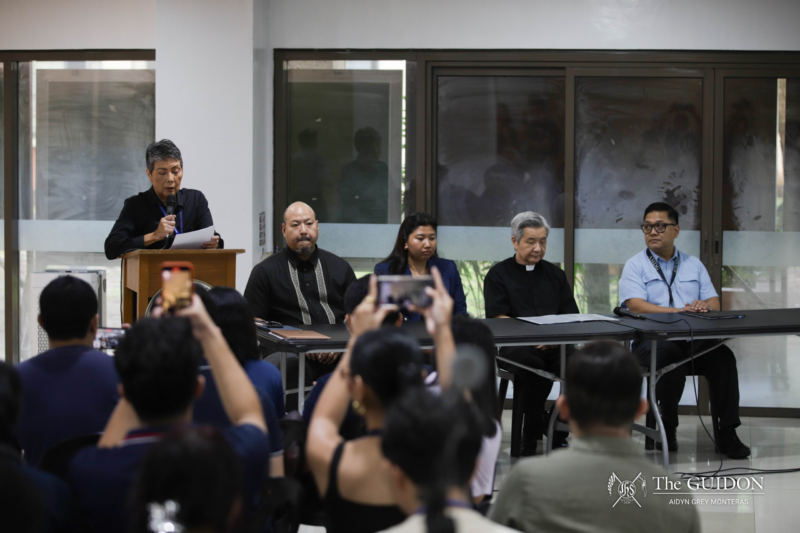
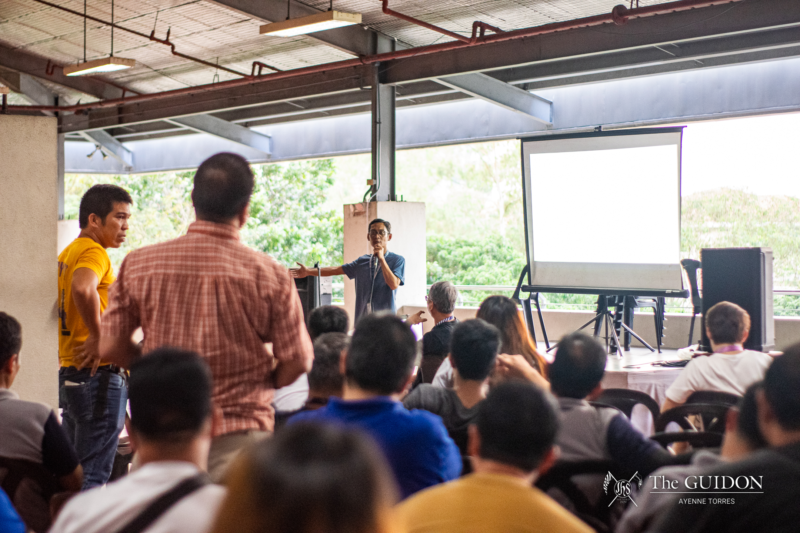
The SOMA, organized by the Ateneo Student Catholic Action in partnership with the Office of the Vice President for Social Development, was held at the Leong Hall Roofdeck on November 6.
The forum advocates the awareness of issues surrounding Mindanao among the members of the Ateneo de Manila community.
SOMA Project Head Dane Ancheta said, “It’s high time that we turn our eyes to the south and listen to [Mindanao’s] narratives.”
Call for peace
According to Sociology and Anthropology Department Assistant Professor Jose Jowel Canuday, PhD, it has been 47 years since “we have been seeing and hearing of conflict in the region.”
“One hundred twenty thousand is the general estimate number of lives lost in the war against Moro rebels,” he said.
According to Canuday, the conflict could be traced back to the resettlement policies in the 1950s which displaced the Moro population.
Moreover, the spread of Moro secessionist groups was aggravated by the Jabidah Massacre of 1968, an alleged killing of Moro soldiers by the military.
“There are continuing wars, but there are also continuing peace accords,” he added.
Struggle for recognition
For Al Qalam Institute for Islamic Identities and Dialogue in Southeast Asia Executive Director Datu Mussolini Lidasan, the Filipino and the Bangsamoro are two opposing identities because the former includes only the people of Luzon.
“To say that we have an identity is to say that we have a location in social space,” he said.
“If particular narratives define identity, is there a way to build a convergence around these narratives?” Lidasan added.
Meanwhile, Ateneo de Davao University Graduate School Instructor Albert Alejo, SJ, noted that IPs are always excluded in discussions about Mindanao.
He said, “While the Moros are struggling for self-determination, the indigenous peoples are also struggling for their own.”
Having worked with the Lumad Social Movement, Alejo explained that there is no clear figure on the population of the Lumads because they are not included in the national census.
Furthermore, Alejo said that the initial draft of the Bangsamoro Basic Law (BBL) failed to mention the IPs.
The BBL is a bill which would replace the current Autonomous Region in Muslim Mindanao with a new Bangsamoro state, giving the Moro people increased sovereignty in the region.
“We want a complete peace. A complete peace is an inclusive peace. An inclusive peace includes [the indigenous people],” he said.
Youth involvement
During the open forum, the speakers talked about what students can do regarding the issues raised in the talk.
Lidasan hopes that the youth will end prejudices against Muslims and that they would not tend to homogenize the Filipino identity.
“Each region should come up with [its own identity], and then we come up with our national identity,” he said.
Alejo, on the other hand, encourages students to study history, explore different disciplines, and identify the connections between them.
“Get interested in our country. You cannot love something or somebody you do not know. Get to know our people,” he said.
With reports from Miguel N. Sevidal