Her sister, Cynthia and her father, Catalino—both lawyers—were part of the 57 people brutally murdered on November 23 in Ampatuan, Maguindanao.
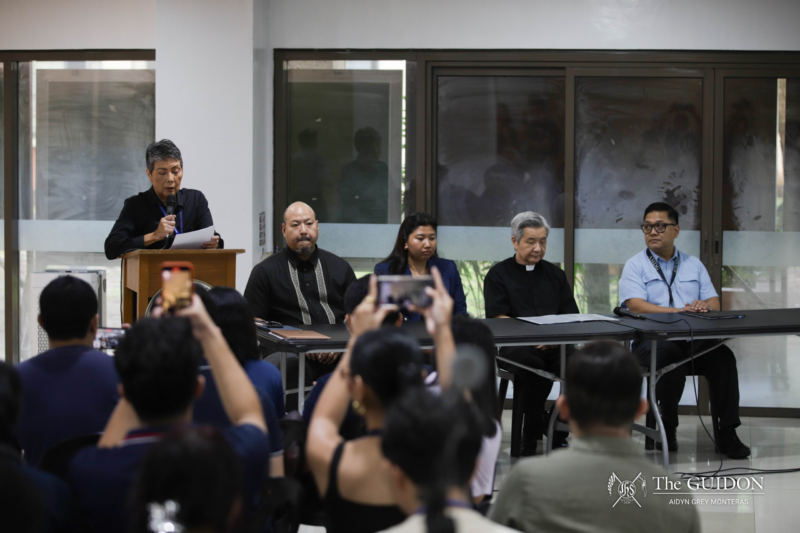
During the rally, Oquendo thanked the students for being with her family in condemning the massacre and seeking justice for the victims.
Still, she said, “[It] cannot ease the pain that we’re feeling.”
Oquendo came to Ateneo with Cynthia’s husband, Dennis, and some representatives from Ateneo de Davao to join the prayer rally organized by the Sanggunian and Council of Organizations of the Ateneo (COA).
“We can’t target the Maguindanao massacre itself … You can’t really do anything [about the issue], but it’s bad that if you think you can’t do anything, you won’t act anymore,” School of Social Sciences Central Board Representative Gino Limcumpao said.
Limcumpao said that informing the students about the issue is enough to politicize the community and make them think.
“Our target is not a grand scale. But when Ateneans go out into the world, at least we know that we did something to make them feel responsible,” he said.
Urged to help
During the rally, relatives and friends of the victims asked Ateneans to be informed and act against the massacre. “[With] young and fresh minds, you are the hope. Let us not let this happen again, because it’s painful,” said Dennis Oquendo.
A student from Ateneo de Davao, Mussolini Sinsuat Lidasan, nephew of victim Genalyn Mangudadatu and Buluan mayor Esmael Mangudadatu, said that students should be concerned about the issues because Ateneo is giving them the best opportunities “not to beat opponents but to serve the marginalized.”
“Be concerned but [not to the point of being] paralyzed. Because paralysis gives you the reason not to do anything,” Lidasan said.
The Sanggu, in a statement, called students to participate in protests and prayer rallies, and to engage in discourse about the Maguindanao massacre and other election-related violence.
It also called Ateneans to be informed, take a stand, and remain vigilant in legal proceedings.
Martyrdom
Describing what she felt when she learned of the death of her sister and father, Oqueda said, “Never in my wildest dreams did I think this would happen … What a way to die.”
Lidasan tried to be optimistic, and said that that however gruesome the massacre is, students should always think that the victims are greater than their killers.
“It’s not just a massacre but martyrdom. You see the victim as a giver of life.” He considers the decision of the Mangudadatus to bring women and journalists, instead of the men, as an act of peace.
“If the men went instead of the women, there could have been war,” he said.
Seeking accountability
While different sectors and orgs released statements on the massacre, they all called for the same things: condemning the brutal murder, mourning for the loss of fellow Filipinos, and seeking accountability to the perpetrators and to the government.
The statements also question the delay of the investigation.
The Sanggu, according to their statement, is “indignant over the delayed investigation of the mass murder that occurred in Maguindanao and firmly believes that such case is reflective of the current state of Philippine politics and democracy.”
Entablado agreed with Sanggu, saying that what happened in Maguindanao was a shame to the Philippine government.
“These (political killings) have long been happening in the country, but it is only now that the government is doing something. This just proves the lack of development in the country because of our government’s vested personal interests,” Entablado’s statement reads, in Filipino.
Other orgs that released statements, among the many others, were The Assembly, Youth for Christ-Ateneo, Ateneo Catechetical Instruction League, Development Society and Ateneo Student Catholic Action (AtSCA).
More united community
Limcumpao said that compared to other national issues, the Maguindanao massacre united Ateneans the most.
He said the Sanggu didn’t expect the freedom boards that were set up to be full of sentiments. He thought students would just be indifferent to the issue.
He added that whenever they give out black ribbons, it would always be distributed fast because many students got one. “I think it just shows that the information campaign of Ateneo is somewhat effective,” he said.
Junior Management Economics Course Representative Lance Chua, however questions this information campaign, “We can make a stand, we can let our voices be heard, but what can we really do?”
He then answered his own question. “Through the collective movement of the students, the government might just listen and try to solve the problems.”