It may be the prestige of the course, or the job opportunities waiting after graduation, that attract some students to pursue a course in the honors program of the Ateneo.
More than 26% of students enrolled in these courses, however, shifted out to a different discipline for school years 2007-2008 and 2008-2009, according to data from the office of the Associate Dean for Academic Affairs (ADAA).
The highest in those two school years was when the number of shiftees from courses in the honors program amounted to 57.5% of the total number of shiftees, or 69 out of 134 shiftees, this 2nd semester.
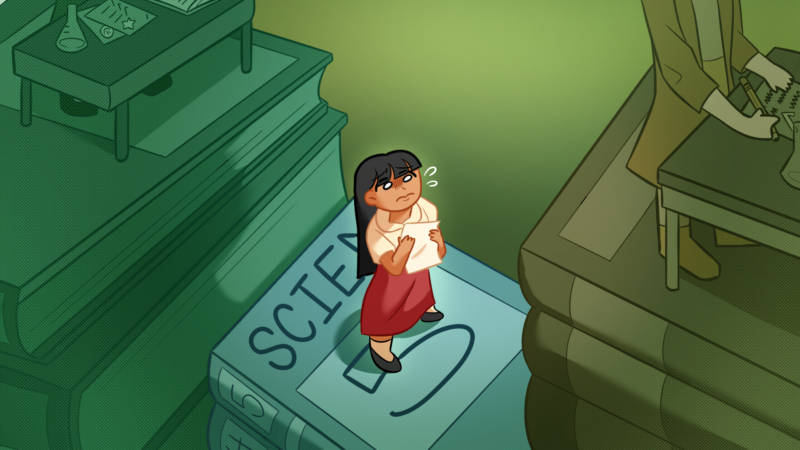
Guidance counselor Ronald Rodriguez says those who shift out of an honors program experience, among others, the “traumatic loss of self-concept” when they realize that they cannot handle the pressure.
Rodriguez explains, “Kasi in the honors program, some students say that they are one of the best, and ‘pag wala ka sa trono mo, ang feeling mo masa ka na (When they lose that distinction, they feel part of the masses).”
Pressure
Acceptance into courses in the honors program is based on the Ateneo College Entrance Test scores. Only the top 15% of successful examinees are able to enlist for these programs.
Courses in the honors program are usually more rigorous and academically heavier than regular courses. Grade requirements depend on the department handling a course in the honors program.
ADAA Eduardo Jose Calasanz says that courses in the honors program are generally more demanding because of the higher level, faster pace, and increased readings.
During counseling sessions, students tell Rodriguez that professors also tend to demand more from the students in the honors program, since they have high expectations from those who were able to qualify.
Most of the pressure, however, comes from the students themselves, says Rodriguez.
As a graduate of Philippine Science High School, Edrick John Santos (II BSM AMF) was required to take a science-related course. He thinks that the reason why students shift out of an honors program is beyond simply academics.
“They shift…because of interests developed throughout the course of [their] first year in college,” Santos says.
According to Calasanz, there are two major reasons for students who shift out of their courses, may they be part of the honors program or not: failure to meet the grade requirement and change of interest.
Santos adds that the difficulty of the core curriculum adds the same amount of pressure to all students regardless of course. “Our math is difficult but we can’t say that other courses’ majors aren’t as hard,” he adds in a mix of English and Filipino.
The GUIDON tried to interview professors who teach subjects at honors courses, but they were unavailable as of press time.
The balancing act
“One does not necessarily need to perceive a course as difficult if he or she just works hard,” says Philip Albert Verde (II BS Psy).
Most students in honors courses devote themselves to academics in order to survive their course. For some, their majors take precedence over the core curriculum.
Emmanuel John Bagacina (II BS ECE) gets high marks in subjects for the core despite devoting more time and effort to his majors.
Gillian Gail Gorospe (II BS Mgt), who was formerly in a Management-Honors course, gives importance to all her subjects. “I see the core subjects that, although not in-line with our course, are there to keep our education more holistic. Another purpose they serve is pulling our QPI [Quality Point Index] up,” she says.
Santos and Verde believe in time management as one of the best ways to remain in the honors program.
More than simply balancing major and core subjects, students from the honors program also try to balance their academics and extra curricular activities.
“Eventually you will get used to [the load]…you will be able to say that you can manage to balance it, but of course my priority is my academics,” Ann Janelle Sanggalang (II BS HSc) says in a mix of English and Filipino.
“I always tell myself that there’s always time for everything…you just have to set your priorities,” Salud says.
The honor in honors programs
Past the prestige of being in an honors course, sincere interest in the subject matter is necessary to sustain interest and fuel motivation.
“You can’t be proud unless you really do [finish] the course,” says Santos. For him, bad grades and bad professors are a part of the experience, and loving math was as necessary as discipline and good study habits.
“It gives me a challenge to continue, to strive for more…you passed the course, and [when] you graduate from the course it is a self-achievement,” Salud says.
“Even if the course is hard, I am learning a lot from it…it feels like I’ve been studying for four years now because of the learning I encounter along the way,” Sanggalang says in a mix of English and Filipino.
For Gorospe, it was a different story. “I was not really able to put my heart into [my former course]. I was not able to see the results of all my hard work. It was difficult for me to be happy,” she said.
Despite having to shift out of Management Honors, Gorospe doesn’t regret her semesters trying to cope with the pressure.
“All the experiences I gained through…the honors program made me a better person. I grew more mature and more capable of facing difficulties,” she said.
“I guess it is truly worth it to at least try surviving an honors program. You won’t lose anything in trying.”