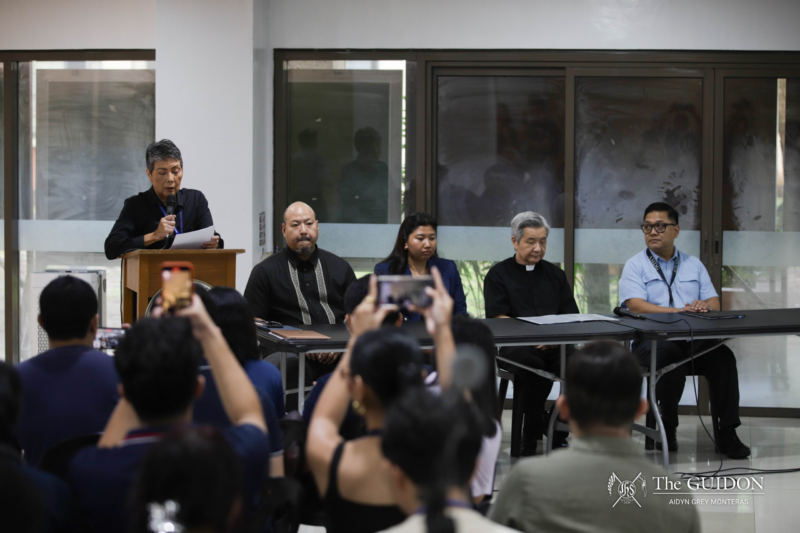
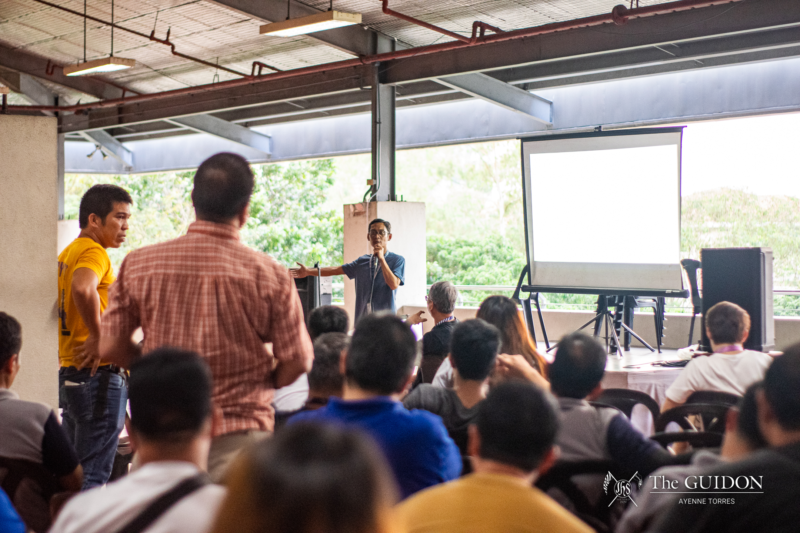
Titled “Boundaries and Belongings: A Conference on Transnationalism, Identity, and Communications,” the talk tackled various issues in the media, especially the media’s role in communication across countries.
University College London Professor Daniel Miller, and University of Cambridge Lecturer Mirca Madianou, Ph.D, presented some of their key studies during the conference. Both are conducting research on the role of communications in parenting between Filipinas in London and their children in Manila.
The event was organized by the Communication Department, in cooperation with the Center for Communication Research and Training-Multimedia and Information Resource Laboratory, and the Ateneo Association of Communication Majors.
“The media in everyday life”
Communication Lecturer Jonathan Ong, who was the conference’s main convenor, said that the media is central to one’s experience with today’s world. “We have to continuously reflect on its social, political, cultural and ethical consequences.”
Madianou explained how the media contributes to discourses of nation and citizenship. In her talk about the media consumption of Turkish people in Greece, she said that the Turkish claimed citizenship through television news, even though their viewing habits of other programs are “ordinary.”
In an interview with The GUIDON, Miller also explained how there is a need to transcend communication and include other fields—sociology and anthropology, for example—in studying issues such as migration and families.
“At the end of it, we’re not just the communicators but we’re interested in the impact it has on the population, families… there we all come together,” he said.
“The conference highlights our own discipline’s unique contribution to the research focus of the Loyola Schools on transnational families,” said Ong.
Blogs, politics, diaspora
Communication Lecturers Jason Vincent Cabañes, Jozon Lorenzana, Ong, and Ateneo alumna Abigail Yao (AB Comm ’04) also presented research papers they are working on.
Cabañes and Ong are working together on a paper on transient students’ level of political engagement while abroad. Yao is exploring how Filipinas in the UK use blogs, and how it makes them adjust better to Britain.
Lorenzana, meanwhile, is researching on how Filipino society and the media affect how Indians in Manila position their identities.
“I think it was good that they showed papers from…Sir Jace, Abigail and Sir Anjo [Lorenzana]. [I hope their papers] help us [think] of what we can have for our thesis next year,” said De La Salle University student Alexandra Cerezo, who is taking up Organizational Communication.
Cocktails were served outside the hall and the speakers were given time to mingle and converse with guests and students.
Meeting celebrities
“It was really great that a lot of Comm scholars were there, like Mirca Madianou in person!” Bea Isabel Oliveros (II AB Comm) said after the conference. “We only know about her from our readings, it was great to see her in person and hear her talk about the media and identity.”
“My colleagues and I were just super-pleased in the end when sophomores went up to these big-name scholars and started sharing stories about Ateneo…taking photos with them as if they were celebrities,” said Ong. “You know it’s effective when you got young people excited about studying!”
Madianou and Miller were impressed with the large turnout of students. “I’m actually very impressed with how people are very up to date with literature and current research…I think they should continue doing that and continue to build on this research culture,” said Madianou.
According to Ong, Madianou was dumbfounded by the turnout of the event, and had said, “I don’t understand why they’d waste [a] lovely, sunny Saturday on this.”
A research culture
Madianou said she would love to come back for another conference.
“Ateneo should host more of this kind of event. Conferences enable students and scholars to come together and share what they know,” Oliveros said.
Ong added that it is important to develop a free and lively research culture in the Ateneo.
“You know, media literacy is not just teaching students how to edit videos or write witty taglines; it’s there to prompt a fundamental questioning of human beings’ capacity to act responsibly in a world of intense and eternal mediation,” he said.