IT WAS exactly a year after the Sumilao farmers stepped into the Ateneo. This time, on December 5, 150 farmers from Barangay Baha and Talibayog in Calatagan, Batangas, and 45 farmers from Sitio Banasi, Bula, Camarines Sur, arrived from the long march in their persistent struggle to reclaim their lost land.
“Maganda ang ginawa ng mga farmers na lumaban ulit (What the farmers did, in fighting again, was good),” said Pambansang Kilusan ng mga Samahang Magsasaka Chair Rene Piñas.
The Calatagan farmers started walking December 2 from Batangas and reached the Ateneo at noon on December 5. The farmers brought their case the next day to the Department of Agrarian Reform (DAR), and appealed for the land to be returned to them.
The contested land, the farmers say, belong to them by virtue of the Comprehensive Agrarian Reform Program (CARP). In 1989 to 1990, Ceferino Ascue rewarded them the land and gave them Emancipation Patents (EPs), which serve as land titles.
Ascue’s heirs, however, sold the land to Asturias Chemical Industries on 1995. Asturias plans to build a cement factory and ecotourism facilities in the land.
The DAR refuses to honor the farmers’ EPs because the land, they say, is not agricultural but mineralized.
Marchers from Camarines Sur
Forty-five farmers who come from Sitio Banasi, Barangay Pawili, Bula, Camarines Sur, also joined the Calatagan farmers on their march to the Ateneo. They have been marching since November 17.
Even though they were already awarded the land 10 years ago, the farmers’ Certificates of Landownership Award were cancelled in a decision from the Office of the President signed by Executive Secretary Eduardo Ermita on April 17.
Ermita said the land was pasture land and thus, was not under CARP, even while ocular reports from the DAR and the Land Bank indicate the land was planted with sugarcane, corn, and rice.
The decision caused the farmers to lose their 123-hectare land and return it to previous owners the Fajardo-Imperial families.
The farmers marched 444-km to Manila to appeal to the President to reverse the decision.
Weary feet
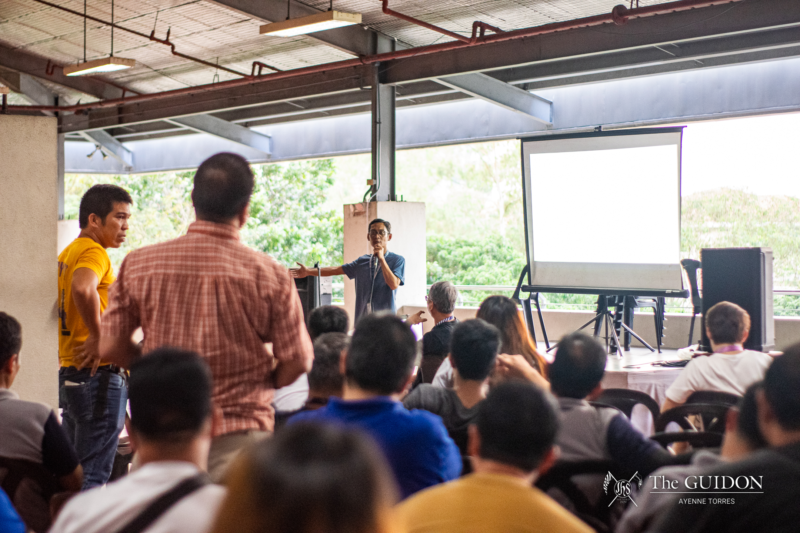
Elijah Nonnatus Adamos (I BS ES), who welcomed the farmers, said the farmers’ case affects society’s views of democratic order, “kung pinabibigyan yung mga mahihirap o mas binibigyan ng value ang mga elitista (if the poor are given fair chances, or if the elitists are given more value),” he said.
The Calatagan farmers were supposed to march to Manila on September. Asturias, however, negotiated with the farmers and offered other options aside from the return of the farmers’ land, putting the march on hold.
What drove the farmers to continue the march were the alternatives offered by Asturias.
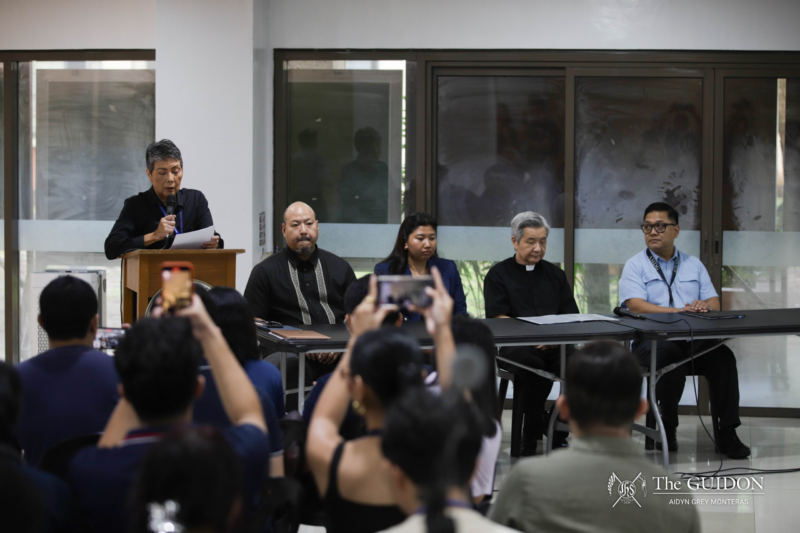
Asturias offered to relocate the farmers to the mountains, said Catholic Bishops Conference of the Philippines-National Secretariat for Social Action Chair Bishop Roderick Pabillo, in a press conference at the Colayco Pavilion after the farmers’ arrival.
Pabillo and the Calatagan farmers’ legal counsel Atty. Magistrado Mendoza said that relocating the farmers to the mountains is like telling the farmers “umalis na kayo [get out of here].”
Meanwhile, Piñas said that Ermita’s decision on the Banasi farmers’ land involved a “conflict of interest,” since the Office of the President Undersecretary was related to the Fajardos. “May nangyaring pagmamanipula dito (There is manipulation happening here),” he said.
Good news will come
In the homily during the mass for the farmers after they arrived, Bishop Gaudencio Rosales said, “Kayo na naniniwala na mayroong magandang balita sa kabila ng … paghihirap … naglakbay kayo … may balitang darating. At diyan may pag-asa tayo (You who believe that there will be good news in spite of difficulty…you journeyed…news will come. And in that, we have hope).”
The farmers spent the night in the Ateneo before proceeding with their march to DAR and Malacañang.
Dante Rasdas, one of the Calatagan farmers, said the Ateneo gave them a very positive show of support for their cause.
“Ang pagtulong nila ay hindi puro salita lang, kundi sadyang nilalagay sa puso ang kanilang pagtulong (Their support is not limited to words, but is in the heart),” said Rasdas.
Piñas said that Ateneo’s support increased the morale of the farmers. “Napakalaking tulong ng Ateneo at katulad ng ginawa nilang tulong sa Sumilao, ay hindi nasayang kasi nagbunga yun ng tulong, (The Ateneo helped a lot, and like the aid they gave the Sumilao farmers, it was not wasted, but bore fruit),” he said.