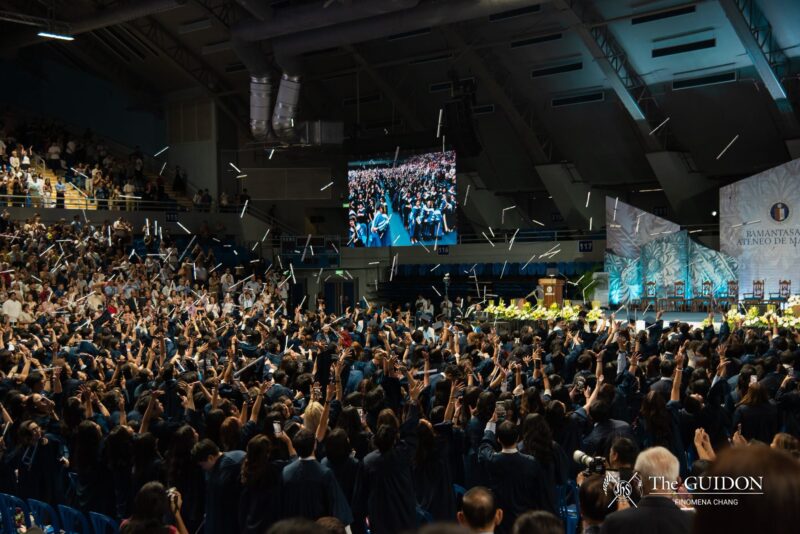
“IF THEY [the mainstream film industry] don’t reinvent themselves, they’re going to perish,” said Kidlat Tahimik, renowned Philippine independent filmmaker and keynote speaker at the fifth Annual Southeast Asian Cinema Conference (ASEACC) held November 20 to 22 at the Ateneo de Manila University.
This year’s ASEACC, which had the theme “States of Independence,” highlighted the surge of indie films in Southeast Asian countries, especially in the Philippines.
Noted panelists and guest speakers discussed contemporary issues in filmmaking, like gender issues in independent cinema, indie cinema and audiences, aesthetics of poverty in films, and the states of indie cinema in other Southeast Asian countries during the conference.
“We’re basically saying how the independent movement of cinema…to a certain extent, contribute, narrate, contradict, reconstruct, the imagined community of a nation or a region,” said Benedict Olgado (V AB Comm) of the Loyola Film Circle (LFC), who is part of ASEACC’s executive committee.
LFC, together with the School of Humanities, organized the annual gathering in the Ateneo.
“Something new”
Before the actual conference, ASEACC held a pre-conference, or multiple film screenings, from November 18 to 19 in Faura Hall.
Movies screened included local films Serbis, Tribu, and Ploning, and foreign films Blissfully Yours and Ayat-Ayat Cinta aka Verses of Love.
The screening was open to all Ateneans, not only to LFC members. “It’s a breath of fresh air from the usual movies they play in cinemas in the malls,” said participant Francis Louie Mendoza (I AB Psy).
For Mary Rose Llorente (I AB IS), the screening made her aware of the films that weren’t part of the mainstream industry. The screening also broadened her film perspective.
“I think [what makes these films appealing is the fact that] these films aren’t screened very often. I think it’s a good chance that you get to watch in school,” said Ma. Bianca Mikaela Francisco (I AB Comm).
Focus on Asia
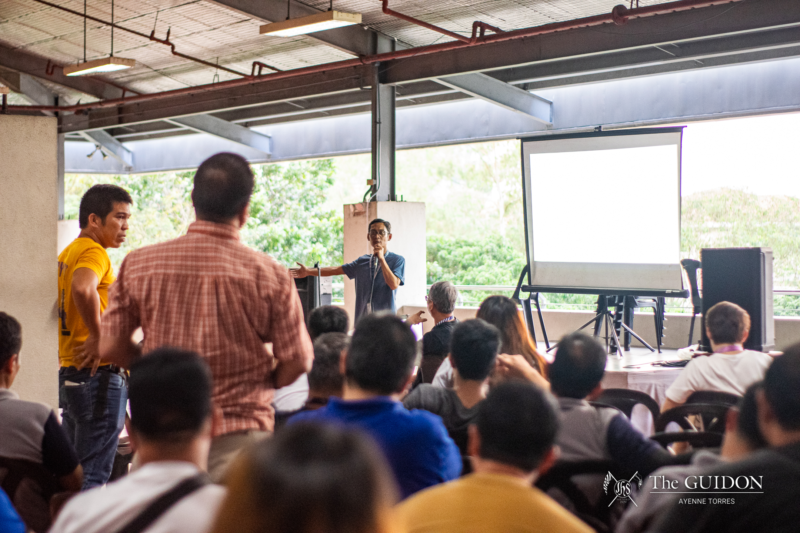
The main conference on November 20 to 22, held in the Leong Hall Auditorium, involved discussions on the films screened during the pre-conference, and featured local and foreign speakers and panelists.
The panelists included Filipino Assistant Professor Gary Devilles, Filipino Lecturer Alvin Yapan, Society of Filipino Archivists for Film President Clodualdo del Mundo Jr., among others.
The discussions during the panel centered on related papers to the films. Some examples of research papers discussed were the following: “The Pornography of Poverty in Serbis and Tribu” by Devilles, “The Cinema of the Other ‘Other:’ National and Cultural Identity in Filipino Alternative Cinema” by Elvin Amerigo Valerio of De La Salle University, and “Acts of Defiance: Or When Superstars Lend Themselves to the Notion of Independence” by Katrina Stuart Santiago of the University of the Philippines.
For Santiago, the conference was a venue to focus more on Asian culture. “There is something unique and special about Southeast Asia that must be talked about as distinct from the rest of the world,” she said.
ASEACC Human Logistics Head Mariela Anne Monique Flores (III BS CTM) said that focusing on Southeast Asian films gives new insight on looking at the Filipino identity. “[We will] try to search for something that’s more intrinsically Filipino rather than one that is influenced by Western ideas of what a film should be,” she said.
“There is a sense of ownership of our cultures in conferences like this one, where we are allowed to imagine that we are functioning separate from the enterprise of imperialism, that’s centered on the US,” Santiago added.
Start of change
Tahimik, who is dubbed “the father of Philippine independent cinema,” emphasized during the conference that it is time to move away from the usual formula of mainstream films: sex and violence.
“There’s enough energy and goodwill so that [Southeast Asian] filmmakers would find a way to get together for a conference like this. That’s a great sign na nagkakamomentum na (that there’s momentum already),” he said.
“Maybe, [the mainstream industry] can look at themselves in the inside and see that their formula is not forever,” Tahimik added.
Flores said, “I think [ASEACC] is very relevant in the sense that the outstanding filmmakers here are able to bridge the gap between their generation and ours.”