“NOT ALL laws are morally correct and just,” said Marian Theresia Valera (IV AB Eco), after hearing both sides of the Calatagan farmers’ case in a forum on September 24. “We should take a second look if what we are doing is for the welfare of people.”
The forum is part of the activities that the Office for Social Concern and Involvement prepared for Calatagan Week, which aimed to raise awareness and show support for the farmers fighting for their right to land in Calatagan, Batangas.
Activities for Calatagan Week on September 15 to 24 included two forums with representatives from stakeholders, and photo exhibits showcasing Atenean volunteers’ visits to Calatagan. Student organizations also displayed their “sako statements,” or sacks that contain messages of support for the farmers, during the week.
The farmers started marching towards Malacañang on September 19 to appeal to the President to cover the 507-hectare land under the Comprehensive Agrarian Reform Program (CARP). As of press time, the farmers have stopped marching and are negotiating with Asturias Chemical Industries, Inc.
The farmers’ side
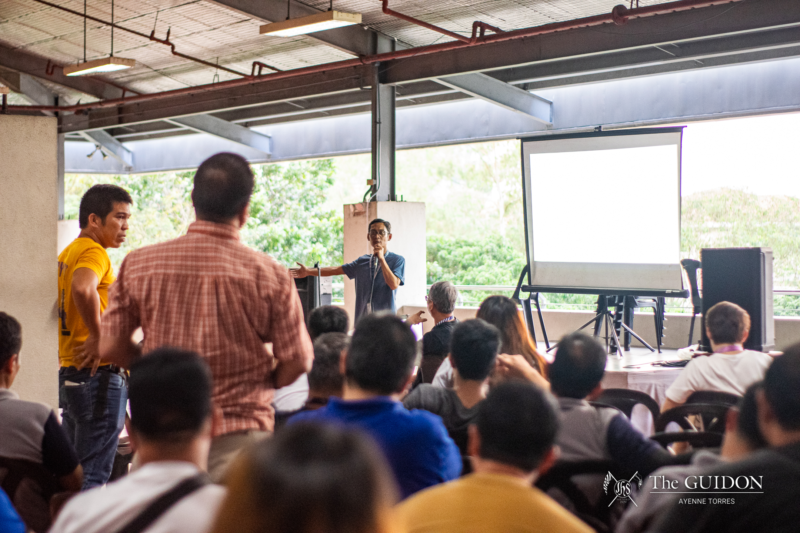
In the first forum on September 17, Ruperto Aleroza, president of Pambansang Katipunan ng Samahan sa Kanayunan (PKSK) said there is injustice in the Calatagan farmers’ case.
“Hindi naibigay ng maayos sa mga magsasaka kaya ito nabenta (It [the land] wasn’t given properly to the farmers, that is why it got sold),” he said.
Aleroza explained that the land in question is for farming, and not for mining.
He added that the land is the farmers’ main source of livelihood, and relocating the farmers to the mountains, as what Asturias proposed, would make the farmers suffer.
Testimonials
Student volunteers who visited the farmers in Bgy. Baha and Talibayog also shared their experiences during the first forum.
“You arrive…[and] the barangay cheered on us,” Edryan Paul Colmenares (IV BSM AMF) said.
Through the visits, Colmenares understood what was happening and believed there is a play of injustice involved with the land of the Calatagan farmers.
“You don’t need to have a certain code of ethics para alam mo kung ano ‘yung mangyayari (for you to know what’s going to happen),” he said.
Karla Eunice Mesina (IV AB Comm), who had her immersion with the Calatagan farmers, agreed with Colmenares. “Hindi lang ito kuwento, katotohanan ito (This is not just a story, this is the truth),” she said.
Heated debate
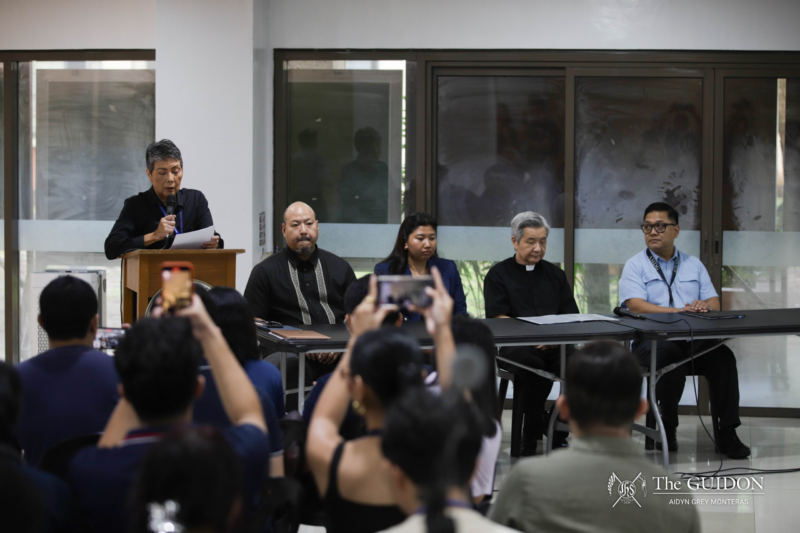
“This was a tale of injustice—one unjust decision after another unjust situation after another,” said Kaisahan Executive Director Jane Lynn Capacio at the latter forum on September 24. Capacio said this in response to the statements of Asturias’ legal counsel Micaela Rosales.
Rosales said that Asturias legally owns the property since the whole 808 hectares of original owner Ceferino Ascue’s land, which includes the 507-hectare under CARP, was bought in court.
“We did not force anyone to vacate the land,” said Rosales.
Rosales also pointed out that the land is a mineral land, and that plants do grow in mineral land. “A lot of things can be done in a mineral property. Hindi lahat ng 808 hectares gagamitin sa planta ng semento (not all of the 808 hectares will be used for the cement plant),” said Rosales.
Capacio questioned Rosales’ statement, and said the land sale between Ascue’s heirs and Asturias was illegal. Capacio added that the land was covered by the Marcos Agrarian Reform Program.
“The farmers still have the title to the land, even though Asturias has ended it,” she said.
A second look
Valera, who listened to both sides—the farmers’ and Asturias’—realized it is important to think how certain actions would affect the welfare of the people.
“We get too blinded with what would be the best for our society,” said Valera.
Karlo Edesson Abril (I BS ME) thought some issues in the forum were not discussed very clearly, especially on the Asturias side. “Mukhang may alinlangan pa. Parang pinagpla-planuhan pa nila kung ano ang gusto nila sabihin (It looks like there’s hesitation. It’s like they are still planning on what they want to say).”