“MALAYA KANG makialam (You are free to meddle)” was the tagline of KamalAEAn, a socio-economic forum held July 26 at Escaler Hall.
The forum aims to raise socio-economic awareness among students, according to Francesco Amante (III AB Eco), externals vice president of the Ateneo Economics Association (AEA). AEA organized the event along with the Sanggunian School of Social Sciences Board.
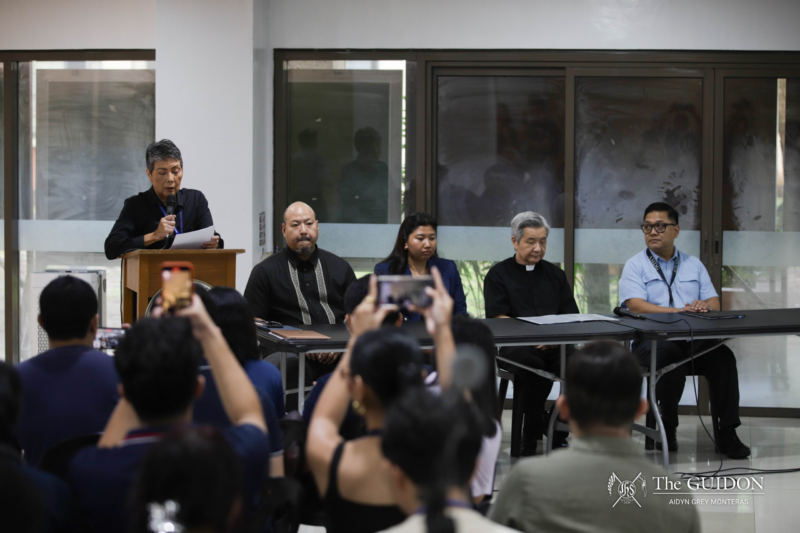
The guest speakers were Senator Benigno “Noynoy” Aquino III, Michael Son (AB Eco-H ’06), junior associate vice president of Shell Philippines, and Ana Mae Tuazon (AB Eco ’06), associate researcher of the Asian Institute of Management.
AEA also invited different high schools, such as St. Bridget School, St. Paul College, Pasig, Diliman Christian University, and Chang Kai Shek College, to attend the forum.
‘Motivated actions’
The forum’s national situationer covered the Philippines’ current economic standing, inflation rate, and unemployment rate. It showed a decrease in the country’s Gross Domestic Product and an increase in the Gross National Product, and the highest inflation rate (11.4%) in 14 years.
Economics Department Chair Fernando Aldaba, Ph.D., said in his opening remarks that the Philippines has economic growth, though many Filipinos are still unemployed or underemployed.
Aside from raising socio-economic awareness, KamalAEAn stressed the importance of economics, said Marian Theresia Valera (IV AB Eco), AEA President. “It is very important for people to master the discipline [economics] kasi you see economics everywhere,” she said.
Valera said she thinks the number of students who take up Economics in college has decreased. Even though Ateneans take Economics 102 as a core subject, it is very important to gain mastery of the discipline, she said.
The general theme of the forum, however, was motivated action, said James Mareck Desoacido (III AB Eco), KamalAEAn project head. “You get to ask yourself how [you will] apply [economic] theories in your job…how will this help the economy,” he said.
The real problem
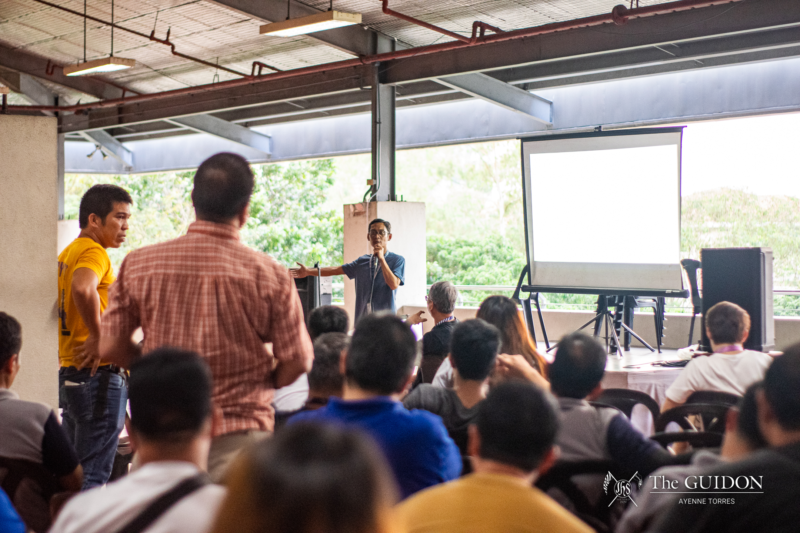
In the open forum, the speakers were asked what the problems of the Philippines are from an economist’s point of view.
Aquino answered: “Is it the system? Is it the lack of freedom from hunger? I am still searching for it [the problem],” he said.
Aldaba said the problem is in the governance and institutions. “The problem in governance is that we don’t trust our leaders and political parties and the institutions are being weakened.”
“Tayo rin talaga ang gagawa ng paraan para mapalitan ang mga institusyon (In the end, it is us who will make plans in order to change the institutions),” he said.
Clearing issues
The forum received positive comments from the audience.
“I really learned a lot from this lecture,” said Fatima Marie Medina, a student from St. Paul College Pasig. “I was hearing more about the government’s side of the issues, which is good.”
“It actually cleared up some issues,” said Paola Pauline Purugganan (II AB Eco-H).