INSTEAD OF having classes on July 7, Ateneans went to school to participate in the Australasian Debate Championship (Australs) and the Integrated Non-Academic Formation (INAF) Day.
Freshmen were required to watch the Australs for their English classes, and as part of their Alternative Class Program. The Ateneo hosted the Australs this year. (See related story)
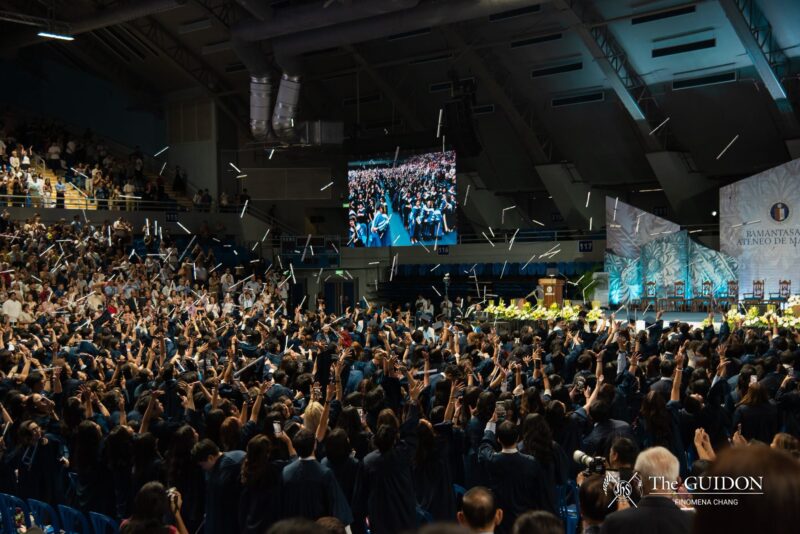
Students of higher year levels attended plenary sessions for the National Service Training Program (NSTP), Junior Engagement Program (JEeP), and Pabaon.
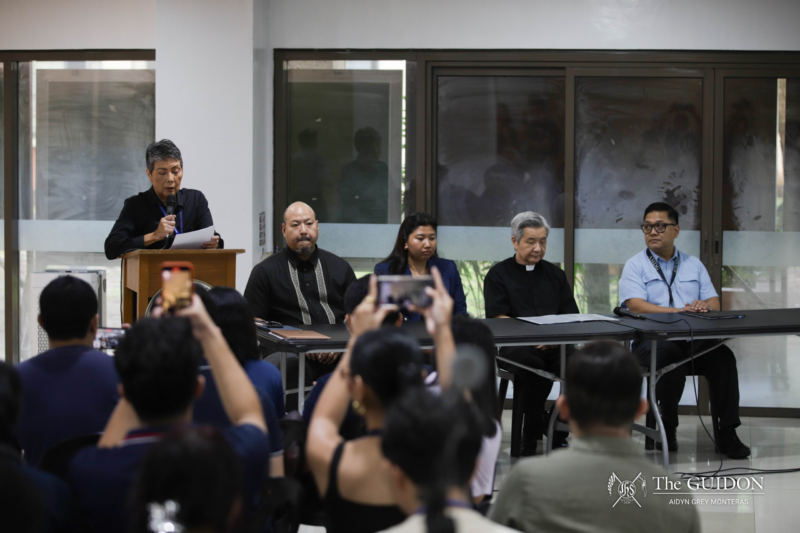
NSTP Program Officer Kristina Aguilar said that the INAF aims to tap three aspects in students—academic excellence, spiritual formation, and social formation.
All non-academic formation programs are under the Office of Social Concern and Involvement, who was mainly in-charge of the activity.
Debates as ACP
Freshmen were required to attend the Australs as part of their English classes. They attended several debate rounds of the Australs, which were held simultaneously in classrooms all over the Loyola Schools.
Aguilar said that watching the Australs also served as preparation for the Horacio de la Costa Cup, a debate competition for freshmen.
“It was my first live debate and watching the Ateneo team and the opposing team rebut and defend their arguments was worth the stay,” said Janna Mae Estares (I AB Comm).
She said, however, that she wasn’t interested in the debate topics. She found it quite boring at first.
“Sanggu hour”
While freshmen watched debates, sophomores attended goal-setting sessions and team-building activities for NSTP.
A “Sanggu hour” was also set aside to discuss the purpose of INAF.
During this hour, several NSTP blocks presented dance and song numbers. The hour ended with a performance by the INAF Jingle Contest winner, Crispin Alexander Parlade (II BFA CW) who sang his personal composition entitled “Kapit Bisig.”
Joaquin Leandro Sanchez (II BS MIS) said that the whole day could have been scheduled on a Saturday instead of a Monday. “Hassle kasi since we lose one day for discussion, eh we have tests coming up soon.”
Other people’s shoes
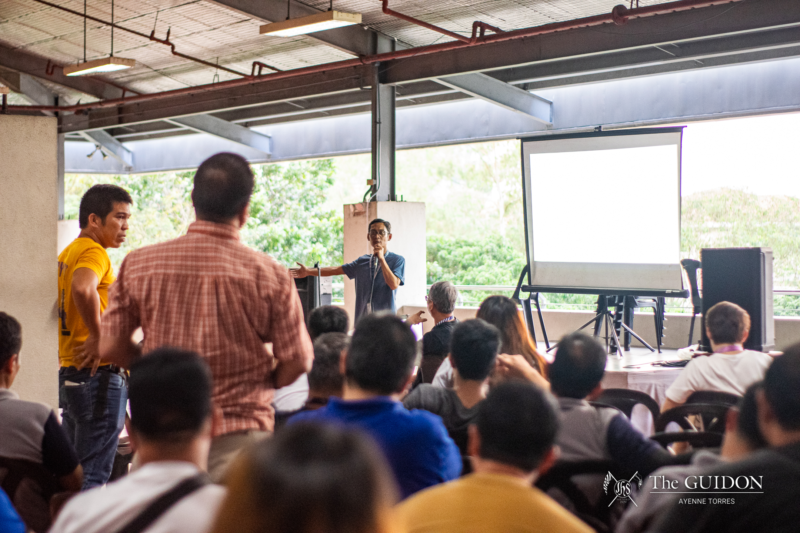
For the JEeP, juniors attended a short assembly in the Covered Courts then broke into groups and went to their assigned classrooms.
“The objective of this session is for the juniors to develop an appreciation and openness to the JEeP program,” said Aguilar.
In the classrooms, a facilitator headed the group dynamics and sharing. One classroom activity involved switching shoes with someone else.
“Breaking up into smaller groups was something different and literally drove home the point of what it felt like to be in someone else’s shoes,” said Anna Katrina Chua (III BS HSc).
Chua also said the orientation was very helpful, “especially for us taking it up in the second sem who have only the vaguest ideas about the program,” she said.
Jose Enrique Sarmenta (III AB Psy) said, however, that he preferred that the whole activity was done in the classroom. “[The activities were] helpful, but there was no need for many orientations or GAs,” he said in a mix of English and Filipino.
After college
The Pabaon for seniors, meanwhile, began with the INAF video, which had also been shown during the sophomores’ Sanggu hour. “They also gave us post cards to write down…[our] fears, needs, [and] concerns as senior students,” said Brian Sabalo (IV AB Hi), Sanggu point person for the Pabaon.
Carlo Martin Nombres (IV BS CTM) said the Pabaon was useful. “It’s good that the school is helping us in some way to face our fears,” he said.
Sanggu President Omi Castañar (V AB DS) gave a speech, which was followed by an audio-visual presentation from the seniors and alumni. The alumni later talked about life after college.
Gen Rev, Christian band, also played four songs in several parts of the Pabaon.
With reports from Dessa M. Jimenez and Rachelle D. Gutierrez