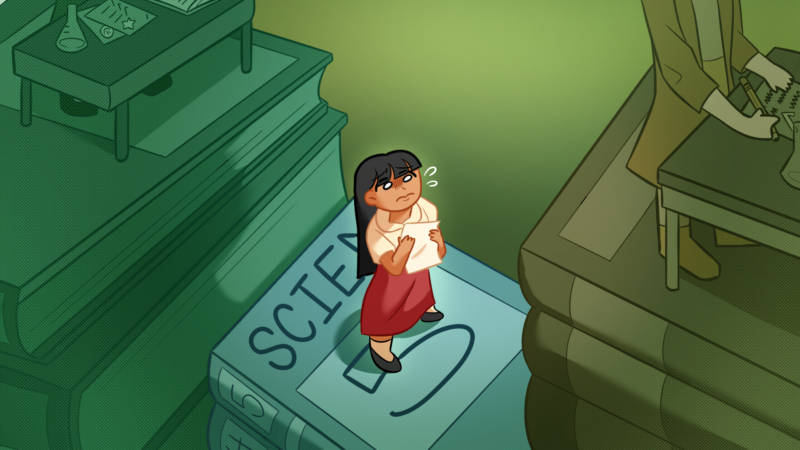
TO KEEP up with trends in science and technology, the Biology Department offered a new course and a new elective this school year.
BS Life Sciences is a course which specializes in four areas: microbiology, molecular biology and biotechnology, conservation biology and biomedical science biology.
Biotechnology, meanwhile, was offered as an elective for science majors and as a Natural Science course for non-science majors.
Birth of a program
BS Life Sciences, a four-year undergraduate program, differs from BS Biology because it is more specialized.
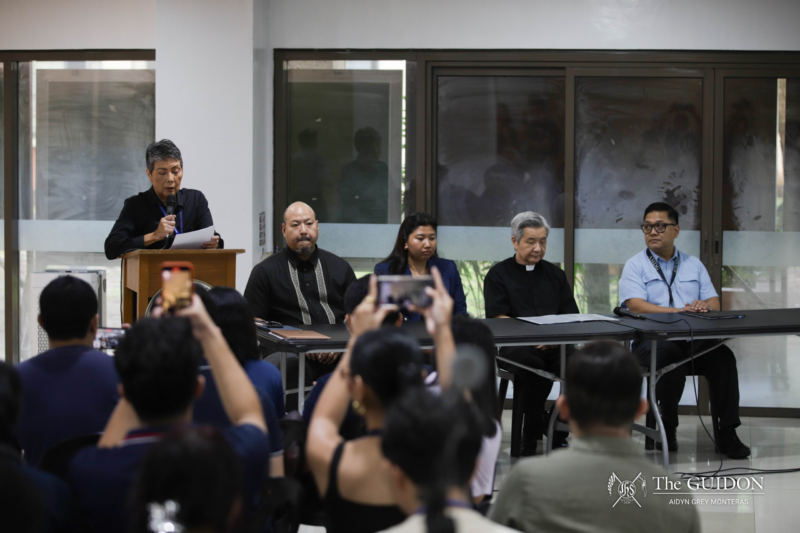
“The BS Life Sciences course…will allow you to choose an area of specialization, and the BS Bio course…will mold you into a hardcore, all-around biologist,” Biology Department Lecturer Ma. Katrina Canlas, MS said.
The new program is also research-oriented and requires students to do a thesis in their senior year, unlike the BS Biology program where students have the option to take a practicum instead.
The Ateneo will be the first university to offer a degree in BS Life Sciences in the country. “We want to eventually be known for a specific area of expertise where we could put Ateneo at the forefront,” Biology Department Chair Emilyn Espiritu, Ph.D. said.
No more Bio A and B
Originally, BS Biology was divided into two tracks: Biology-A (pre-medicine track) and Biology B (research track).
However, the Commission on Higher Education (CHEd) called for a revision of the BS Biology curriculum among all universities. “CHEd wanted a number of courses…to be added, but [we] have our core curriculum that we want to preserve,” Espiritu said.
She said the department extended the BS Biology program from four years to five years, with the summers freed of the required subjects. “BS Biology is broad…it allows you to go into various areas, into various careers or profession after graduation.”
“But we also cannot discount the possibility that there are certain individuals who would want to take up a more focused area,” Espiritu added, explaining the rationale for BS Life Sciences’ specializations.
Anjuli Mae Ilagan (IV BS Bio-A) said, “I think that [BS Life Sciences] would be a better option as a pre-med program because it lasts four years.”
“It would be better if practicum would be included in the program for the ones venturing into other areas other than medicine,” she added.
Biotech
Biotechnology was an appreciation course that introduces students to “the scientific basis, historical development and current applications of traditional and modern biotechnology.”
The course will focus on the applications of science to food, agriculture, industry, environment, forensics, health, and medicine.
Espiritu cited the rice crisis as an example where biotechnology can be applied. “How do we improve our production so that the rice that we produce will be not only sufficient for the Filipino… maybe it can be in a form where it already has certain nutrients added to it?”
For Canlas, offering biotechnology “is a reflection of the department’s thrust to adapt and move on [to] the 21st century biology.”
Applying theory
Canlas said that the challenge in teaching biotechnology and the courses under BS Life Sciences lies on bringing what is shown in TV or movies, or those published in newspapers or books, to the classroom setting.
She added that the department is also trying to refurbish their laboratories, “so that we have the capability for teaching the latest techniques, if not in actuality, at least virtually or in theory.”