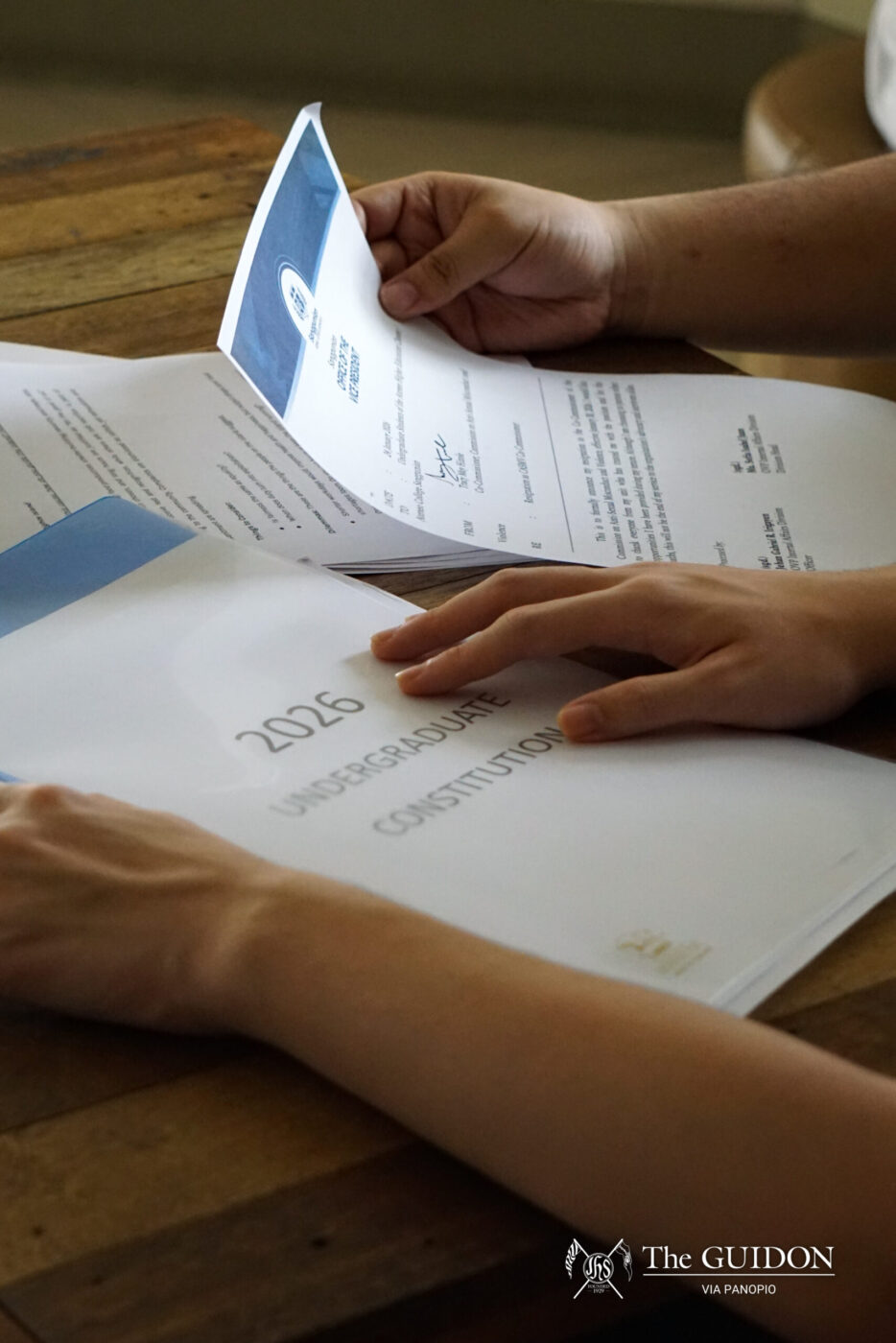
SEEKING TO represent the current student context, the Sanggunian held a series of consultations with students and Sanggunian arms in hopes of amending the 2019 Undergraduate Constitution.
According to Sanggunian Vice President Jedryc Romero, revising the Constitution stems from the need to address structural and technical gaps, including typographical errors, missing provisions, and other inconsistencies, while ensuring that the document reflects the current needs of the student body.
Notably, the Sanggunian has approved the proposed amendments after reaching the required three-fourths majority vote among elected Sanggunian members and sectoral representatives. With this, the Constitution has been forwarded to the Ateneo Commission on Elections for a University-wide plebiscite on March 23 to 26, requiring 50% + 1 votes before ratification.
Bridging the gaps
In updating the Constitution, Romero shared that the Sanggunian has been collecting student input through initiatives like the ConstiConversations, where provisions may be questioned, amended, or removed. He emphasized that student needs have changed since the Constitution’s last ratification in 2019, particularly following the COVID-19 pandemic.
Given student feedback, Romero pointed out that the Sanggunian focused on gaps in the Bill of Rights, such as the lack of clear definitions on discrimination and mental health support, outdated terms and references, and tensions between executive and legislative roles.
Romero also stressed that the most pressing structural concerns are being prioritized, particularly those involving the Sanggunian’s arms, such as the lack of contingency in appointing prosecutors and auditors, as well as the absence of formal monitoring and accountability systems.
Additionally, Sanggunian Office of the Vice President Policy Planning Division Head Vernice Arocena explained that some student proposals, such as clarifying access to campus spaces and addressing generative artificial intelligence are still under review to ensure alignment with existing University policies.
While no further consultations are scheduled, Romero stated that the form remains open to collect more suggestions from the student body.
Constitution in motion
Following the initial drafting of the Constitution, Romero noted that the planned revisions remained general at first, as student insights from the ConstiConversations were considered, while more specific provisions were finalized after further consultations with the student arms.
Specifying the proposed revisions, Romero stated that it will close governance gaps in the student arms and strengthen transparency mechanisms. In particular, he mentioned that the amendments aim to ensure that key bodies, such as the Ateneo Commission on Audit, remain operational and establish clear contingency plans for vacant positions.
“The approach that we can do [in amending the Constitution] is incremental. We start with the most urgent and most agreeable amendments before we actually think of the bigger structural changes in [the Sanggunian itself],” he expressed.
Beyond student feedback, Arocena highlighted the need to address outdated clauses, citing an example where several proposed amendments to the Electoral Code were denied for being unconstitutional, as they conflicted with preexisting provisions.
Ultimately, she stressed the need to improve how the Constitution is implemented, ensuring that it is properly understood and applied. Hence, she expressed hope that even if the revised version is not approved, the Ateneo community continues to uphold their responsibility of following the constitution’s mandates.
From the students’ lens
With the revision of the Constitution underway, the Sanggunian has taken into account the students’ perspectives on the current provisions through surveys. In light of this, Steven Pioquid (2 BS LEARN) shared hopes that the student government markets the constitutional changes better to reach a wider audience.
“It is crucial to consider the context of the general [student] assembly [that the Sanggunian is] serving and [who] will eventually be affected by the provisions. [The Sanggunian should] provide a sense of agency that [the students] could [be part of the] change,” Pioquid stated.
In suggesting amendments, students underscored that the Constitution should more effectively uphold and empower students’ rights. Moreover, students also noted the need for clearer delineations on the role of beadles as well as course representatives.
With the proposed provisions, Pioquid stressed that the current state of the University is contingent. He specified that the introduction of the Gokongwei Brothers School of Education and Learning Design, the addition of new degree programs, and the shift to a unified grading system highlight the Sanggunian’s need to respond to the evolving student conditions.
Hoping to positively impact the community, Romero emphasized that the revisions aim to ensure continuity and prevent disruptions in the functions of the Constitution. Through clarifying procedures and addressing inconsistencies, the changes aim to support a more responsive and effective representation for the student body.