In the heart of a city that never sleeps, people find love and livelihood in the busy Dangwa Flower Market.
NAVIGATING THE bustling streets of Dangwa, people like Ryan, Regen, and Jhonee all play their part in keeping the age-old tradition of flower-giving alive.
Situated on Dimasalang Street, the renowned flower market was believed to have gotten its name from the nearby Dangwa Tranco Terminal that originally transported vegetables from Benguet to Manila. However, highlanders eventually saw an opportunity to sell locally grown flowers to the capital due to its attractive margins. What once began with a small group of eight vendors selling flowers has now become a restless and teeming marketplace that decorates the streets with blooming flowers.
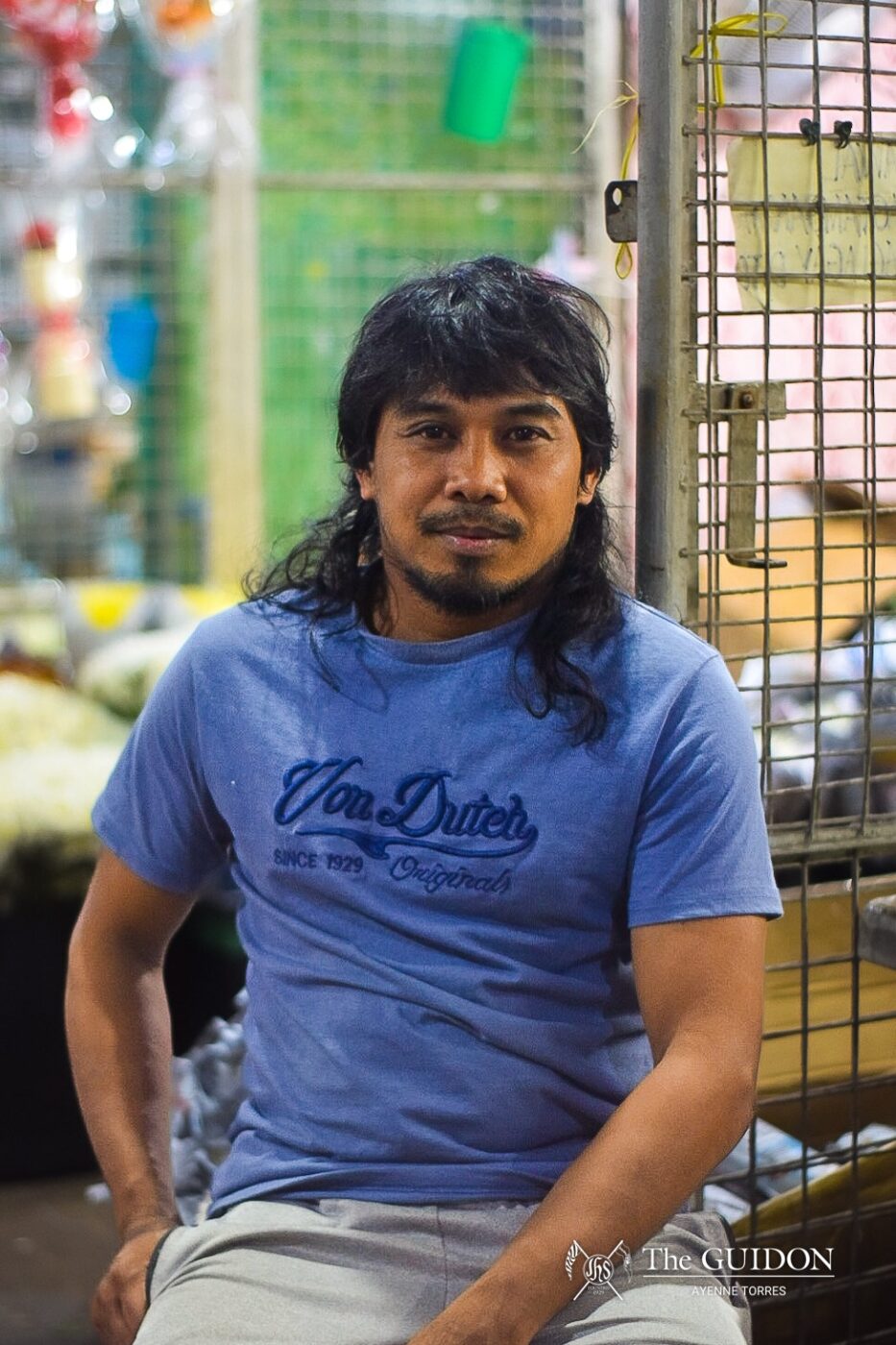
Working the night shift, Ryan, the all-around man, sits inside the Manila Flower Market, interacting with the other clerks around him. When he’s not working the stall, he’s either offloading and carrying flowers to Dangwa or planting Malaysian mums in the chilly highlands of La Trinidad, Benguet.
Having found his calling in Manila, Ryan has worked in Dangwa since 2004. From unsold flowers that wither to sudden drops in demand, he shares that he has seen it all and acknowledges that these challenges are like seasons that come and go. Now residing in Benguet, Ryan works to hopefully grow and nurture a family someday.
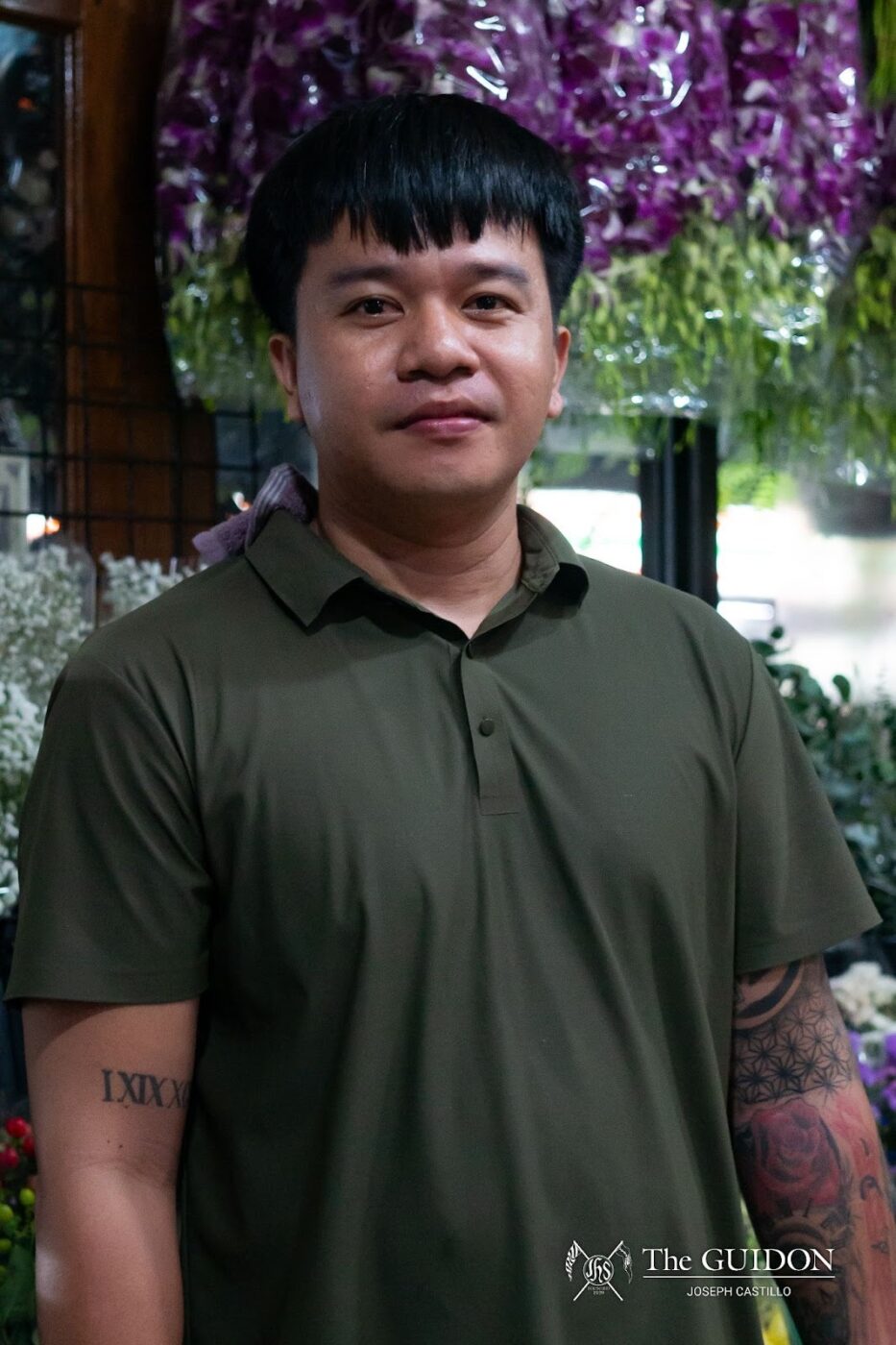
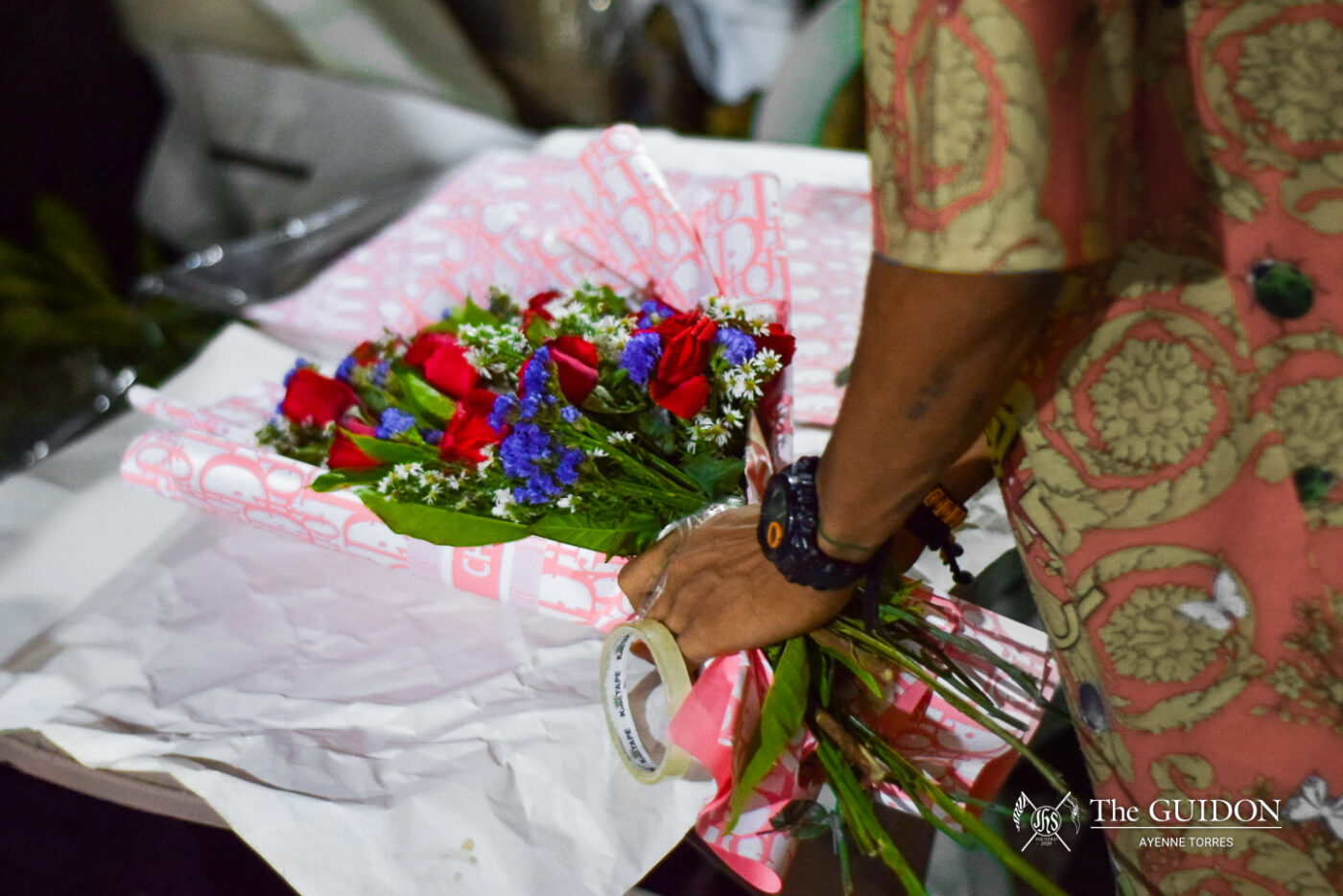
As porters keep busy outside Dangwa’s lively streets, inside Nene’s Flowershop, florists like Regen craft their most exquisite bouquets with great precision—an art difficult to master.
“Dapat kontrolado yung kamay mo na maluwag [mag-arrange], hindi masikip… nasa florist na kung paano [niya] mapapaganda yung arrangement,” he says. (Your hand should be controlled and loose [when arranging], not too tight… it is up to the florist on how to make the arrangement look beautiful).
Upon moving to Manila City from Masbate, he started off as a baker and unexpectedly became a florist. By constantly observing his colleagues in Nene’s, he quickly learned how to make flower arrangements, a hobby also enjoyed by his wife.
Now, he tends to his assortment of roses and stargazers with care. In each craft, he carries the same tenderness found in the act of flower-giving.
Meanwhile, as florists prepare their bouquets, buyers, such as Johnee, make their rounds in search of the perfect gift.
His preference for Dangwa comes with the fact that he finds flowers cheapest there. Yet, he notes that some arrangements can be costly, ranging up to Php 2,000. Beyond price tags, however, he says that when he thinks of Dangwa, flowers come to mind instantly, which is why he willingly travels far just to visit its bustling streets.
Before he makes his way back to Cavite, he buys Malaysian mums for a girl he is courting. No matter the cost, Johnee hands out bouquets to loved ones for special occasions, calling it his act of love. “Dito ko [naipapakita] yung pagmamahal [ko],” he shares. (This is where I show my love).
Every corner in Dangwa is filled with multicolored petals; however, the flower market extends beyond its goods. The lives of Ryan, Regen, and Johnee are only snippets from stories of dedication, tireless sweat, and profound affection that fill the night with each passing season.
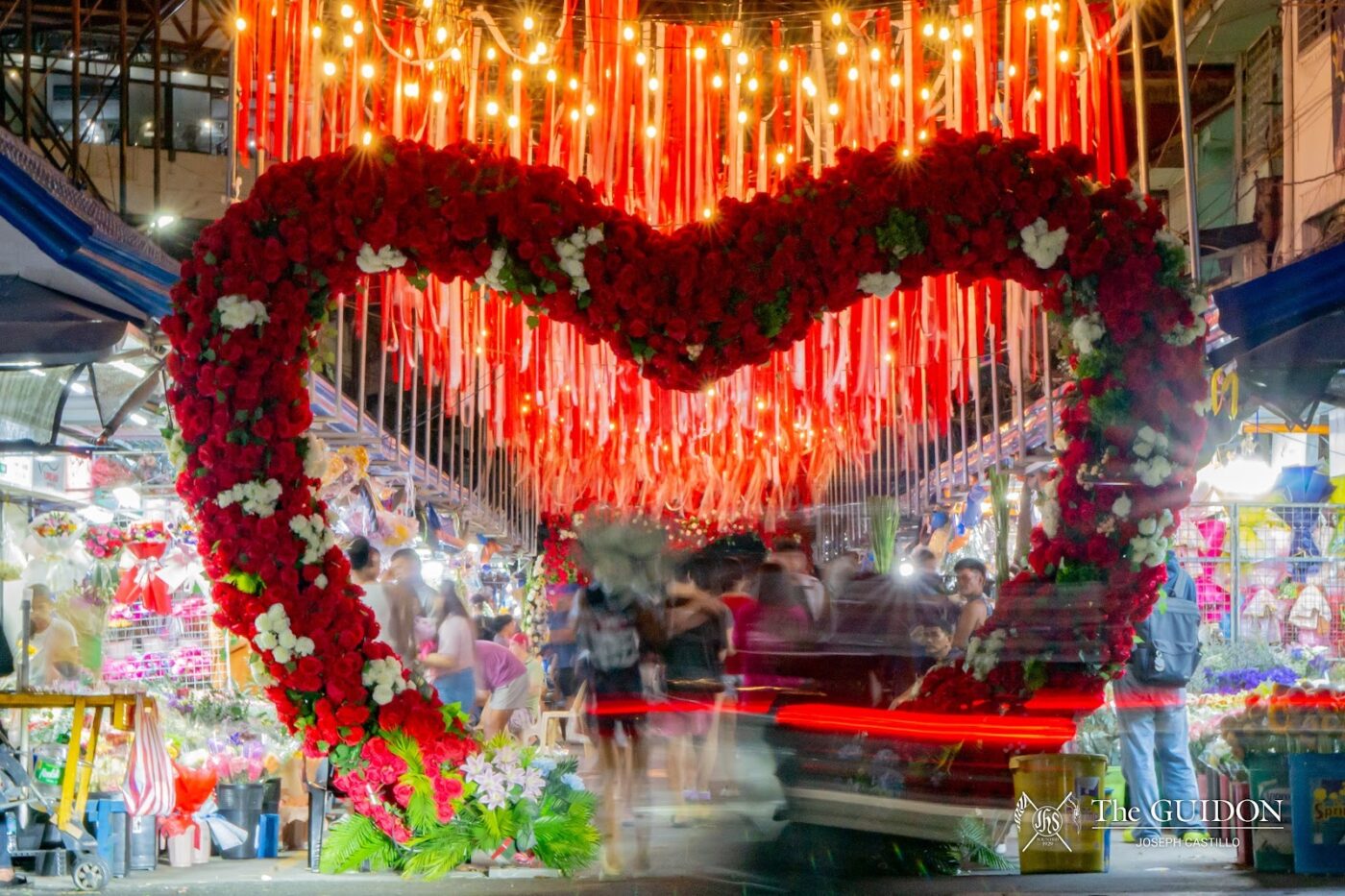
Whether through the exchange of bouquets or the quiet work behind them, workers and buyers in Dangwa alike cultivate an enduring culture of devotion shaped by labor and love.