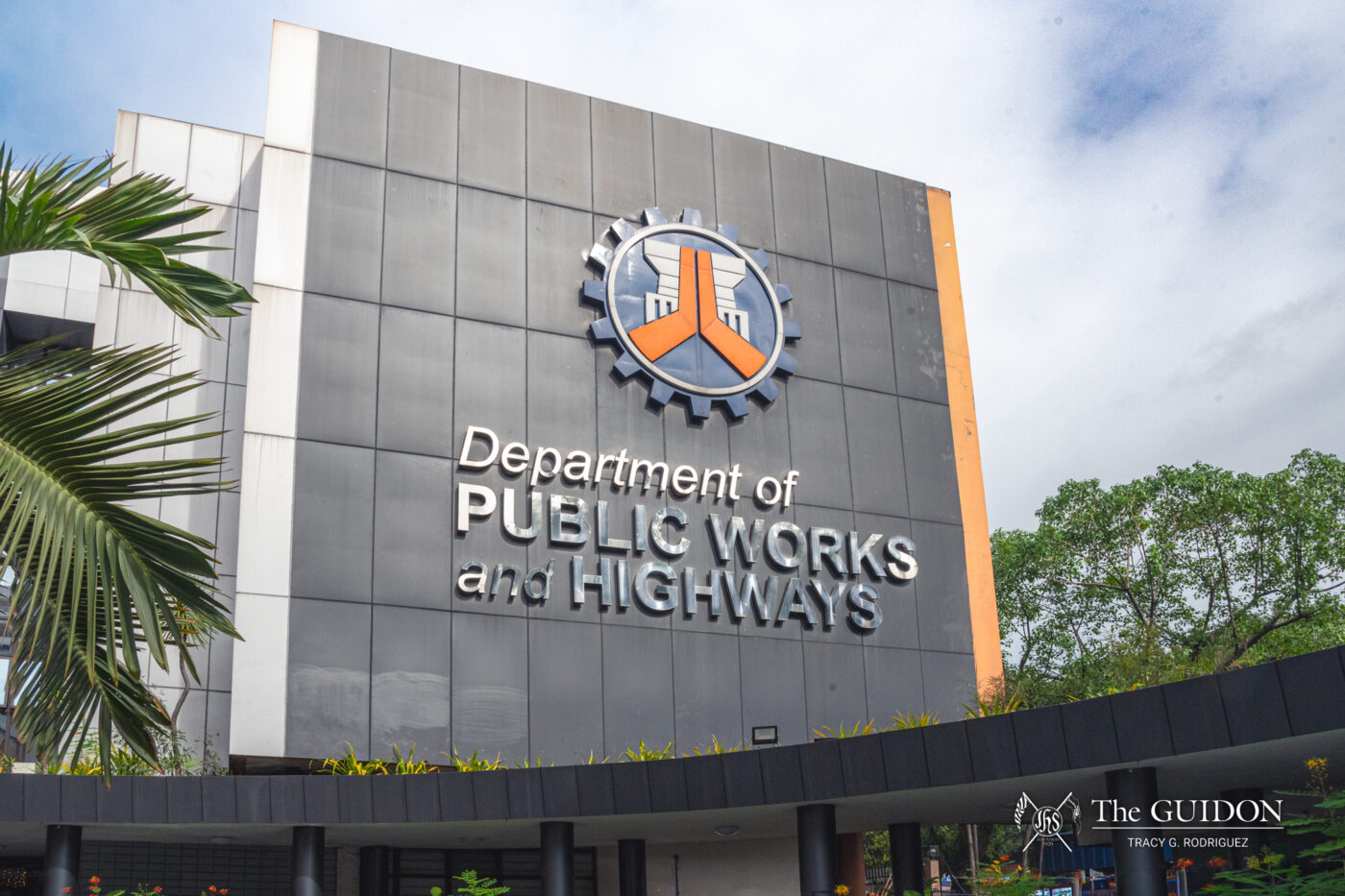
DESPITE BILLIONS of pesos allocated to flood control infrastructure, uncovered substandard projects reveal how corruption captures public institutions for private gain.
These public-private ties and fund misuse expose a distinct machinery of collusion that transforms the government’s promise of public service into a tool for bureaucratic self-interest.
Where the money pools
Flood control spending has steadily ranked among the government’s top budget priorities since the mid-2010s. Between 2015 and 2025, its yearly allocation ballooned sixfold—from Php 42.28 billion to Php 254.3 billion—consistently surpassing those of the Department of Social Welfare and Development and Department of Health, agencies that are typically among the largest social-service allocations.
This shift in fiscal priorities heightened during the Rodrigo Duterte administration, when about 5.4 percent of the country’s gross domestic product went into infrastructure spending, including flood control projects in 2017. Yet the same period marked a pattern of recurring anomalies in implementation, as the Commission on Audit flagged around Php 73 billion worth of Department of Public Works and Highways (DPWH) projects as delayed or unimplemented. Following this, in 2018, DPWH found that its top 10 contractors were linked to fake tax documents, political ties, and incomplete or substandard projects.
Between 2022 and 2025, around Php 545 billion was poured into flood control projects nationwide. About Php 100 billion of this went to just 15 contractors, five of whom held projects across nearly the entire country.
In this context of escalating and highly concentrated investment in flood control projects nationwide, Ateneo Policy Center Senior Research Fellow Atty. Michael Yusingco explained that the strong budgetary focus stems from political and economic incentives. “Because [vulnerability to flooding] is a perennial problem, politicians can use it to always say that we need to do something about it—flood control projects,” he said.
Another reason, Yusingco added, lies in the close link between politics and the construction industry. He remarked that many lawmakers, particularly from political dynasties, hold investments in construction companies, signaling an overlap between public and private interests.
Entry and exchange mechanics
One common entry point for this collusive behavior between public officials and construction firms is the bidding process for DPWH projects. A former government contractor told ABS-CBN News that lawmakers often preselect their preferred contractors, turning the bidding process into a mere formality. Bidding committee members reportedly arrange documents and bids to ensure that certain firms win, while losing bidders are compensated through “bidding expenses.”
This narrative aligns with the testimony of contractor Curlee Discaya, whose family owns one of the top 15 firms contracted for DPWH flood projects. He told the Senate that bidding is rigged from the outset, as negotiators tied to high-ranking officials determine which firms can participate. Some contractors allegedly provide “advances” to politicians to secure projects, while members of the Bids and Awards Committee receive padulas—facilitation money exchanged for fast-tracking paperwork.
As contractors prepare project documents, certain DPWH engineers provide bureaucratic cover to justify them. Collaborators within the Department of Budget and Management then ensure that these projects appear in the National Expenditure Program, while allied lawmakers lobby once the General Appropriations Act budget reaches Congress.
Together, these overlapping networks reveal how flood control projects have become less a matter of public infrastructure than of entrenched political patronage. Thus, both public and private actors appear to reinforce each other’s interests through cycles of exchange and reward.
Going against the tide
As Congressional hearings revealed systemic corruption in flood control, calls for stricter legislation rose. However, Yusingco asserted that the problem lies not in the absence of legislation but in its weak implementation. “They’re trying to paint the picture that the law is inadequate instead of saying, ‘No. You are violating the law.’ That’s the problem,” he argued.
For instance, Republic Act (RA) 6713 or the Code of Conduct and Ethical Standards for Public Officials and Employees, prohibits public officials and employees from holding substantial interests in businesses or private enterprises and other conflicts of interest related to their position. Similarly, RA 3019 or the Anti-Graft and Corrupt Practices Act bars Congress from having interests in business enterprises that may benefit from their intervention.
However, many officials were found to have ties with government contractors, including former Ako Bicol Representative Elizaldy “Zaldy” Salcedo Co, who remains a shareholder in companies linked to his family, and Senator Bong Go, whose father owns one of the top contractors in Davao with alleged links to the Discayas.
With the flood control fiasco sparking massive outrage and protests across the country, more mobilizations are being organized by various civil society groups. While Yusingco acknowledges its impact, he believes that meaningful change will only occur once the right people get elected.
“The rallies are helpful in terms of raising awareness. […] But the change that we want can only happen if we change the people that we vote to Congress,” Yusingco explained.
With investigations on the widespread corruption underway, Filipinos await whether their calls for accountability will be drowned by the waves of impunity or justice will overcome the tides of corruption.