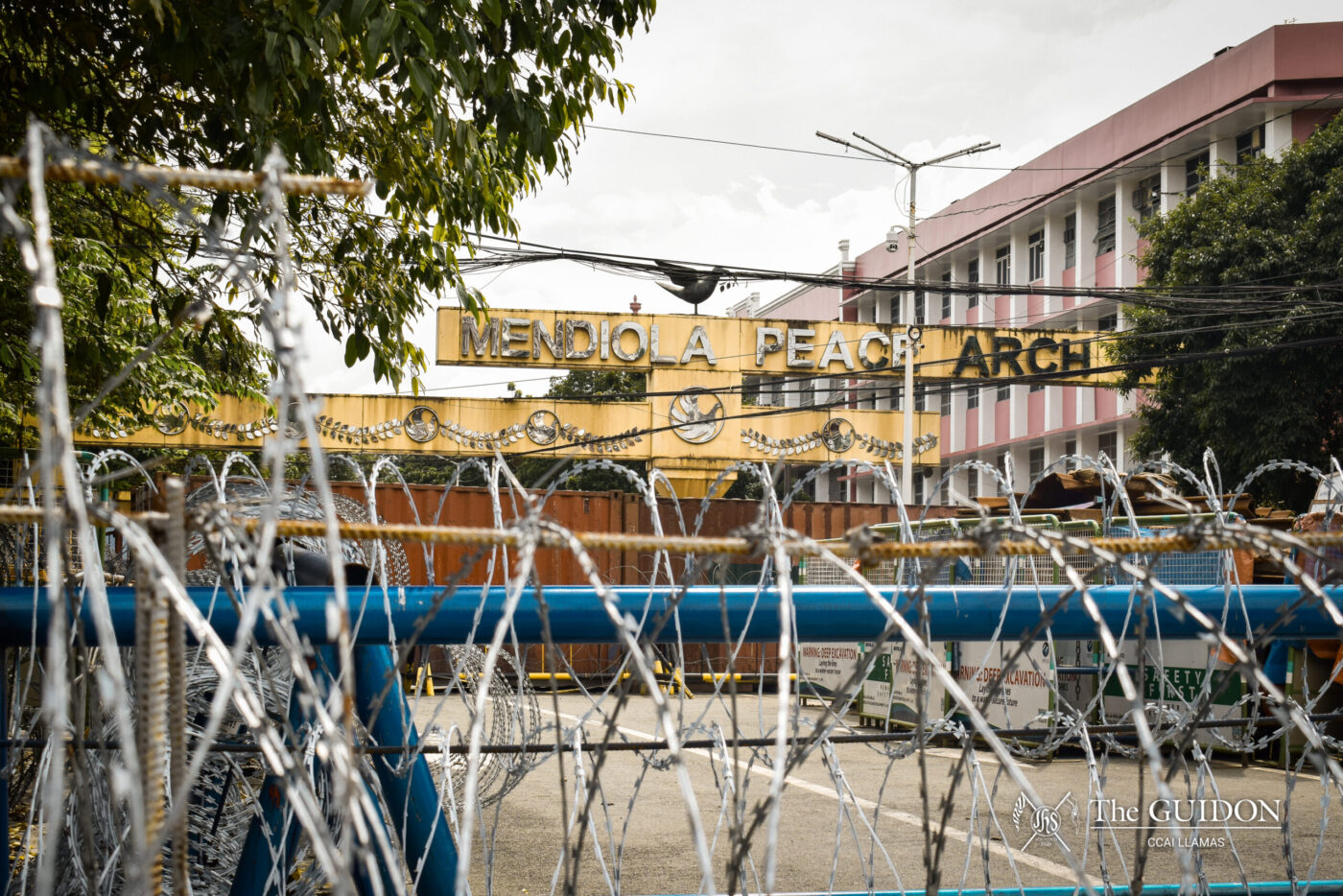
WHEN GREATER Manila’s poor took to the streets of Mendiola on September 21, the target was not only riot shields but also the broken promises of a state that has long turned its back on them.
From state killings to the quiet injustice of eviction and hunger, the poor have lived under a system that punishes their poverty while denying their pain. Each clash, each protest, serves as a reminder that in the region, violence is both inherited and imposed.
Unresolved pleas
For many years, Greater Manila’s streets have witnessed numerous unresolved issues that affect the urban poor, constantly echoing the neglect that inhabitants are forced to endure.
In truth, the residing urban poor communities have long been subjected to exclusion from critical narratives, such as the “war on drugs” during former president Rodrigo Duterte’s administration, which is infamously referred to as a “war against the poor.” This cost the lives of numerous victims, especially from highly impoverished areas, many of whom were breadwinners struggling with low-wage employment.
Under the same rule, the COVID-19 pandemic occurred, taking millions of lives and livelihoods all over the country and leaving those on the brink of poverty to fend for themselves. While certain measures like the “Bayanihan to Heal as One Act” were made to provide financial assistance for low-income families during lockdown, it did not resolve the greater issue of wide-scale unemployment among the poor. As a result, those on the lowest end of the social hierarchy continued to struggle with job instability, lack of income, and increasing debts.
The impacts of these events still aggravate the state’s current landscape, influenced by other socioeconomic concerns such as rising food costs, low minimum wage, worsening employment conditions, and lack of state support. In fact, according to a recent Social Weather Stations (SWS) survey, 23% of Filipinos believe that their quality of life has only worsened in the past year.
With these numbers remaining unheard by the country’s authorities, a state of unrest covers those who are most affected, leading to the rise of outrage.
Defiance in despair
For those most burdened by these conditions, silence is no longer an option. In recent months, thousands of workers, farmers, and youth joined protests across Manila—most notably the September 21, October 21, and November 30 rallies in Mendiola, Luneta, and Liwasang Bonifacio. Timed around key anniversaries of past struggles, these rallies became stages for collective outrage over corruption, poverty, and neglect.
According to Sociology and Anthropology lecturer Mary Racelis, PhD, organizing local movements and alliances allows the poor to see themselves not as passive recipients of aid but as citizens capable of demanding accountability.
“Organizing is crucial not only because people then get to know the issues… but because [the urban poor] get the courage to speak as equals,” she stated.
However, authorities often frame such grassroots demonstrations as disorder. From the September 21 protest, where police used water cannons and tear gas on protesters, to the October 21 rally, which led to the arrest of a youth protester for vandalism, the state continues to equate civil resistance with criminality.
Nonetheless, these communities continue to speak, march, and organize—a testament to how resistance, for them, is not the absence of order but the presence of dignity. “Violence only happens when those who are engaged in it don’t see any other options,” Racelis noted, stressing that aggression rarely comes unprovoked. Most, she added, actually do not like violence but nevertheless suffer from it.
What the poor face daily—the slow cruelty of hunger, eviction, and exclusion—is in itself a form of violence. Their protests, then, only mirror the violence long inflicted upon them by a state that notices them only when they fight back.
Amplifying voices
In contrast to the accounts of the demonstrators present, the Philippine government and law enforcement regarded the September 21 anti-corruption protests as “generally peaceful.” According to National Capital Region Police Office Chief Police Brigadier General Anthony Averin, “No guns were fired, and no police officers were killed,” noting that violence erupted only after rioters intervened.
However, these claims were refuted by firsthand accounts of police violence that took place during the protests. Particularly, one video captured by a witness in the same protest showed a half-naked youth being carried by police and subsequently dropped onto the pavement.
Bulatlat Community Manager and Reporter Dominic Gutoman expressed that despite many media workers witnessing police harassment firsthand, coverage of the violence in these protests remains sparse.
In an article by the Center for Media Freedom and Responsibility, alternative media differs from mainstream media in the way its content poses views different from those in power. For Gutoman, “[We are here] to ensure that the critical contexts are being put into the news algorithm.”
Conversely, he articulated that alternative media reporting puts primacy on the lived experiences of the marginalized to complement mainstream reportage. Instead of simply parroting what government officials and policies state, the accounts of the urban poor are especially brought to the fore.
Through reporting from the ground and building solidarity with the urban poor, alternative journalism ensures that the resistance of the people is covered. Gutoman expressed, “For the longest time, alternative media functions as a conduit for the people’s voice to be amplified. […] We refuse to overlook the fact that this is a response of the people to the widening exclusive scandal of corruption.”
Although the government may try to mask the disenfranchisement of the urban poor, alternative media exists to bring these truths to light. Even if media workers themselves are subjected to conditions of precarity, these anti-corruption protests illustrate the need for different sectors to help one another in their collective struggle.