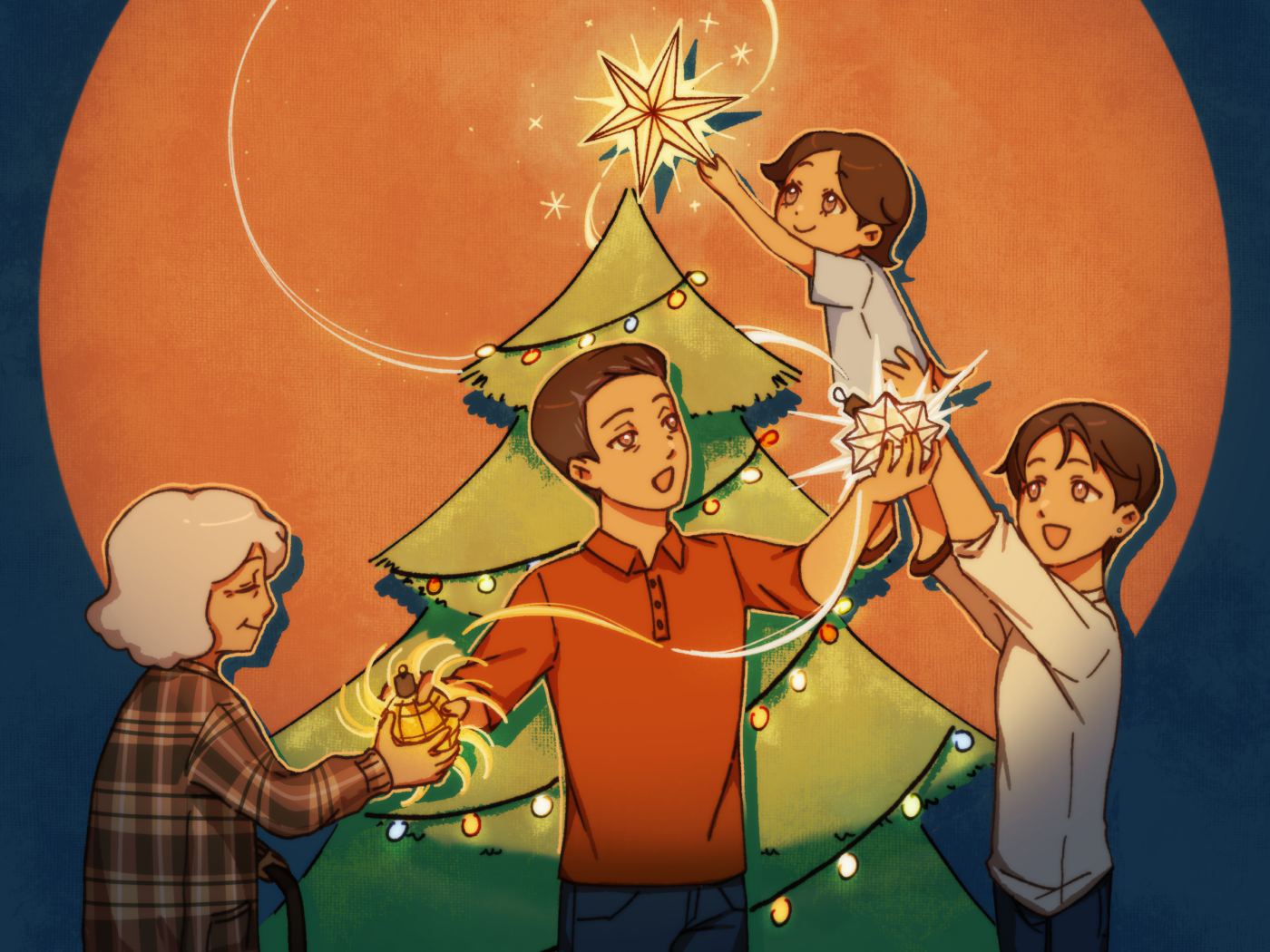
Inside the four walls of a home, families built from multiple generations come together to bridge differences in unique ways.
AS HOUSING prices weigh heavier and as family members age, the need to live under one roof becomes a delicate dance between necessity and the family-centric Filipino culture, creating a household defined by its own special dynamics.
During moments when traditions—from sharing recipes to gathering for Christmas celebrations—burn the brightest, rifts and tension, along with the tapestries that strive to bind families together, reveal intersections that bring both moments of discord and harmony.
Underground foundation
Isha*, a 35-year-old housewife from Lucena City, lives with her mother, two younger siblings, her partner, and their two children. Her mother, a small-town lottery agent, is their family’s sole breadwinner.
As the eldest daughter and a parent herself, she partners with her mother in making decisions for the household, while taking care of her own kids. Beyond her responsibilities, she remains close with her siblings and bonds with them over meals or by playfully teasing them.
However, despite their closeness, Isha admits that some family traditions from her childhood have since faded, such as the practice of eating together.
Reflecting on the Christmas season, “Pumupunta kami dati sa mga kamag-anak [namin para] sama-sama kami mag-celebrate [ng pasko]. Pero dahil tumatanda na kami, may sari-sarili na kaming pinupuntahan (We used to visit our relatives and celebrate Christmas with them, but as we started growing older, we started spending Christmas in different places),” she reminisces.
These changes are not limited to evolving family traditions; they have also extended to values and ideologies. As the only Baptist Christian in a family of Catholics, she strives to share her faith with her family, but has not been fully successful.
When arguments arise from differences, Isha describes how her family members cope. “Wala sa vocabulary namin [ang] mag-sorry sa isa’t isa. Parang okay na ‘yun [problema], parang wala [nang naging hindi pagkakaintindihan] (We don’t usually say ‘sorry’ to each other. It’s like the argument never happened),” she explains.
Nonetheless, she maintains an open mind towards her family members’ perspectives and avoids imposing her own beliefs. For Isha, communicating her ideas and stances is enough.
Roots run deep
Similar to Isha, Alexis Viray (3 BS LM) finds that communication helps her household smoothen conflicts. Although arguments with her parents are more frequent, tension still arises with her grandmother, who lives with the family.
A sore topic is whether Viray intends to pursue law school after college. With no answer to give, she tries to circumvent the topic, something she cannot do when they visit their Cebuano extended family for Christmas. There, Viray tries to keep the focus on her and her studies to prevent the pressure from shifting to her younger relatives.
In the Cebu household, they are meticulously cared for, with her mother as the youngest of seven siblings. The usual Filipino Christmas traditions are celebrated—a long prayer before the meals, Noche Buena nightcaps for the elders, and the children opening gifts on Christmas morning.
Yet once Christmas is over, it’s back to Viray’s life as the eldest child. Daily, she handles the family’s meals, a skill she learnt from her Kapampangan grandmother. Through the love of cooking that has transcended generations, Viray has also learned to infuse her own tastes, which her grandmother welcomes.
“She’s really happy to pass down yung recipe kasi para bang naglilive-on yung recipe kahit papaano (She’s really happy to pass the recipe down because it’s almost like it gets to live on),” she shares.
Despite occasional differences due to the generational gap, Viray retains the magic of coming together over cooking, building this into more meaningful relationships.
Intertwined branches
Although generational differences are deemed wearisome, for both Isha and Viray, it is actually their favorite thing about their households. In Isha’s case, she enjoys the understanding that they offer to one another despite the mismatches, and for Viray, she loves that there is “a little bit of everything.”
Beyond filial piety and inflated costs of living, Isha and Viray both believe that the family-centric culture of the Philippines has a strong influence on why their families came together.
In their separate households, Isha and Viray discovered that above all conflicts and changes, their family was most important. Communication, compromise, and cooperation were their biggest allies for maintaining harmony.
As families’ worlds intersect with those they share a roof with, each member is also challenged to maintain their autonomy. For Isha and Viray, though living with their families was due to circumstance, they chose to look for the silver lining of their realities through the diversity they have begun to cherish in their multi-generational households.
*Editor’s Note: The interviewee’s name has been withheld upon their request to protect their identity and privacy.