While others wrap presents amid the whirl of Christmas wish lists, Nanay Ingket binds her hope with the bundle of toys that she sells from her own version of Santa’s Toyland in Escopa III.
CHRISTMAS IN Escopa III arrives in a flurry of Yuletide songs and parols hanging on the streets. Hands of different ages join together as they celebrate with a simple Christmas party and warm smiles.
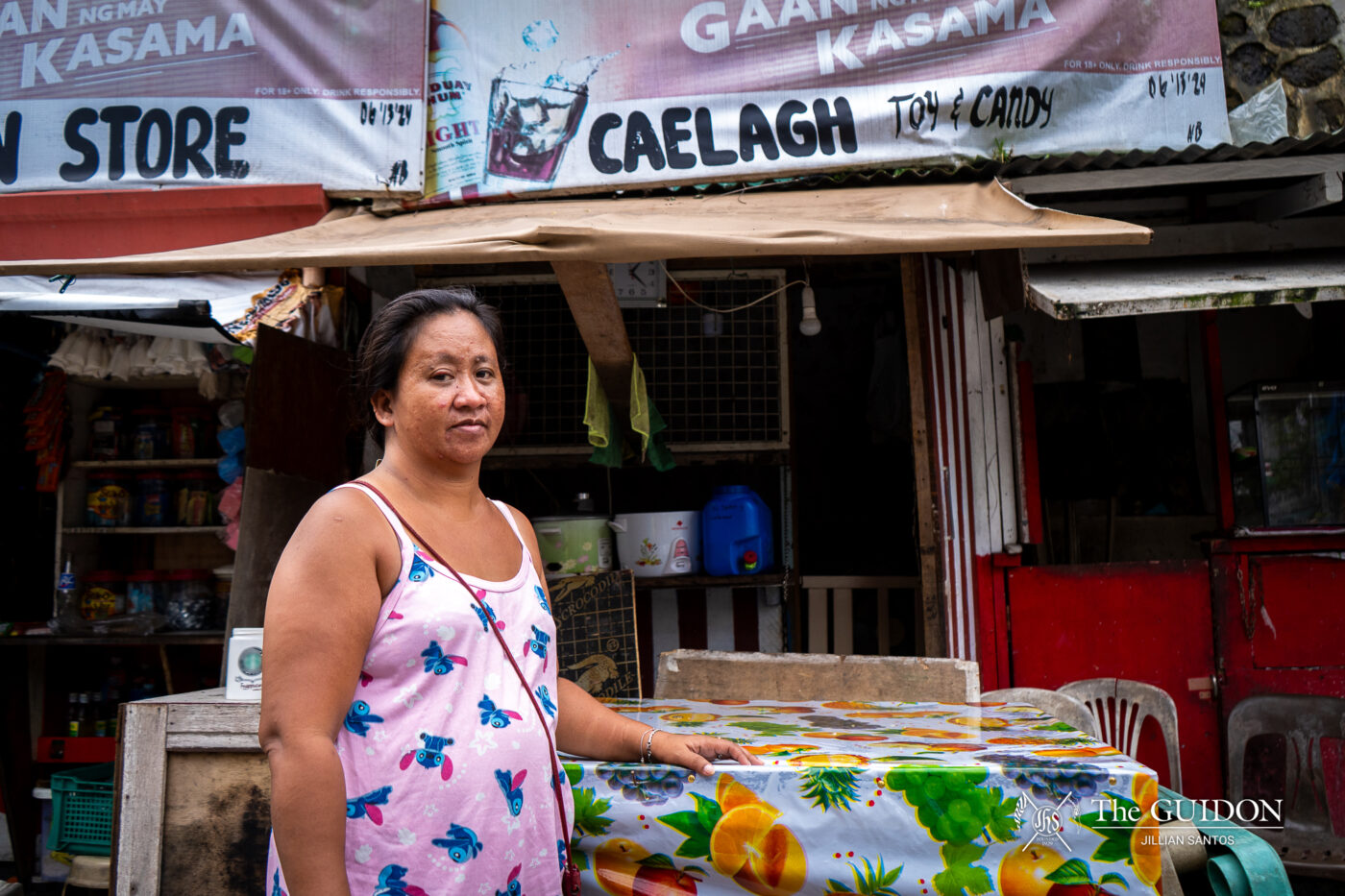
Amid the festivities, the lane of Escopa, filled with small businesses, continues to operate. Among these shops stands a humble toyshop, manned by Escopa’s version of Santa—a mom who serves as a kusinera for half the year, and a toyseller when December approaches: Nanay Ingket.
The toy maker
As one walks toward the end of a street in Escopa III, they will find Nanay Ingket behind her almusalan, named after her two-year old daughter: Caelagh. She and her husband, together with their four children, live in a house across their store.
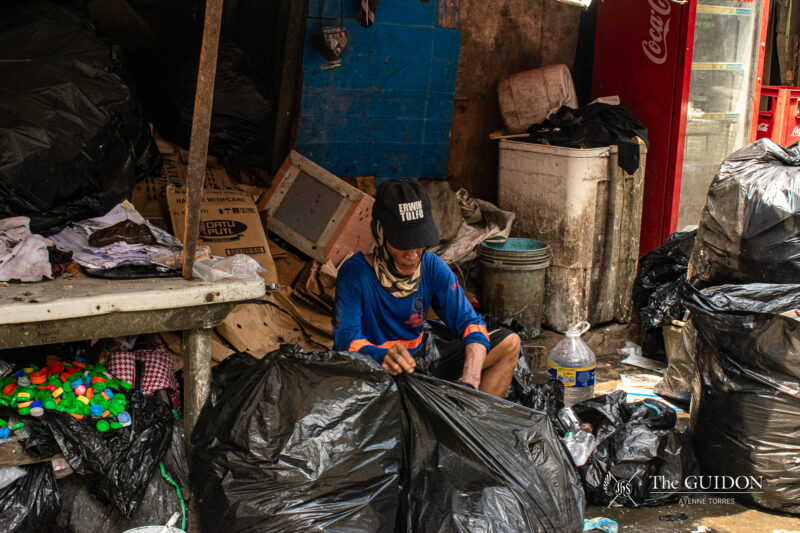
To keep their family afloat, Nanay Ingket and her husband juggle multiple jobs, including their business, part-time cleaning work in Xavierville, and sale of scraps to junk shops.
Every day, Nanay Ingket wakes up at 2 AM with her husband to prepare the food they sell at the almusalan. After seeing off their sons and ensuring that their two-year-old daughter is cared for by a neighbor or a relative, they tend their shop until noon.
In the latter part of the day, Nanay Ingket goes to Xavierville if she has requests to clean houses. Otherwise, she stands in for her mother’s sari-sari store right beside her almusalan. Her husband, on the other hand, looks for scraps around their neighborhood to sell to the junk shop.
Each day ends with a family dinner, and the same routine is repeated as they rise at 2 AM once more the next day.
However, despite having multiple jobs and attaining scholarships for their three sons, the anxiety of failing to pay bills and provide for their children persists. To earn more, Nanay Ingket turns every season into an opportunity. This means adding miniature cars, glowing swords, and singing dolls to her store’s buyable items once the Christmas bells start to chime.
Factory reset
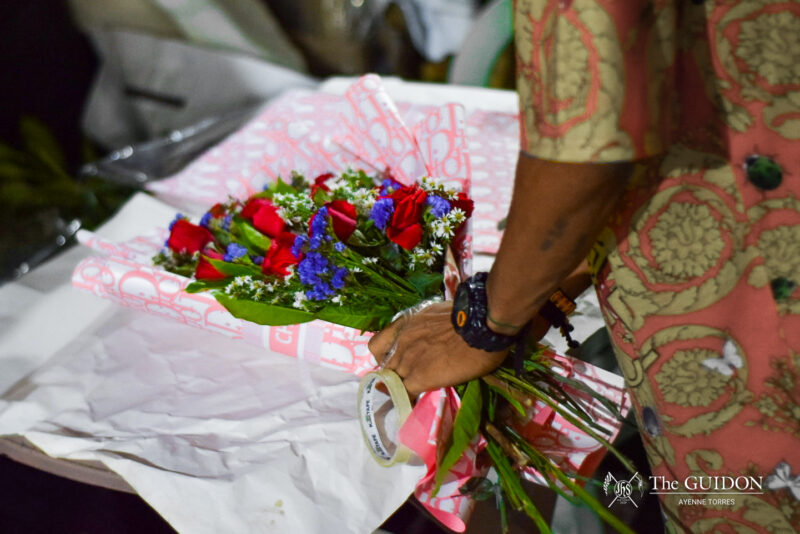
Over the course of various Filipino holidays, Nanay Ingket’s humble shop quietly transforms, following what the season needs. From January up until early November, the shop remains an almusalan that offers classic Filipino staples such as pritong ulam and pansit. During February, Nanay Ingket sells flowers to meet the demands of Valentine’s Day and the upcoming Teacher’s Day.
Then, once December starts, Nanay Ingket’s shop begins to receive not only orders of the usual menu, but also Christmas delicacies such as leche flan. Her seasonal goods—toy cars and dolls—also often become the center of attention, as they draw children passing by with their parents.
To ensure the toys sell, Nanay Ingket keeps them affordable, pricing them between Php 35 and Php 180 for the season of giving. “‘Yung afford lang nung bata […] [para] ‘pag magturo ‘yung bata sa mama nila, [mabibili] agad nila (Something the child can afford [so] if the child points out something to their mom, they can afford it),” she explains.
According to Nanay Ingket, the transformation of the shop is motivated by dull earnings during different seasons. She adds that what may sell during February might not be as popular during December.
As seasons continuously change and new festivities arise, these transformations show a bit more than what meets the eye—moments of growth for Nanay Ingket’s shop. In a fast-paced world where demands are always shifting, her humble shop adapts as an advantage, desperate to make a living for their family’s future.
Normal settings
Despite her hardwork, however, Nanay Ingket’s labor is not met with reward just because it’s Christmas. While many Filipinos celebrate the holidays through grand parties, vacations, and gift-giving with family and friends, she wakes up to a day of increased work.
For her and many Filipinos, Christmas is a season of heightened stress and isolation due to bills continuously piling up and the pressure to keep up with the holiday rush. Regardless, these are challenges that Nanay Ingket has learned to overcome and tolerate.
This toleration is something that she has passed down to her children. “Sabi ko sa [mga anak ko]: kung ano ‘yung meron, i-appreciate ninyo kasi hindi lahat kaya ibigay [sa inyo]. Parang masasaktan ka lang ‘pag hindi mo nakuha ‘yung [magandang Pasko na] gusto mo,” she says.
(I told my children to appreciate what’s available, because we can’t have everything. You’ll just get hurt if you don’t get the nice Christmas that you want.)
As Filipinos are taught to endure and settle rather than ask for what they truly deserve, scarcity becomes normalized. Hence, in a culture that romanticizes resilience, the glow of parols and the loop of holiday jingles signal not rest, but another season survived.
At the end of another season and another year, the nanay, kusinera, cleaner, and toy seller in Escopa III, along with her family, celebrates Christmas with kaldereta, spaghetti, and a family picture as their highlight, serving as a reminder that the season of giving turns even the smallest gestures into the grandest joys.