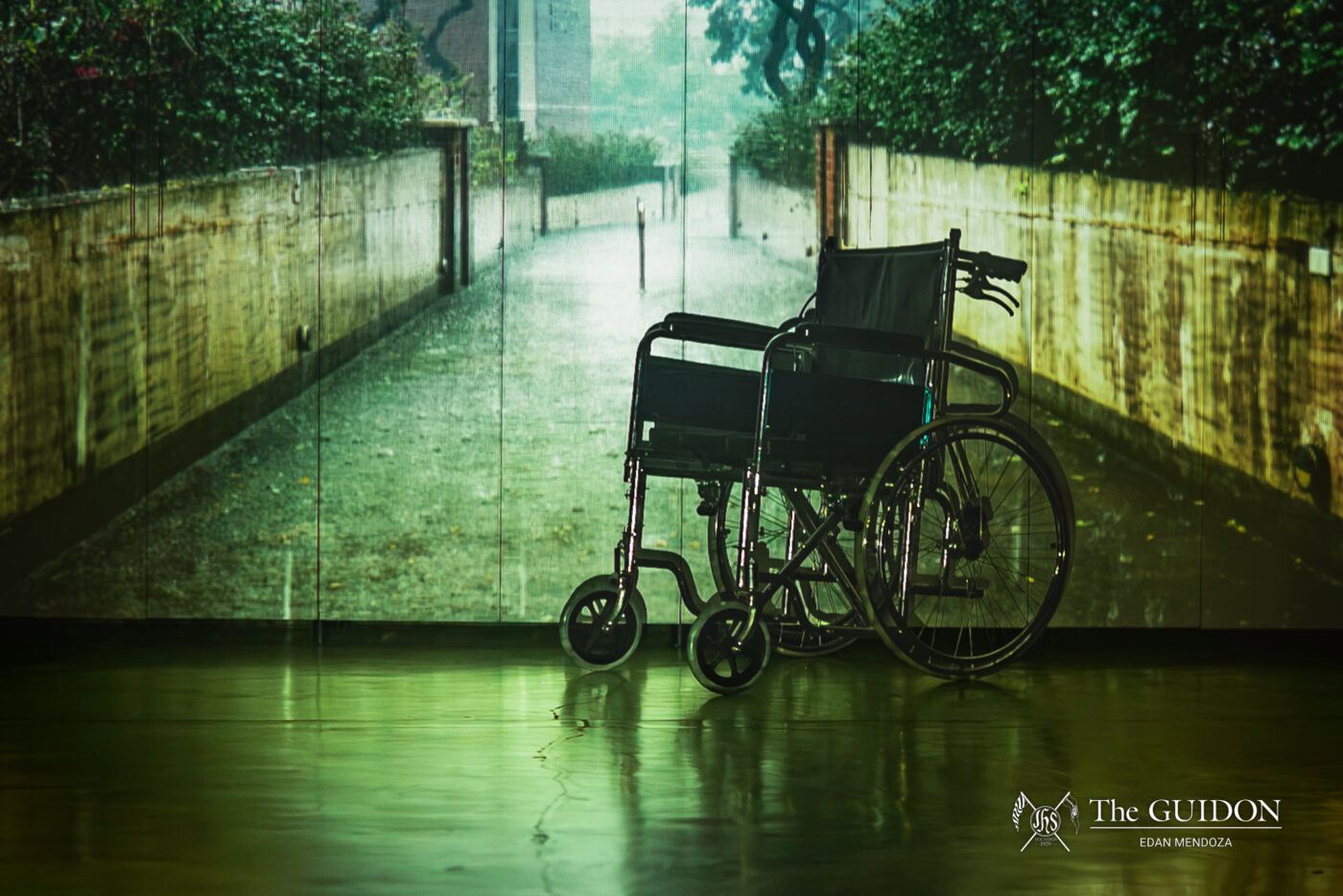
AS DISASTERS constantly wreak havoc in the Philippines, persons with disabilities (PWDs) continue to drown in systems that let them sink.
This systemic failure is reflected in disaster planning that overlooks over 2 million Filipinos registered as PWDs, underscoring the broader need for a non-handicapping environment in the country.
The human cost
In 2024, the Harvard Humanitarian Initiative reported that the devastating impact of natural disasters in the Philippines has left PWDs more vulnerable and less likely to recover. Despite experiencing the same disasters as non-PWDs, PWDs face significant challenges in disaster recovery.
When Typhoon Ondoy struck in 2009, Tahanang Walang Hagdanan, Inc. (TWHi), a non-government rehabilitation and skills training center for PWDs, suffered more than Php 5 million worth of property damage.
TWHi Administrative Manager Maria Belen Pacete recounts that, when the flood entered the vicinity, the machines they used to manufacture wheelchairs, woodworks, and needlecraft for their livelihood and advocacy work were destroyed.
Apart from personal experience, she highlights the inadequate assessment and consideration for PWD needs in evacuation centers, leaving PWDs to struggle with disaster preparedness and response.
“I don’t often receive news of persons with disabilities getting evacuated,” Pacete emphasizes in a mix of Filipino and English.
Within the Ateneo, university-level disaster risk reduction and management policies also grapple with disability inclusion.
For instance, Ateneo Special Education Society (SPEED) President Andrea Bataclan stresses that campus evacuation routes usually require students to travel through slanted walkways, which overlook students with mobility concerns. Moreover, emergency alerts compromise the safety of students with hearing impairments, as these are only broadcast through speakers.
Wading through broken systems
While individual institutions are left to plan independently for PWD-inclusive disaster preparedness, broader community efforts under governmental responsibility remain insufficient for the needs of PWDs.
At present, the National Disaster Risk Reduction and Management Council and the Department for Social Welfare and Development oversee nationwide disaster preparedness and response efforts. However, the implementation of these initiatives largely falls on the shoulders of local government units (LGUs) due to limited funding and a lack of sustained supervision to ensure adequate project execution.
As LGUs allot funds to improve disaster planning, efforts are not proportional across the nation, with over 50% of local governments lacking PWD offices.
For Quezon City PWD Affairs Office (PDAO) Head Deborah Dacanay, government ayuda alone is not enough. She shared that their flagship project Lahat Handa—composed of barangay-wide emergency training seminars and workshops—helps to develop PWD independence and empowerment, supplemented by their growing ayuda program.
However, Pacete shares a different story in Rizal, where the PDAO office response is lacking due to the absence of sustained collaboration with PWD communities, especially in disaster preparation.
To compensate for the absence of strong LGU efforts on PWD inclusivity, Pacete notes that many in their community have banded together to organize annual earthquake preparedness training, donation drives, and intersectoral dialogue.
Despite these efforts, PWD-centered initiatives must also be grounded in reliable information and statistics to enable data-driven planning. However, the persistent digital information gap surrounding PWDs continues to exacerbate their exclusion.
In particular, the lack of a unified national PWD database that can be used as a basis for recovery and rescue efforts remains a key structural disadvantage. This absence forces some LGUs to rely instead on their respective initiatives, as seen in QCPDAO’s PWD ID Registry, while others, including Rizal’s PDAO, have no publicly available registry at all.
Pacete stresses that during and after disasters, the lack of a reliable count for PWDs who were endangered, rescued, or recovered makes safety planning and efforts for them more difficult and further excludes the community from assistance needed during calamities.
This is just one example of how structural gaps in PWD inclusion bleed into the lives of real individuals, not numbers or statistics. Even as efforts to build inclusivity improve every year, promises for proportional PWD welfare remain largely unfulfilled.
Moving beyond symbolic policy
In spite of slow progress, improvements in PWD inclusivity are steady, owing to the continuous collaboration between government units and PWD advocates. Legislative efforts also heed the calls for sustained PWD welfare.
According to Pacete, there are a lot of promising leaders who spearhead laws in pursuit of PWD inclusivity. “Pero, hindi ko siya nakikita na ganun ka-efficient, ” she comments. (But I don’t find them that efficient).
Meanwhile, Bataclan calls for active PWD representation and involvement in the implementation of Ateneo’s emergency protocols. She emphasizes the need for enhanced disability assistance in disaster risk reduction and management through digitalized alerts, adjustment of evacuation procedures, and responder training.
“I think there needs to be a real shift from seeing PWDs as passive recipients of assistance and aid to actually recognizing them now as active stakeholders in disaster preparedness, response and recovery,” Bataclan concludes.
With the country’s constant exposure to typhoons and earthquakes, widespread reform should actively involve the PWD community, may it be social, political, and economic.
No Filipino should be left behind in the efforts of the government to assure the welfare and well-being of all its citizens. As such, there needs to be a cultural shift of empowering compassion and dignity for all PWDs in action, not just words.