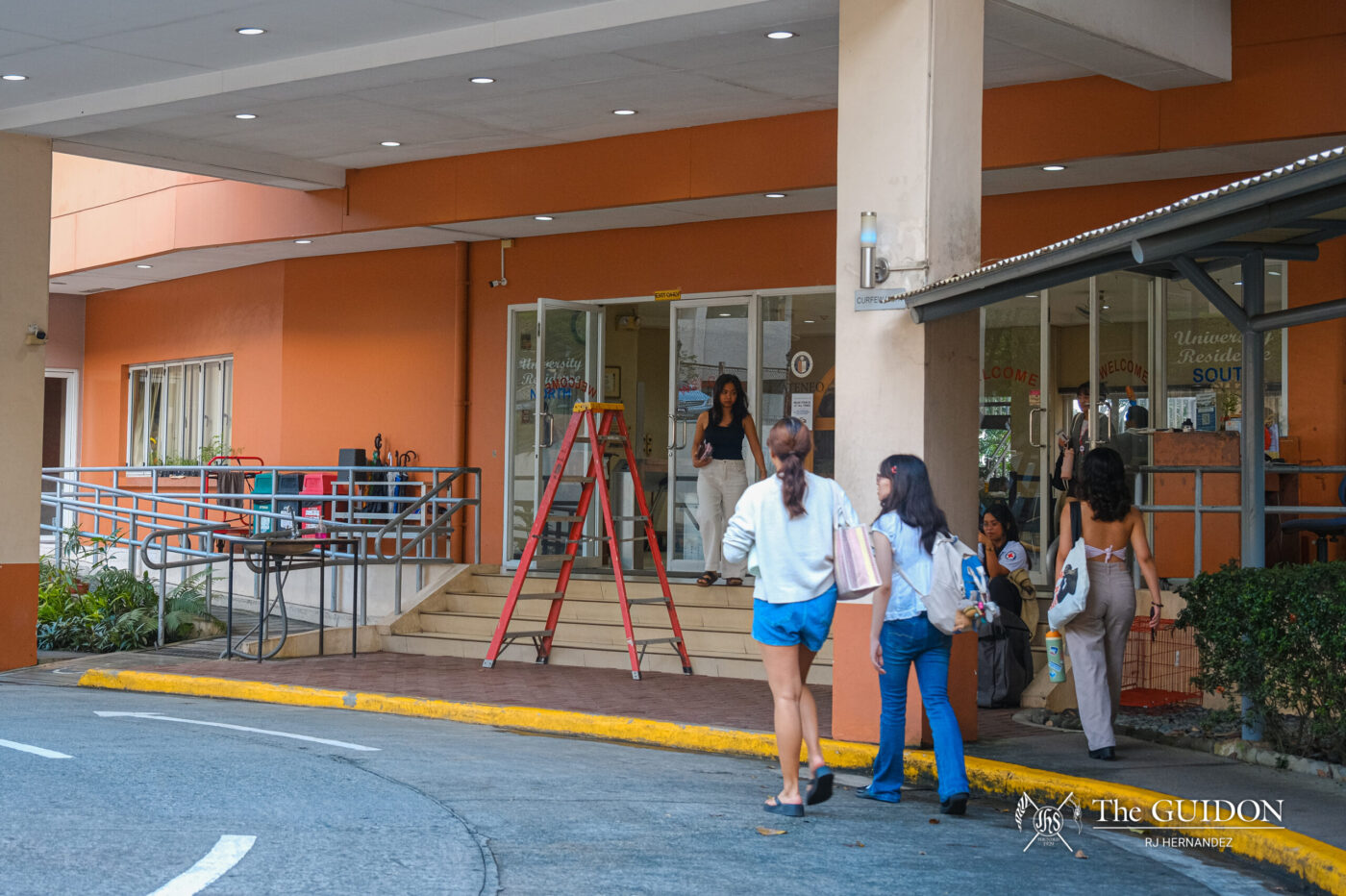
TO IMPROVE dormers’ experience within campus, the University Residence Halls (URH) administration began a phased renovation plan across the URH complex, following an announcement at the URH town hall held on February 12.
In an email correspondence with The GUIDON, URH Director Giancarlo Tuazon said that the renovation efforts are currently focused on the University Dormitory (UD) North and UD South Towers to address building maintenance, respond to resident feedback, and support sustainability goals for inclusive and eco-conscious facilities.
He also emphasized that these improvements are part of the administration’s “broader plan to modernize student housing.”
Within the dorms
As part of ongoing renovation efforts, the URH administration clarified in an email to dormers last November 27 that repainting of exteriors and interiors, as well as replacing worn-out furniture in UD South, began on December 4.
Moreover, Tuazon specified that the renovations also cover the refurbishment of restrooms in UD North and South, as well as common areas such as the Cervini Recreation Room.
In planning the renovations, Tuazon outlined that the URH administration accounted for the buildings’ age and condition, resident feedback, and the University’s sustainability goals.
Explaining the renovation timeline, Tuazon stated that renovations were initially scheduled during intersession, but encountered schedule conflicts with the Central Facilities Management Office (CFMO) and other contractors.
To address this, he shared that the URH administration has strengthened coordination with the CFMO and contractors through weekly coordination meetings and site inspections.
He further elaborated that the URH administration has revised the construction period to maximize the Christmas break, when most residents are off-campus.
For the break, the URH administration announced in the November 27 email to dormers that, aside from UD South, Cervini Hall will also be repainted. As of writing, the UD North and South Level 2 restrooms are still undergoing refurbishment, while improvements to emergency equipment, including the Fire Detection and Alarm System, as well as fire and emergency exits, are in progress. Security systems are likewise being enhanced in collaboration with the Campus Safety and Mobility Office.
Beyond renovations
As the URH undergoes renovations, UD South resident Vean Monsanto Cordero pointed out the inconveniences caused by construction noise that extends until 9 PM.
She explained that, although URH does not enforce designated noise hours, evening construction disrupts their personal time. “[Renovations] do heavily affect [dormers] [because] URH is [not only expected to be a place] for studying and academics, but also rest or recreation,” Cordero expressed.
To ensure that the dormers can forward their concerns, the Ateneo Resident Students Association (ARSA) President Christian Ang explained that ARSA released the Facilities Report, Escalation, and Enquiry (FREE) Forms last academic year, which enabled direct reports from dormers on URH admin-related inquiries.
He added that ARSA also has the Dormer’s Online Grievance and Suggestions Form, which allows residents to raise complaints regarding noise or roommate concerns, missing items, and suggestions directly to the organization.
However, Ang clarified that they have not received any noise complaints, only inquiries regarding the renovation’s completion. Regardless, Ang highlighted ARSA’s role in keeping the dormers informed about the renovation progress, particularly on renovation schedules and potential disturbances from the construction.
Building better spaces
In response to dormers’ concerns, Tuazon shared that they also plan to prioritize renovations for shared spaces such as the study lounges, recreation spaces, laundry areas, and pantries, based on feedback gathered from residents.
Aside from these initiatives, Cordero stated that strengthening existing dorm systems is equally important to enhancing the residents’ experience. In particular, she hoped for stricter enforcement of dorm policies and systems, citing the lack of clear rules on common study spaces and the need for more consistent cleaning schedules.
“The URH is an important space, especially for students [far from home]. […] It’s a shared living space, so there is a need to respect the time and needs of the students,” Cordero stated in a mix of English and Filipino.
As improvements continue in the URH, Ang reiterated that ARSA has taken a more active role in communicating with both the URH administration and the dormers to address concerns regarding policy implementations and renovations.
He further shared that the URH administration has renovation plans that it cannot fully disclose to dormers. Nonetheless, he emphasized that the office has become more open to meeting with dormers and offering compromises.
With the URH administration being receptive to feedback, Ang expressed hope that the ongoing renovations reflect the dormers’ needs and best interests in mind. He also hoped that ARSA’s collaborative relationship with the administration would continue as they work to serve the dorm community.